
Cary residents could see property tax increase as growth slows in Wake town
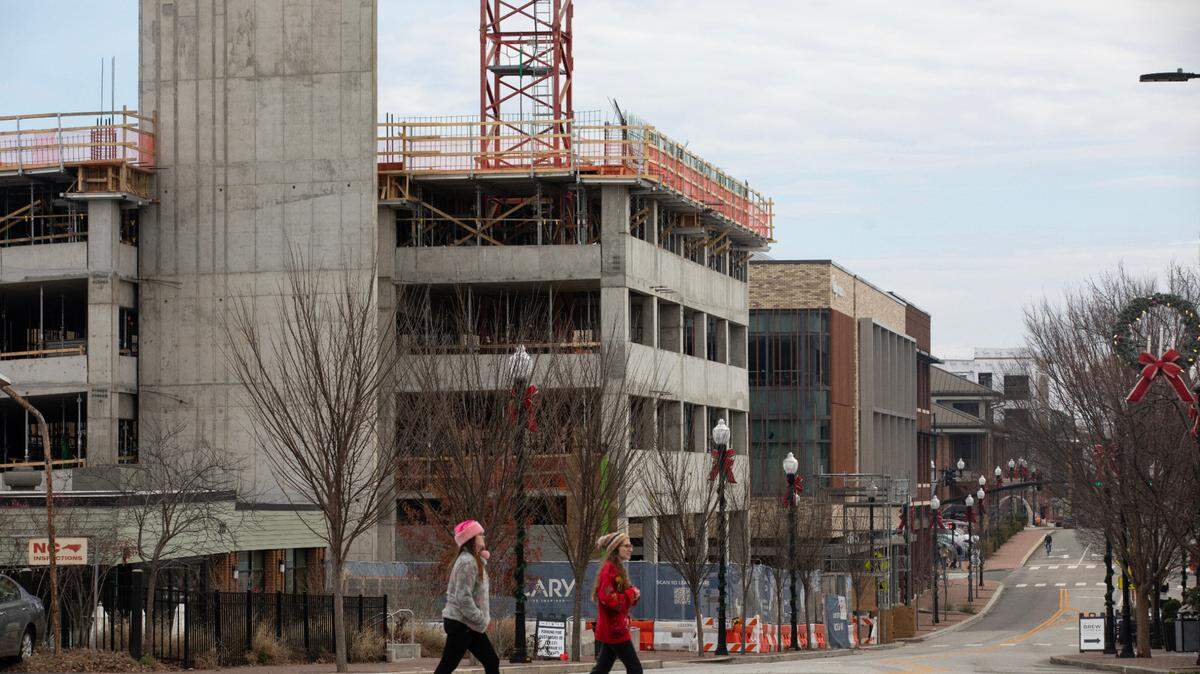
Cary homeowners would pay higher taxes under a proposed town budget that seeks to fund the town’s needs while responding to the pressures of inflation.
Town Manager Sean Stegall said the town’s finances are strong “in the face of economic uncertainty” and that his $508 million budget reflects the realities of an aging community.
Cary’s “influx subsidy” era is over, he explained, referring to the period following fast population growth when new residents’ tax contributions help keep tax rates low while expanding services.
Cary’s population, at over 190,000 residents, is the second largest in Wake County. But growth has slowed, putting more pressure on the tax rate, Stegall says.
What would a typical Cary homeowner pay in town tax?
The budget proposes a 1.5-cent property-tax-rate increase, bringing it to 34 cents per $100 of assessed property value.
The owners of a $550,000 home, the median value in Cary as of February, would see a town tax bill of $1,870.
The current year’s $503.5 million budget prioritized affordable housing, the environment, parks and public safety.
The tax rate dropped to 32.4 cents. But many homeowners paid higher tax bills due to Wake County’s property revaluation, which raised residential property values by an average of 57% and commercial properties by 39%.
Also last year, Cary voters rejected a $560 million parks bond that would have raised property taxes further.
Mayor Harold Weinbrecht noted in a blog post the budget has no new hires in Cary for the second year in a row.
What would the typical homeowner’s total tax bill be?
Wake County Manager David Ellis presented the county’s $2 billion budget this week, proposing a 0.25-cent per $100 valuation tax-rate increase to help pay for the $142 million library bond that voters approved in November.
If both Cary’s and the county’s budgets are approved with their proposed tax rates, the owner of a $550,000 house in Cary would get a combined tax bill of $4,708.
Where does the money in the Cary budget go?
The proposed budget recommends $80.7 million for public safety, with $44 million of that for the Cary Police Department. The town expects to borrow $2.8 million this fall to buy a police mobile command center and an armored response vehicle. The Cary Fire Department will get $33 million and will soon get new fire trucks.
Over $16 million is recommended for the Parks and Recreation Department which includes community recreation centers and programs, sports venues like the WakeMed Soccer Park and the Outdoor Environmental Division.
Had last year’s parks bond been approved, the town would have added three community centers and one senior center. The largest chunk of the money would have gone to a $300 million sports and recreation center.
How can town residents give their input on the budget?
Residents can share comments about the budget by calling 311, or 919-469-4000, or speaking at any upcoming Cary Town Council meeting.
Public hearings on the budget are scheduled for May 22 and June 16. Residents can also text TXT311 or directly message the town on social media to share comments.
The budget is set to be adopted at the end of June and take effect July 1. It also includes a 4% utility increase and a $2 increase to solid waste fees, bringing the amount to $25 a month.
For more information about the budget go to carync.gov/budget.
This story was originally published May 9, 2025 at 8:00 AM.