Wake County’s landfill is running out of space and time. Here are the options.
AI-generated summary reviewed by our newsroom.
- South Wake Landfill nears capacity, projected to fill between 2040 and 2045.
- County leaders weigh options including new landfills and waste-to-energy sites.
- Public outreach and stakeholder input will guide future waste disposal plans.
More than 1.1 million people live in Wake County.
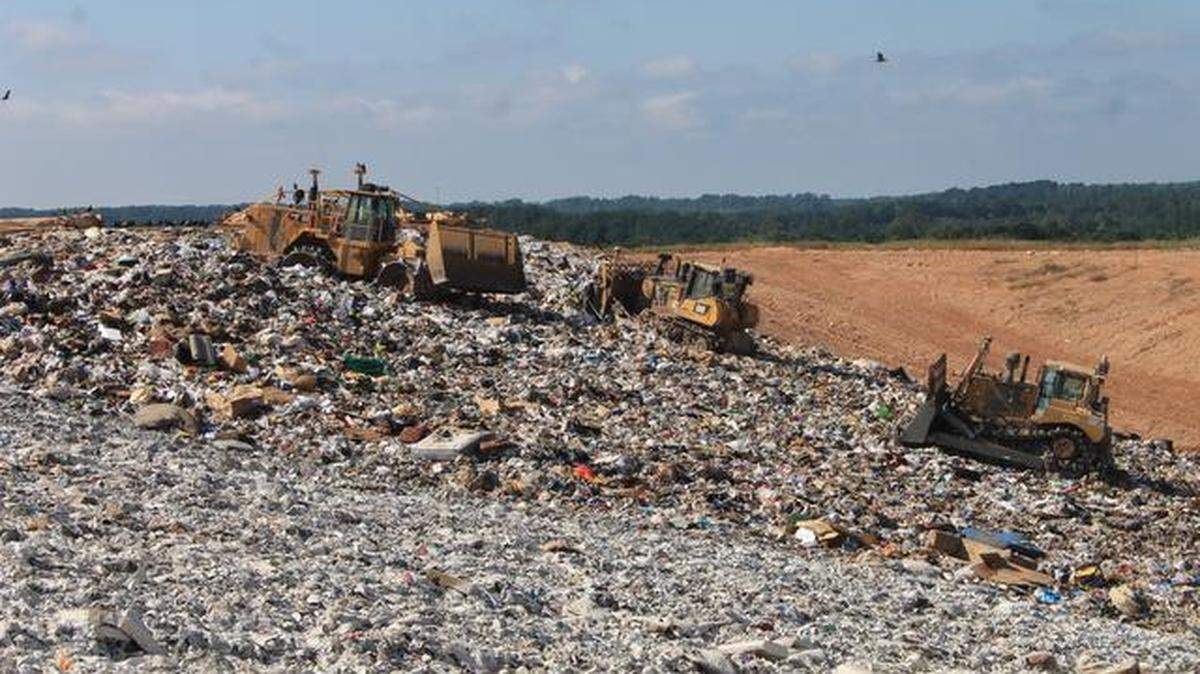
And Wake County officials are pondering what to do with all their trash as the South Wake Landfill fills up.
The nearly 500-acre landfill opened in 2008 at the intersection of Old Smithfield Road and N.C.55 Bypass between Apex and Holly Springs.
Based on how much trash the county generates, the landfill is expected to reach capacity between 2040 and 2045. But figuring out the plans for the future have to start soon.
“Availability [of land], designing, permitting, construction of a future disposal facility, whether it’s a landfill or a waste to energy type facility, will take at least a decade for that process,” said John Roberson, Wake County’s solid waste director. “So, you do that math, and we’re getting pretty close to 2040.”
The Wake County Board of Commissioners were briefed on the landfill during a work session Monday.
Four options for waste disposal in Wake County
There’s building a new landfill, the “cornerstone of waste disposal in North Carolina,” said John Boyer, an environmental engineer with CDM Smith, an engineering and construction company working on the county’s trash study.
“That’s growing increasingly difficult just because of the lack of space, but it’s still potentially an option,” he said.
A second option is to do what most other counties in the Triangle do: Haul it off somewhere else.
Durham, Harnett, Lee and Orange counties all ship their waste to the Sampson County Regional Landfill. Nash, Granville and Chatham counties also send their trash to regional landfills.
A third option, often used in parts of Europe and Asia where there is less land available, hasn’t been widely adopted in the United States. That’s a waste-to-energy facility.
Such facilities burn trash to produce electricity, Roberson said. The county would still have to do something with the trash ash, and the facilities can be paired with facilities that require significant energy use, like a data center,
“It’s not your father’s incinerator,” he said. “Incinerators today are much different than they were in the ‘60s, ‘70s, ‘80s.”
They also require a fraction of the land, Roberson said.
A fourth and final option is using unidentified “emerging or alternative disposal technologies.”
Wake County will talk with community stakeholders and seek the public’s thoughts on how to move forward.
“We’ve seen historically marginalized communities often have had bad experiences with projects like this,” said Wake County Commissioner Tara Waters.
This story was originally published September 9, 2025 at 8:12 AM.
CORRECTION: This article incorrectly named one of the options considered by Wake County. The third option is a waste-to-energy facility.