In Raleigh, four-year effort to replace a tunnel with a bridge has ended
.jpg "The Ligon Street bridge over the Raleigh Beltline opened on April 2, 2026.")
AI-generated summary reviewed by our newsroom.
- New two-lane Ligon Street bridge opens over I-440, the Raleigh Beltline.
- Bridge replaces a one-lane 1960s tunnel as part of NCDOT Beltline widening project.
- Contractors used about 23,000 tons of pea-sized gravel to raise roadbed.
A new bridge opened across the Raleigh Beltline last week, at the spot where for decades cars — and only cars — passed under the highway through a low, narrow, one-lane tunnel.
The new Ligon Street bridge over Interstate 440 has two lanes with sidewalks on both sides, providing an option for cars, trucks, buses, pedestrians and cyclists to cross the Beltline between Hillsborough Street and Western Boulevard. The bridge connects N.C. State University’s main campus with several university buildings west of the Beltline, including the JC Raulston Arboretum.
The bridge replaces a tunnel that was built in the early 1960s when the highway was constructed as a bypass around Raleigh. The passage connected the Method neighborhood on the east side with the community’s Oak Grove Cemetery on the west. NCSU also had fields and orchards west of the highway on land that eventually became research labs, warehouses and the arboretum.
The one-lane tunnel was as long as the Beltline was wide and demanded a certain etiquette among drivers. Most came almost to a stop before entering to look for either headlights or the silhouette of a car coming the other way.
The N.C. Department of Transportation replaced the tunnel with a bridge as part of a much larger effort to widen the Beltline between Wade Avenue and Interstate 40 in Cary. That project is substantially complete, though work remains at the Wade Avenue, Hillsborough Street and Western Boulevard interchanges.
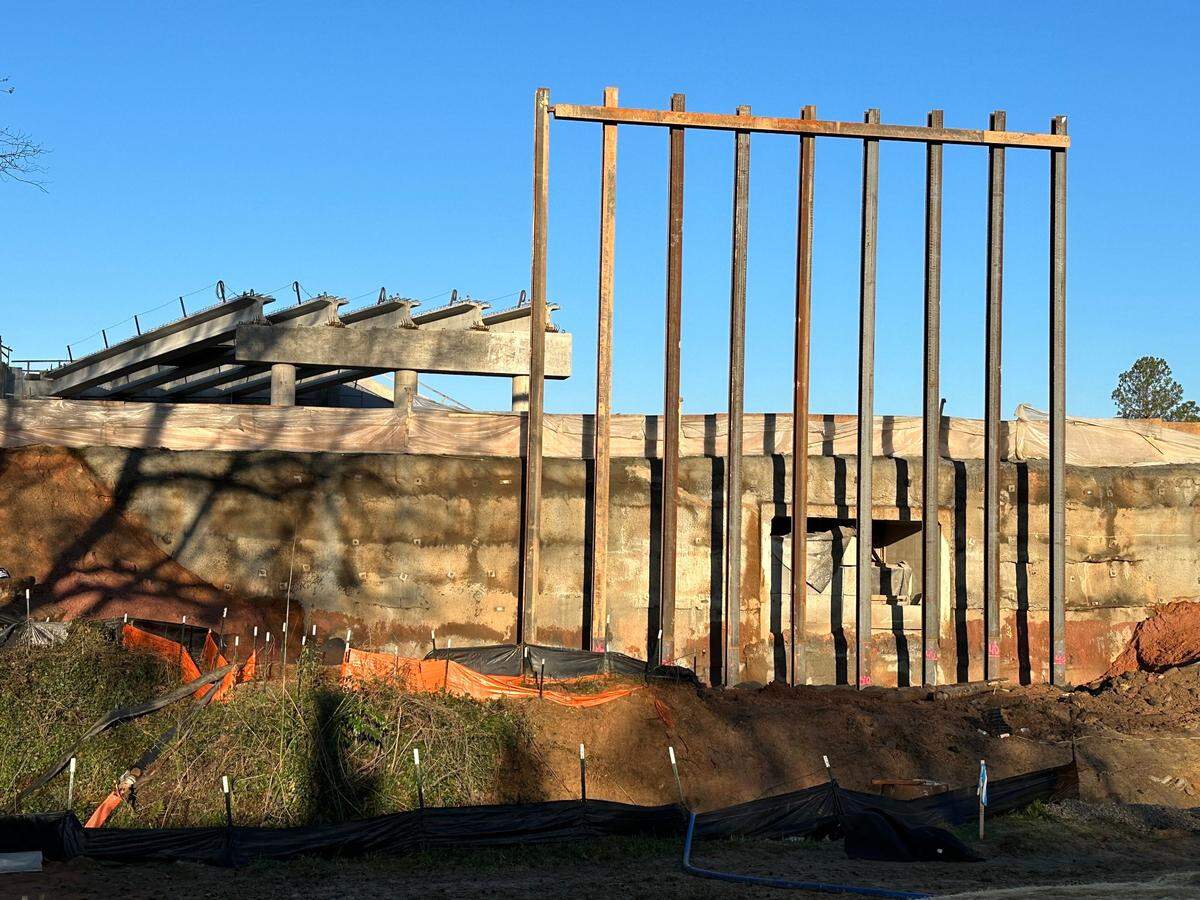
Transforming Ligon from a street that went under the Beltline to one that now goes over it meant raising the road on either side. To do that, NCDOT’s contractors brought in about 23,000 tons, or about 1,150 truckloads, of pea-sized gravel and built walls up to 45 feet high to support the new roadbed.
NCDOT estimated the bridge would cost about $3.54 million.
The tunnel was closed in April 2022 and filled with concrete before the entrances at either end were buried under gravel. NCDOT engineers say that reduces the chance that the tunnel might someday cave in deep under the highway.