Library workers protest Wake County budget, insist they need more hours
AI-generated summary reviewed by our newsroom.
- Proposed budget cuts temporary hours while attendance rose by 11,000 from last year.
- The union said temporary hours are down 30% while full-time positions stayed the same.
- Over 200 library workers signed a petition, and dozens protested outside a budget hearing.
From overcrowded children’s story times to limited tech support for those using library computers, Wake County library workers say staffing limitations are hurting services.
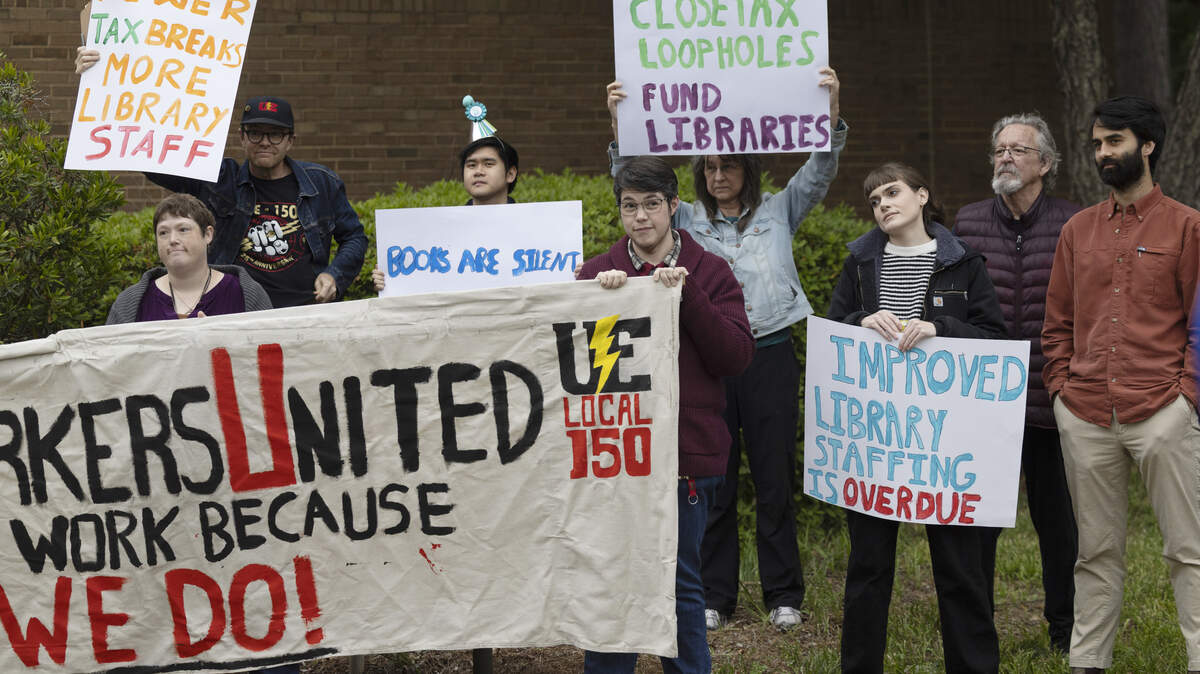
Dozens of library patrons and workers gathered outside a Monday public hearing on Wake County’s proposed fiscal year 2027 budget, which union leaders representing library workers say makes painful cuts to staffing hours.
“What do we want? Staff hours.” the demonstrators chanted. “When do we want them? Now.”
Library workers are being asked to do more with less, said Zac Morgan, a library worker and spokesperson for Wake County Library Workers United. Morgan declined to give the membership numbers of the union, which formed in 2024.
Libraries offer more programs than 10 years ago, according to Wake County spokesperson Alice Avery. The population has grown by around 200,000 — around 20% — in that same time frame, according to the U.S. Census.
But Wake County has only budgeted for an additional half of one full-time position’s hours in its libraries in the past seven years, and it’s cutting hours for temporary positions in this year’s budget proposal.
From fiscal years 2016 to 2020, however, the county added about 50 new full-time equivalent positions as it opened new libraries.
The union says that the county has refused to negotiate. Under North Carolina law, governments are not allowed to enter into collective bargaining agreements with public-sector employees. Still, Morgan said, other public-service worker unions speak to governments without a formal agreement being made.
What do county officials say?
Instead of full-time positions, the county has relied on “temporary hours” to help staff its libraries. When the county doesn’t fill a full-time position, the budgeted funds for that position are used for these temporary hours, according to Wake County Library Director Tammy Baggett.
Baggett has said the county is using all the temporary hours it can, but in a statement, the union said those hours were down 30% while the number of full-time positions in the budget remains the same.
Over the past decade, the county has increased the available temporary position hours by 278%, the county said in a statement.
But in fiscal year 2024 the libraries went over their budget for temporary position hours, requiring additional funds to be transferred to cover them, Baggett previously said. Since then, the county has tried to stick to only using the available funds, which resulted in decreases in the temporary position hours, she said.
Baggett also said that the county is doing a staffing study to better understand its needs and address staff concerns.
County Commissioner Vickie Adamson said Monday night that she’s planning to take another look at the budget after hearing library workers’ concerns.
The county is already proposing a tax rate increase, however, to fund public schools and address jail overcrowding.
What did protesters say?
The union is asking for a shift to the county relying on more permanent library positions rather than temporary hours, Morgan said.
It’s also asking for recognition in the county budget of the true staffing situation: though the county budgets for 285 full-time equivalent positions, there are actually around 600 library employees including temporary employees, according to Morgan.
And though the county’s staffing study is a welcome development, he said, it won’t help library employees in the short term. Only budgeting for additional staff hours can do that, union members said.
“We’ve been asking for a staffing survey for a long time,” Morgan said. “There was no discussion of that before our petition.”
Over 200 library workers signed the petition, the union said in a statement, which asked staff members to agree to a “shared statement highlighting the staffing crisis” across Wake libraries.
The county pushed back against Morgan on Tuesday, saying the staffing study was announced three months before the petition was circulated, according to county spokesperson Alice Avery
Library attendance is up by over 11,000 participants from last year, according to Baggett.
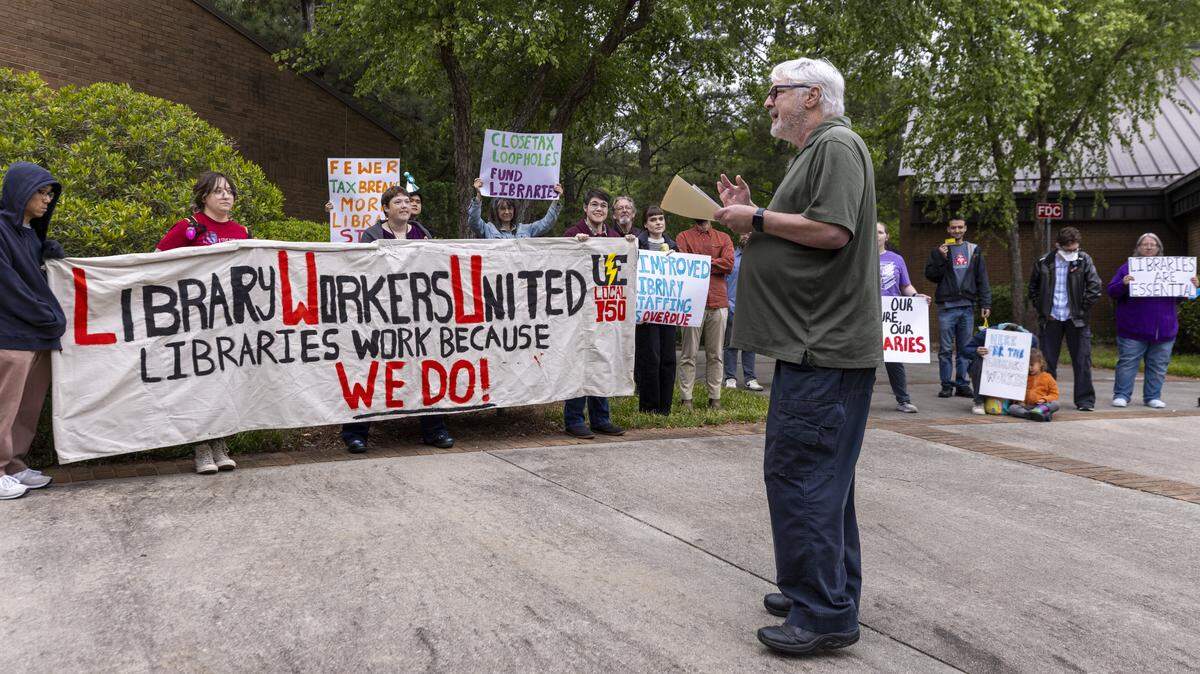
Steve Bader, a library patron, said on Monday that means that the county should be budgeting for additional library positions.
“Just logic — if you have 11,000 more people and fewer workers, something’s got to give,” Bader said.
However, library attendance is still down from what it was 10 years ago — before COVID-19 — around 8%, according to the county.
Dante Strobino, a union organizer with UE Local 250, the larger public-service workers union that the Wake library union is affiliated with, acknowledged many of Wake County’s budgetary difficulties during Monday’s rally.
The county is planning to hire 92 additional jail employees as it looks to open a temporary jail building to hold inmates as part of the proposed budget. County officials say they have been holding around 100 state prisoners in their jails because the state needs additional staffing in its prisons before it can house them.
The state still hasn’t passed its budget, and Wake County has had to provide millions of dollars in funding for operations at public schools, despite county officials saying that’s a state duty, Strobino said.
And a property tax exemption for affordable housing allowed under state law allows owners of housing developments to avoid property taxes.
Local officials call that exemption the “Blue Ridge” loophole, after a development where a for-profit investor who owned 99.9% of an apartment complex was exempt from taxes because 0.1% of the complex was owned by a nonprofit. Legislators are now considering ways to close the loophole, but it will take an estimated $12.3 million out of county coffers in fiscal 2027, according to County Manager David Ellis.
“That’s costing Wake County library workers,” Strobino said.
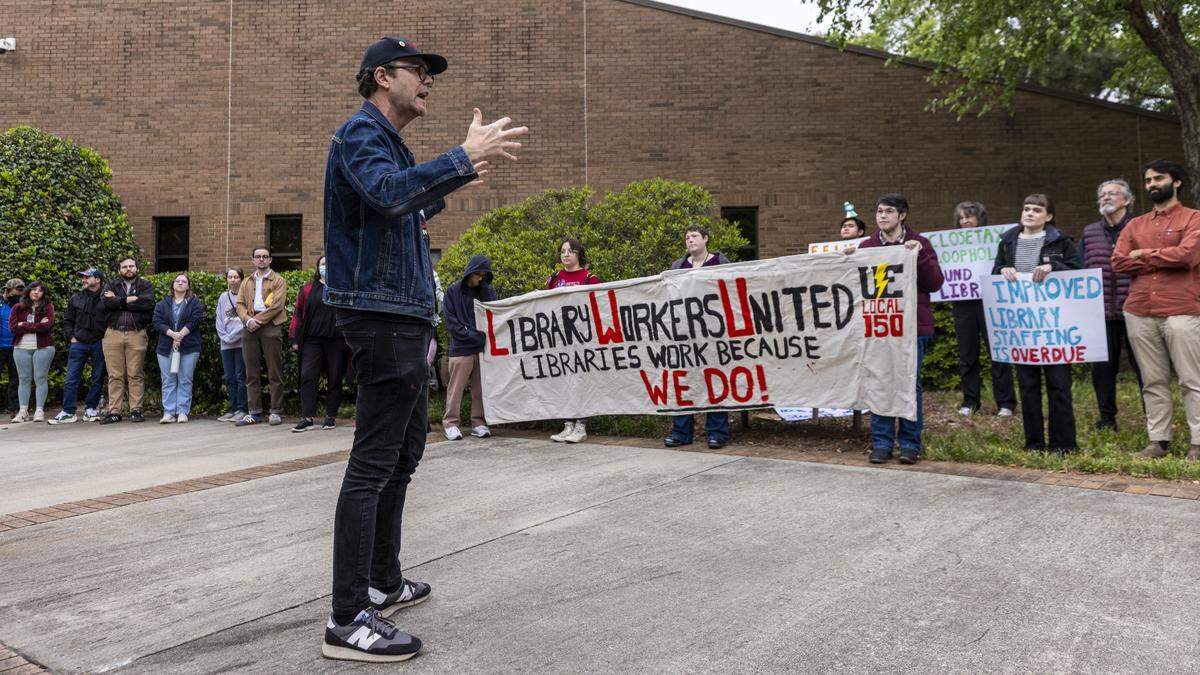
Strobino led the protesters in chants of “Money for libraries and education, not developers and corporations.”
This story was originally published May 11, 2026 at 11:59 PM.
CORRECTION: The story has been corrected to reflect the number of employees hired at Wake libraries in the past decade.