Raleigh’s water restrictions have not done enough. What the city could do next.
AI-generated summary reviewed by our newsroom.
- Stage 1 restrictions were effective in April and the first half of May, but not since.
- Falls Lake levels fell to 64% while watershed remained in NC's most severe drought.
- Council may allow fines up to $1,000 and water cutoffs under stricter stages.
Raleigh’s current water restrictions have proven ineffective, city officials say.
Now, officials are considering stricter rules and stronger enforcement.
Why aren’t the restrictions working?
“Stage 1 Water Use Restrictions have been in place since 4/20 and were initially effective in limiting irrigation demand during April and the first half of May,” the city manager’s latest report reads. “However, based on water plant pumping data, demands have increased on average during the latter part of May and through June.”
Stage 1 restrictions have primarily limited which days of the week people may irrigate their lawns.
The city’s restrictions are all based on water levels at Falls Lake — Raleigh’s primary water reservoir —and they increase in severity as water levels drop.
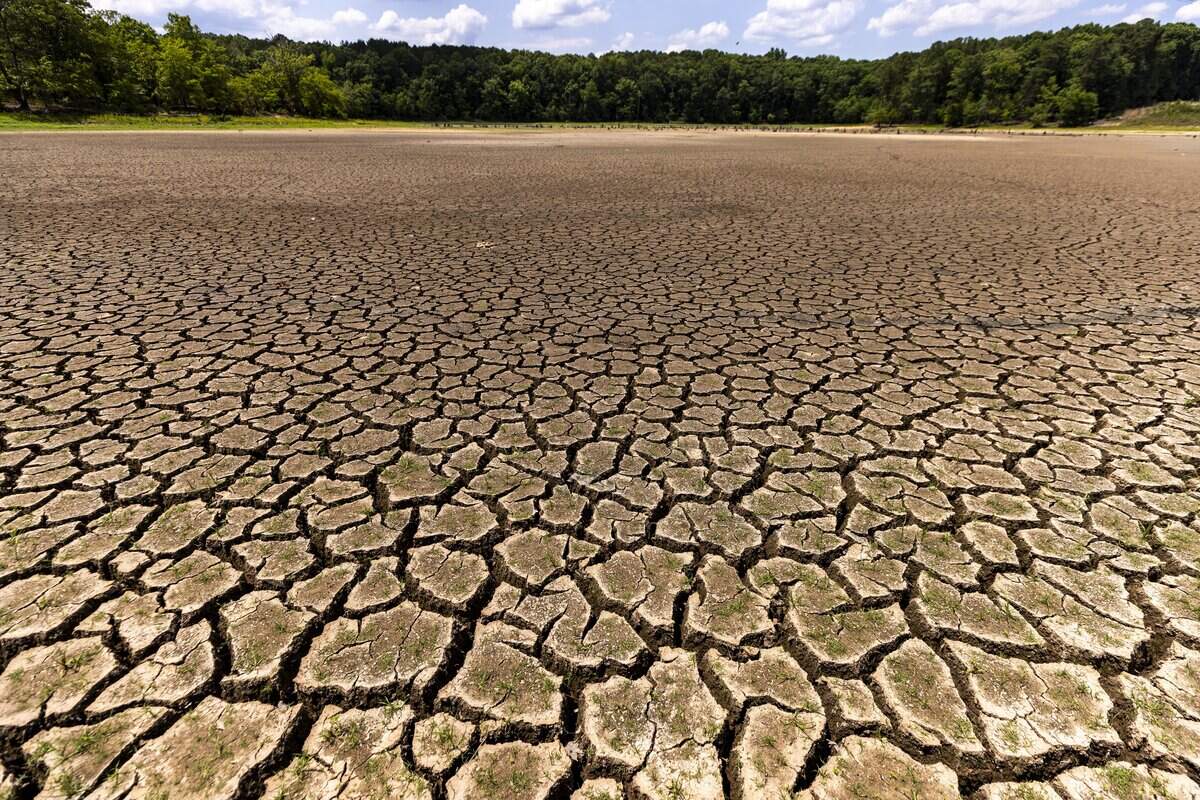
Stage 2 water restrictions would normally be reserved for when the lake hits 45% of its normal water level in the month of July.
“This trigger is based on an anticipated reduction of water demand once Stage 1 Water Use Restrictions have been adopted,” wrote Assistant Raleigh Water Manager Ed Buchan in a report to the City Council.
Falls Lake was at 64% of its normal level as of Friday, but despite the restrictions, demand has grown.
- The average water demand in May grew more than 3% over May 2025
- In June, it increased more than 8% over last year.
The water restrictions are designed to reduce water demand when compared to last year, Buchan wrote in an email to The N&O on Monday.
“If we were seeing a 4.3% reduction in June 2026 compared to June 2025, we would be more comfortable with how well the water use restrictions were working,” Buchan explained. “That is just a theoretical example, but the point is we were hoping to see some kind of reduction — certainly not an increase.”
The Falls Lake watershed remains in the most severe drought designation by the N.C. Drought Management Advisory Council.
“It is also clear that irrigation is the single largest driver in increasing water demand, especially on permitted irrigation days, but also on non-permitted days when there has been limited rain and/or high temperatures,” Buchan wrote.
What’s the city doing in response?
The City Council will review Raleigh’s water restrictions during its 1 p.m. session on Tuesday at the Municipal Building on West Hargett Street.
Possible changes include:
- Allowing the city manager to enact stage 2 or stage 3 water restrictions when the previous restrictions haven’t worked.
- Allowing the director of Raleigh water to discontinue water services to water meters used for irrigation only when the city enacts stage 2 water restrictions.
- The ability to fine water users $200 fines for any violation of stage 2 water restrictions and $1,000 for any Stage 3 water violation. “A second violation of any Water Conservation Restriction may result in interruption of water service to the offending customer,” proposed ordinance language reads.
Currently, the fines are less punitive, according to city code. The city is required to send a written warning for a first violation. For a second violation, the city can fine $50, and for a third, $200.
A fourth violation can result in the city cutting off water to the offender.
The city has issued 366 educational and 166 formal warnings about the water restrictions, with a total of 639 violations reported.
Seven customers have been issued a $50 civil penalty and one customer has been issued a $200 civil penalty, the city manager’s July 2 report said.
“Based on recent irrigation meter data, over 3500 irrigation services have been non-compliant and additional enforcement efforts will be made with these accounts,” the report states.
Any changes in water restrictions would take effect as soon as the council adopts them.
Stage 2 restrictions
Buchan also wrote that he recommends the city adopt stage 2 restrictions.
Those would prohibit people from watering their lawns using hose-end sprinklers and in-ground irrigation systems, according to the city website. Efficient drip irrigation systems would still be allowed and people could still irrigate using things like buckets.
Buchan also recommends limiting athletic field irrigation to one day a week. Stage 1 and 2 restrictions don’t limit that at all.
This story was originally published July 6, 2026 at 3:50 PM.