
Drunk-driving arrests plummet in Wake and Durham counties
This is the latest story in The News & Observer’s “Are We Safe?” project investigating readers’ concerns and how well government is protecting us. If you have a question for “Are We Safe?” go to bit.ly/AreWeSafeProject to fill out a simple form.
In 2014, North Carolina arrested nearly 50,000 people for driving while impaired — a total higher than all the students at N.C. State University and approaching the population of Chapel Hill.
That year, a statewide task force set up 5,221 checkpoints on five major holidays, issuing tickets for DWI to nearly 10,000 drivers.
But soon after, the numbers started to drop drastically. In Wake County alone, drunk driving tickets fell 16% in 2015, then 25% in 2016.
People in law enforcement wondered if the declines came from an election year blip. With presidential candidates Donald Trump visiting Raleigh twice, and Hillary Clinton four times, hundreds of officers got pulled off routine duty.
“Were agencies cutting back on their gas budgets?” asked District Attorney Lorrin Freeman, recalling another theory.
But a clearer picture has emerged, showing a stronger trend.
In the five years between 2014 and 2018, DWI arrests fell 18 percent across North Carolina, according to an analysis of data from the state Administrative Office of the Courts. Out of 100 counties, 70 showed a reduction, including Wake (47.1%), Mecklenburg (47.9%) and Durham (35.4%). Arrests rose by 15 percent in Orange County during that period.
Alcohol-related wrecks in Wake also declined over that period, but at a significantly lower rate — by 7%, according to state Department of Motor Vehicles data. Deaths in alcohol-related crashes rose from from 368 to 411 in 2018, the DMV reported.
The reduction coincides with the rise of Uber and other ride-sharing companies. But people working in law enforcement around the Triangle also point to a decline in police resources, especially officers funded by federal grants, and lower officer recruitment here and nationwide.
Meanwhile, 911 calls have dropped slightly across Raleigh — about 1 percent in the last five years, police said in a 2018 report. But vehicle crashes remain among the top-three types of emergency calls in five out of six of the city’s police districts.
Read more: Drunk driving arrests in Charlotte have plunged.
To the families of people killed in alcohol-related crashes — 354 across North Carolina in 2016 — the drop-off is troubling.
“When people aren’t seeing it in the newspaper or hearing about it from friends, you start letting your guard down,” said Ted Dann, whose wife, Maria, was killed by a drunk driver in 2011. “You think, ‘I had two drinks, but I can get away with four.’ And you can’t.”
Driving while impaired remains a charge that can snare anyone from a college student to the CEO of Blue Cross and Blue Shield of North Carolina. And it remains common enough that defendants file into room 204 at the Wake County Courthouse every Friday at 2 p.m.
But in 2019, there’s room inside for every defendant to get a seat.
“I definitely don’t get hired on as many (cases),” said Dewey Brinkley, a Raleigh defense attorney. “Everyone has a Smartphone now. They just have the app. It’s just so easy to get a ride.”

The ‘Uber Effect’
The ease of taking Uber and Lyft cars home from bars and parties helps explain the drop in DWIs, said multiple people who work in law enforcement. More than 14 million people ride Uber cars daily, according to company statistics, which are not available by city or state.
“I do believe that there is a shift in our culture and that more people are relying on alternative modes of transportation in lieu of getting behind a vehicle themselves,” said Freeman, the Wake district attorney. “Whether you call it the ‘Uber effect’ or the ‘Lyft effect,’ I think there is something to that.”
But studies are mixed on how much ride-sharing apps have cut into drunken driving.
New York saw a 25% decline in crashes over two years after Uber started operating in 2011, a City University study showed. But in 2016, the American Journal of Epidemiology published data from 100 of the nation’s largest cities, which showed no connection between Uber’s availability and traffic deaths — either alcohol-related or on weekends.
A far more common explanation, at least in law enforcement circles, is a shortfall in police resources — both in funding and recruitment. It is increasingly hard to hire qualified officers required to staff checkpoints or to fund such operations, according to multiple police departments and their advocates.
“I can tell you that funding is always a problem,” said Jennifer Lichtnegger, state program director for MADD North Carolina. “It’s not inexpensive to have checkpoints and saturation controls. Here, we see many of the departments who are strapped, not having the resources. The visibility of having checkpoints and patrols decreases the instances. Having the people out there is a deterrent.”
Dried-up Funding
The downturn in DWI arrests applies to all types of agencies:
▪ Police departments: down 27.5 percent,
▪ Sheriff’s offices: down 18.2 percent,
▪ NC Highway Patrol: down 5.3 percent.
In Raleigh alone, arrests dropped by 59.4 percent — more than half over five years.
At least part of that drop-off can be explained by a $1.4 million grant from the National Highway Traffic Safety Commission in 2013, which paid for a DWI enforcement unit.
In the first year, the unit was 100% funded with $525,720, but it declined each year because the grant required the city of Raleigh to pay matching funds, said Donna-Marie Harris, police spokeswoman.
By the fifth year, the grant paid only $98,491. Once it expired, the department tried to fill spots with other officers, leaving some slots open.
“The Raleigh Police Department continues to take DWI enforcement seriously,” Harris said in an email. “While there are currently vacancies within the DWI Unit, the Raleigh Police Department is evaluating all options in regards to staffing those positions.”
The Wake County Sheriff’s Office saw a similar downturn in arrests. 489 to 165 over the same five-year stretch.
Spokesman Eric Curry said Wake also saw grant funding dry up, roughly in 2018 near the end of former Sheriff Donnie Harrison’s term. He did not know the source or amount of funding because it was exhausted before Sheriff Gerald Baker took office.
Durham police saw arrests fall from 463 to 299 in the same five years, though they began to pick up again this year. Spokeswoman Kammie Michael said “staffing could be a factor.”
Some attorneys in Raleigh point to the “Ferguson Effect,” recalling backlash from an unarmed black teen shot and killed by police in Missouri. Job-seekers are reluctant to work risky, late-night jobs for low pay when their mistakes can be captured on camera and used for prosecution.
“Departments across the board are having trouble filling ranks,” said John Midgette, executive director of the N.C. Police Benevolent Association. “The anti-police animus promulgated by certain anti-police groups have done their job well. Otherwise, excellent to good candidates seeking a career in public service are steering clear of law enforcement as a career of choice.”
The “Ferguson Effect”
In May, former Wake deputy Cameron Broadwell pleaded guilty to misdemeanor charges after siccing a police dog on a mentally ill man in Raleigh — a rare conviction for an officer in the line of duty.
As he left the courtroom, Broadwell’s attorney Rick Gammon criticized the deputy’s prosecution, saying Broadwell was motivated only by protecting the public.
“My advice to any and all law enforcement officers is they need to get another line of work,” Gammon said at the time. “This is just the beginning.”
Across the Triangle, many close to criminal justice share this attitude and believe it contributes to falling officer enrollment.
The Bureau of Justice Statistics reported last year that full-time officers per 1,000 residents nationwide decreased from 2.42 to 2.17 in a decade — down 10 percent.
The Governor’s Highway Safety Program set up 3,248 checkpoints in 2018 using officers, deputies and troopers from around the state — a total down 37 percent from 2014.
Raleigh Police had 782 sworn law officers in 2013, according to its 2014 community report. It has 802 now, according to its Wikipedia page.
Those figures represent a 2 percent increase in officers. In that time, Raleigh’s population has risen by 8 percent to 469,298.
“All those police agencies are understaffed right now,” said Brinkley, the Raleigh defense attorney. “The backlash against law enforcement ... it’s such a thankless job. They don’t get paid well. It’s such a hard job. It’s hard to find qualified people. It’s tough for law enforcement right now.”
Political priorities have shifted in some cities, particularly Durham, where some members of the City Council have unsuccessfully pushed for more officers in budget talks. A spike in violent crime is fueling the discussion in Durham, not driving while impaired, but the resistance to adding officers has come out of a fear of over-policing.
“Was he going to follow through?”
Every Friday, a crowd files into room 204 of the Wake County Courthouse, all of them making their first appearance on DWI charges. They represent every person cited for DWI within a three-week period.
On a recent Friday, they numbered 140, a slice of Wake’s population that ranged from a defendant sporting a navy blue suit to another wearing a striped jail uniform.
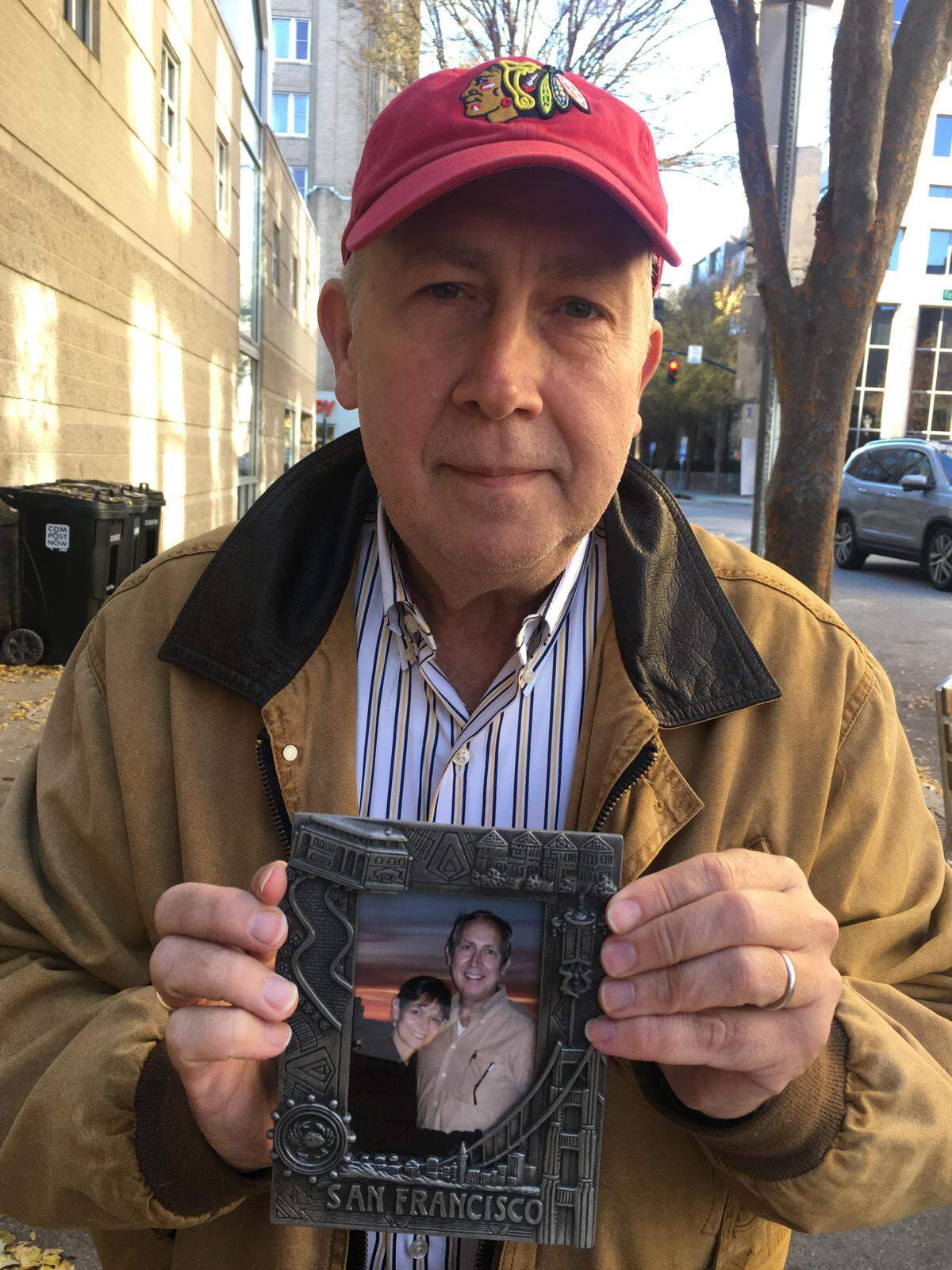
In 2011, Maria Dann was driving between elementary schools on U.S. 15 near Oxford, where she worked as a curriculum coach for Granville County. She had spent more than a decade teaching second grade at Ravenscroft School in Raleigh before taking the new job.
At age 50, she and Ted Dann had been married only four months, and on that November morning, she told her husband she hoped to get off work early so they could walk the dogs together.
As she came around a curve on U.S. 15, a pickup truck crossed the center line and struck her Chrysler head-on — both cars going 55 mph. The other driver, Valerie Corsaro, 36, was killed instantly. Dann was pinned in the car, and once emergency crews freed her, she was flown by helicopter for emergency treatment.
Her husband learned of the crash when a state trooper called and told him to drive carefully to the hospital. By the time he arrived, his wife had died from cardiac arrest. Weeks later, he received word that toxicology reports showed the other driver had a blood-alcohol level at twice the legal limit.
It took three years for Dann to pull out of the downward spiral of depression that followed his wife’s death. He credits grief counseling for seeing him through.
But even today, when he walks through a street fair or goes to a concert and sees people drinking, he can’t help but think that some of those people casually sipping beers will be driving home soon.
Hearing of the reduction in arrests, he reflected on those times.
“This is such important public policy,” he said. “If we’re backing off on it, I just don’t think this is the right thing. You’re going to end up with more tragic deaths.”
Dann recalled seeing a truck weaving out of its lane on I-540 about a year ago. He and the driver pulled off on the same exit, and as they did, Dann called the Highway Patrol to report it.
But as he was calling, he spotted a sheriff’s deputy stopped at an intersection, and he rolled down the window to point out the weaving car.
Dann drove away as the deputy pulled the truck over, blue lights flashing. But as he drove away, he realized he couldn’t go home without seeing how the case got resolved.
“I started getting in my mind, ‘Was he going to follow through?’ ” Dann said.
So he drove back to the scene and saw the results of his tip. The deputy had the driver out of the stopped pickup — wearing handcuffs.
This story was originally published December 11, 2019 at 5:58 AM with the headline "Drunk-driving arrests plummet in Wake and Durham counties."