Durham’s police chief wants more money to fight gangs. What does the gang unit do?
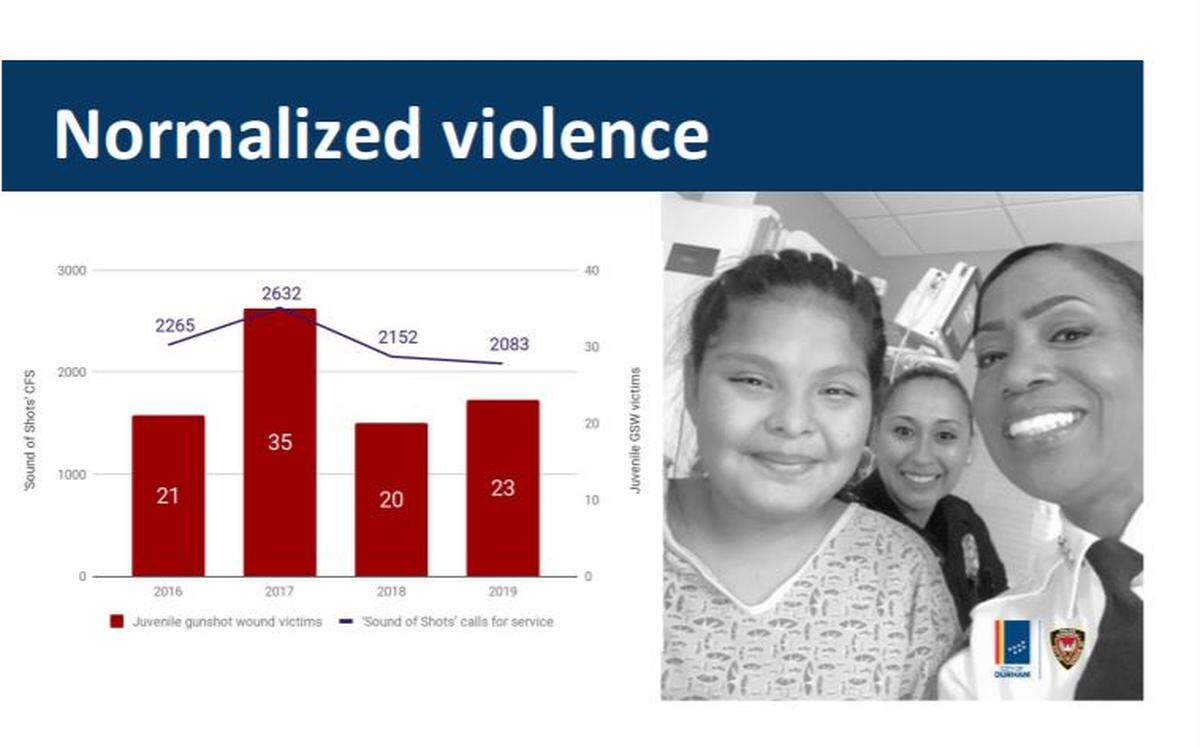
Police Chief C.J. Davis’ request for more officers to fight gang violence follows a year in which 189 people were shot in Durham, including 32 who were killed.
In at least 12% of the total 652 reported shooting incidents, including those without injuries, a gang member was either a victim or a suspect, Davis said.
“The current level of violent activity, combined with the steady stream of potential perpetrators, is more than the single Gang Unit can respond to effectively,” Davis wrote in memorandum outlining a potential expansion of the gang unit.
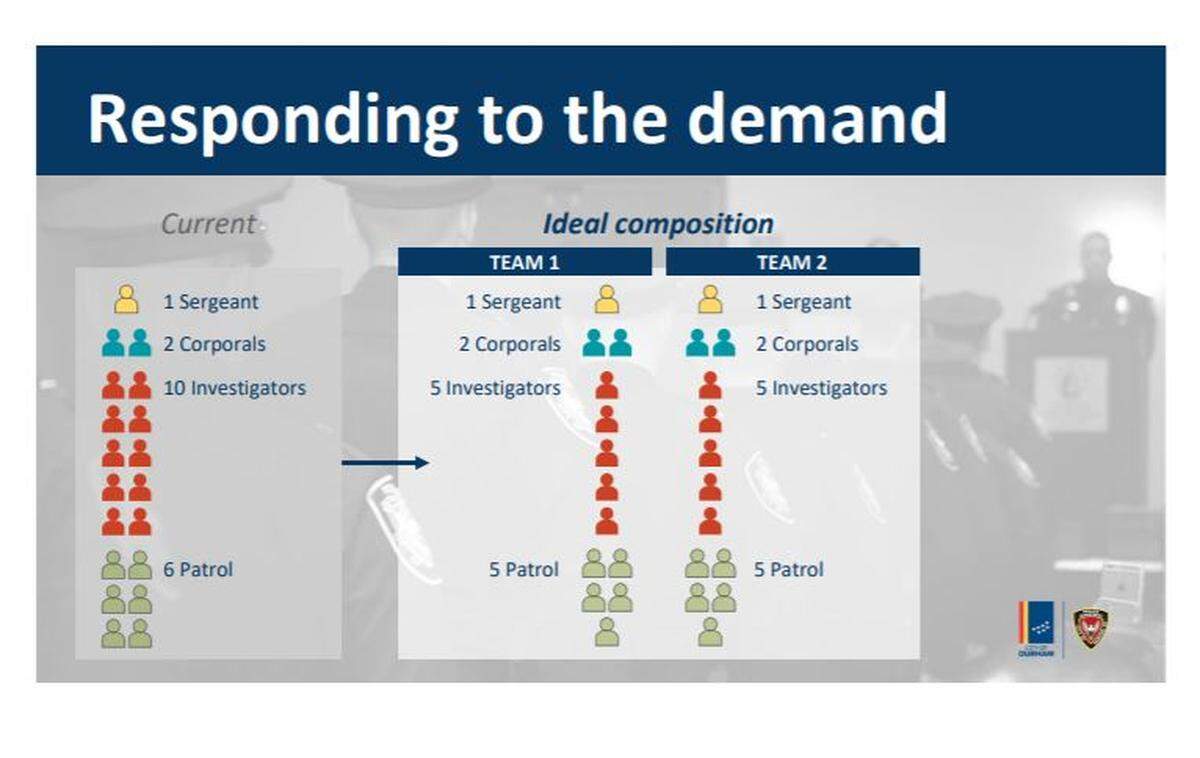
The Police Department’s gang unit currently has 13 positions but often operates at half that because of approved leave and other reasons. In December, Davis temporarily moved six patrol positions to the gang unit, using overtime to pay officers to volunteer for four- to six-hour supplemental shifts to help cover general patrol shifts in those officers’ absence. (In general, officers work 12-hour shifts.)
Options for the City Council include:
▪ Hiring 13 more officers for a second gang unit, which would cost $908,765 a year and provide round-the-clock staffing
▪ Funding six new patrol officers for the gang unit, which would cost $419,430.
▪ Funding supplemental shifts, which would cost $361,187 annually.
The News & Observer and The Herald-Sun turned to public documents and three gang-unit officers to learn more about what they do.
How many gang members does Durham have?
As of Feb. 7, the Durham Police Department had validated 2,060 gang members.
The number has fluctuated over the years as new members are validated and are removed for inactivity.
The gang validation process starts with “a reasonable suspicion that a person is involved in criminal activity,” and then moves on to documenting at least two of 12 validation criteria established by the N.C. Department of Public Safety GangNET Policy.
How many crimes do gang members commit?
In 2019, there were 681 gang-related arrest reports in Durham, which included 464 felonies, according to a memo from Davis to the City Council.
There were 351 validated gang members arrested for various crimes, and 99 of those crimes were gun related.
About 65 validated gang members are released from incarceration back into the Durham community annually.
What does the Police Department’s gang unit do?
The gang unit, which was started about two years ago, responds to all shootings, the officers said.
Whether the gang unit takes over the case depends on the who the victim is and the suspect may be.
“If the victim has any kind of gang ties as a gang associate, possible gang member, we know then we are going to pick it up and we are going to help investigate it,” said gang unit Investigator Cory Ugolick.
Once the unit claims the case, it starts divvying up duties.
“Do we need people at the scene? Do we need people at the hospital? Do we need people looking for a suspect, interviewing witnesses, collecting evidence, locating evidence?,” Ugolick said.
Investigators will typically interview witnesses and canvas the area. Patrol officers will look for the suspects, which can be directed by investigators providing details obtained from interviews on the scene.
If a shooting doesn’t appear gang involved but police later learn a gang member may have committed the act, the gang unit will help other officers already investigating it by following up on leads and leveraging their expertise and familiarity with those who may be involved.
When there isn’t a shooting, the gang unit follows up on leads and observations from patrol officers and reports from previous shifts.
Each gang unit investigator also serves as liaison to other units, such as homicide, robbery, special victims.
“We are making contacts with the investigators in those units to see how we can help them with their cases, which may be gang related may not be, “ said Lt. Genavous Minor, especially if if there is an aggravating factor.
Minor is assistant commander in the organized crime division, which the gang unit falls under.
The gang unit typically works four, 10-hour shift over a 40-hour work week.
What impact have the six patrol officer positions added to the gang unit had?
They have helped the gang unit expand its coverage and visibility, Minor said.
If you divided the city into four parts, you can cover probably three out of the four areas as opposed to just two, Minor said.
Unlike district officers confined by borders, the gang unit goes wherever the shootings are and the retaliatory incidents that may follow.
“It’s all about gathering intel on who is doing what, but at the same time sustaining a visible police presence to deter that retaliation or incident from occurring,” Minor said.
The chief has said a small group of people are committing most of the violent crimes. How many people are on that list?
There isn’t an actual list, the officers said, and they declined to quantify the number of people they are keeping their eye on, saying the numbers fluctuates. A small group can be anywhere from 5 to 20, Minor said.
Have gangs changed?
When people think of gangs, they might think of a Crips versus Bloods situation.
The Bull City has Crips and Bloods, international gangs with different sects, but local police are seeing more neighborhood gangs.
“What we are seeing is what you call a more nontraditional neighborhood gang which could combine Crips and Bloods under the same sort of gang together commit criminal acts,” said Cpl. Jason Childress.
The more traditional gangs are more organized and have rules like don’t shoot children, for which violators face repercussions, Childress said.
That doesn’t seem to be the case with the neighborhood gangs, Childress said.
This story was originally published February 20, 2020 at 9:04 AM.