‘Safety first’: 3 NC communities look beyond police to help people in crisis
The 19-year-old was on the roof in Chapel Hill when Durham police officers came to arrest him.
He told them he would jump before being taken into custody.
“Subject was teary eyed in demeanor but was willing to allow Crisis (Unit employee) to step forward and make introductions, while officers stepped back from the immediate perimeter,” states a report that describes how the Chapel Hill Police Department and its Crisis Unit respond to certain 911 calls.
The Crisis Unit employee began speaking with the teen to build a rapport and learned he didn’t want to detox from heroin in jail.
While others contacted local hospitals, the crisis worker talked with the teen about his fear of detoxing in jail, along with where he went to high school and wrestling.
“Officers continued to stand by,” the report states.
The crisis workers, there are usually three during such negotiations, coordinated with officers to take the teen to UNC Hospitals to detox and then be discharged into police custody. The teen agreed to be taken to the hospital by police with a Crisis Unit employee riding along.
The teen left the roof and was voluntarily placed in handcuffs, the report states, another safe resolution for the Chapel Hill police’s nearly 50-year-old Crisis Unit.
Deadly encounters between police and people in crisis have increased calls for co-responder models. But reform was already underway or being talked about in Durham, Raleigh and Chapel Hill. One thing all the cities agreed on was the need for alternatives to sending armed officers on certain types of calls.
With four people fatally shot by law enforcement officers in the Triangle last month, The News & Observer looked at three local co-responder programs in various stages of implementation. It is not clear whether alternative responses would have been appropriate or feasible in any of the recent cases.
“Co-response” is defined in different ways, according to the International Co-Responder Alliance.
“At its core, though, is a belief that partnering first responders with behavioral health professionals is an effective way to respond to behavioral health crises and other situations involving unmet behavioral health needs,” according to the alliance’s website.
In the 1970s and ‘80s co-response paired officers and mental health professionals. Today the practice includes other first responders, clinicians and substance use professionals who de-escalate situations, connect people and families to resources and follow up.
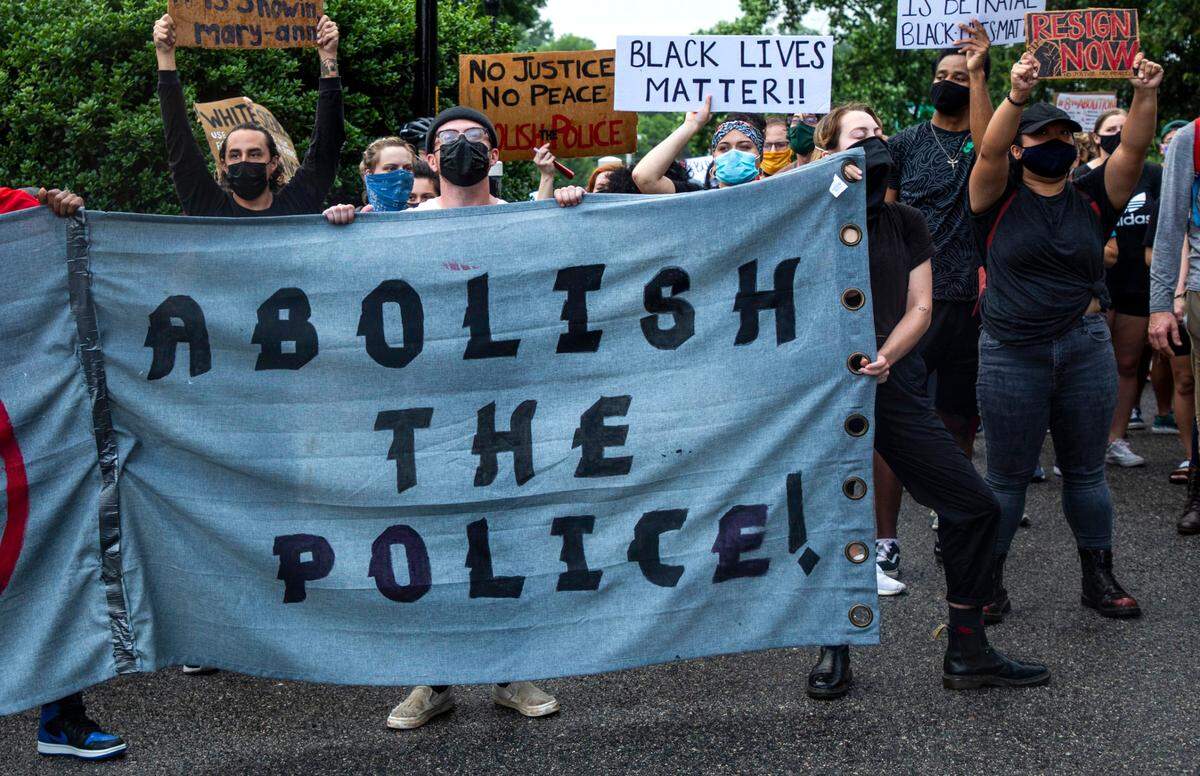
Some critics of co-response units want police removed altogether, arguing money should be invested in alternative programs separate from law enforcement.
“My biggest critique here: We are still sort of falling back on the same kind of sensibilities .... the cops being the end all, be all answer to situations that can be higher risk,” said Danielle Purifoy, a volunteer leader in Durham Beyond Policing, a coalition that has pushed for some of the changes that are now happening in the Bull City.
Chapel Hill’s Crisis Unit
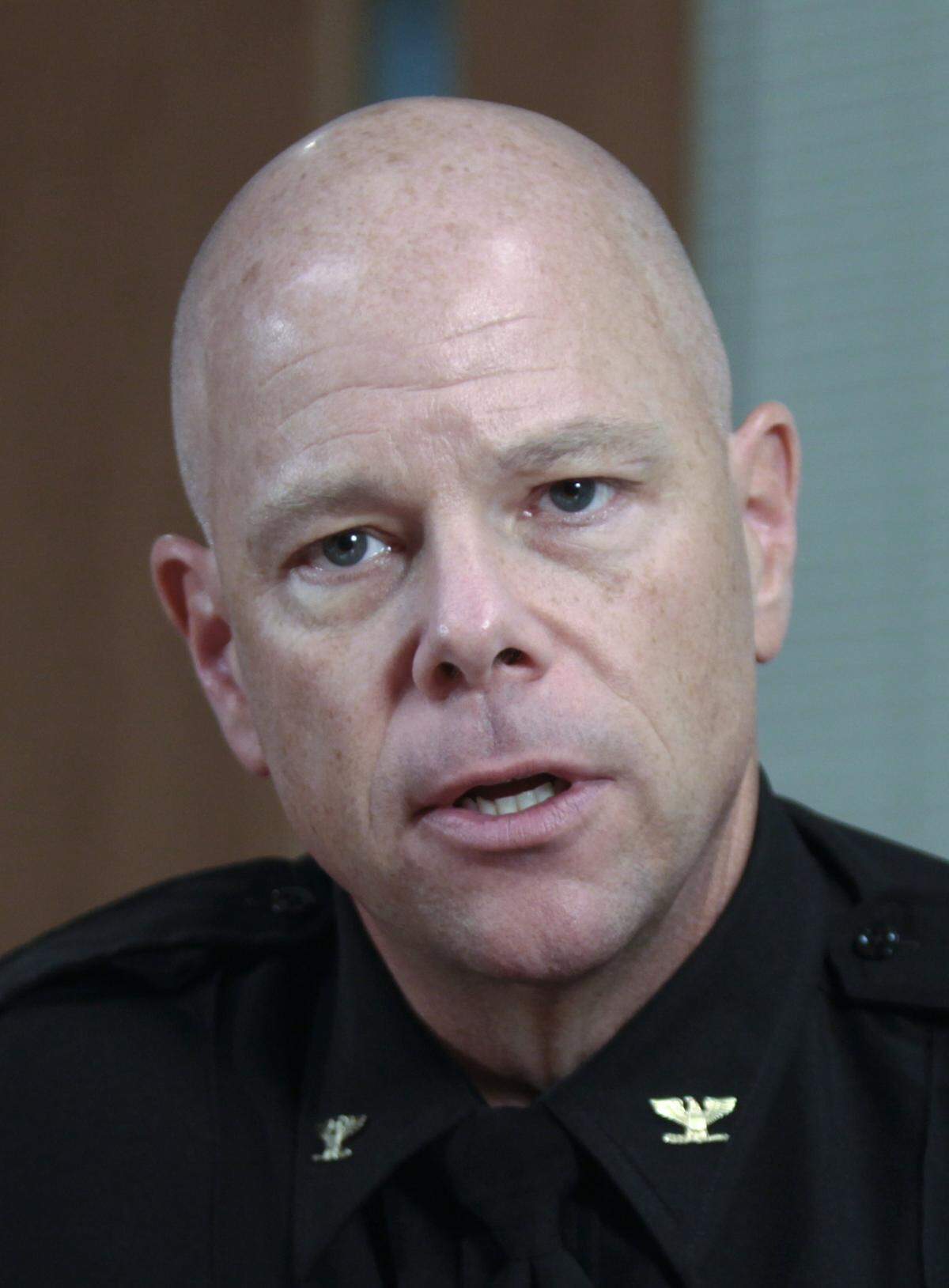
In Chapel Hill, the Crisis Unit has been such an integral part of the police department for so long that Police Chief Chris Blue said it’s hard to think about it as a distinct unit.
“It is truly in our organizational DNA,” Blue said.
The unit stems from a 1972 pilot program started by Howard Lee, the town’s first and only African American mayor. Lee earned his master’s degree from the UNC-Chapel Hill School of Social Work.
“He recognized there was a need for response beyond law enforcement,” said Megan Johnson, supervisor of the Crisis Unit. After a year-long pilot, the town and police department hired one social worker.
Over the years, the unit has grown to five crisis counselors, including a position added this fiscal year. The unit’s budget is about $500,000 of the Police Department’s nearly $16 million budget. In 2021, the Crisis Unit made contact with 2,248 people, according to the town.
“Our unit comes out with us on all kinds of traumatic calls,” Blue said. These include runaways, death notifications and outreach to the homeless population, as well as situations where someone has barricaded himself or taken someone hostage, and where people have been traumatized by a natural disaster or violent crime.
The unit also provides a 24-hour crisis line.
Crisis Unit staff monitor police communications to identify situations they can assist with, and officers sometimes ask them to come or ride with them to a scene.
After Johnson stepped into the position four years ago, she contacted similar programs, which led to the National Co-responder Conference, which in its third year will be held in Chapel Hill in June. It will be sponsored by the International Co-Responder Alliance, which Johnson help found, and Chapel Hill.
Some have questioned whether it is safe to send out mental health professionals, but Blue said the debate on whether to invest in social workers is only a debate if you want to make it one.
“I don’t think any of us have any guarantee of safety when we are working out in our community, but we try to be smart,” he said.
That means not bringing Crisis Unit employees into dangerous situations, like an active bank robbery.
“You might send them to help with the staff after the trauma is over,” he said. “It is not an either-or in my opinion.”
The Chapel Hill unit is saving lives, Blue said. A Chapel Hill police officer hasn’t shot anyone in more than 10 years, he said.
“It is hard to know who they may have saved, but what I know is the pure volume of work they do in our community with folks who are particularly vulnerable leads me to conclude that without them those folks would have succumbed to those vulnerabilities,” Blue said.
“I just see so many cases where our folks are plugged in with the most vulnerable people in our community, and they get connected, oftentimes after many, many tries, many, many visits from our team, many, many referrals, they ultimately find themselves clean, housed, employed, and that is through persistence. That is through rapport building. That is through providing a response that is not simply a police officer with handcuffs with enforcement power,” he said.
“Sometimes that is necessary, but that should not be the only tool that we have in our toolbox,” he said.
Raleigh’s ACORNS team
In June, the Raleigh Police Department launched the ACORNS unit.
ACORNS stands for Addressing Crises through Outreach, Referrals, Networking and Service.
The unit seeks to help people in crisis due to homelessness, mental illness and substance abuse. It isn’t intended to serve as an immediate response to people who are in a mental health crisis, police officials have said.
In August 2020, then Police Chief Cassandra Deck-Brown described the new unit to City Council members, explaining how it was intended to serve the homeless and respond to people in crisis.
“As such, referrals and calls for service will be responded to by a social worker and an officer, premised on a care-, safety-first, enforcement-last approach,” said Deck-Brown who retired in June 2021.
However, in recent discussions officials have said the ACORNS unit primarily serves in a follow up capacity through referrals from officers responding to 911 calls, and not going out on hot calls.
“I think you have to take a step back a little about that because it is always safety first,” said Chief Estella Patterson, who started in August. “We want to make sure the social workers, our officers, the individuals we are dealing with, that there is safe environment for everyone. .... I think the need right now is to ensure that we can do the outreach and we can do the referrals.”
ACORNS unit officers are monitoring calls and going out on calls when there is need for them, she said.
For example, in August police officers initially responded to a man who had barricaded himself in his home with his son.
“Once they arrived on the scene, and they assessed what they had, they said this could be a perfect case for the ACORNS unit to try to de-escalate the situation,” Patterson said.
ACORNS responded that day and returned the next to connect the man with services, Patterson said.
More typical, though, are situations where ACORNS follows up, like after police receive a complaint about a homeless camp.
Regular officers would initially respond, assess the situation and decide whether the ACORNS unit should go out, Patterson said.
When the unit does goes out, it works with people over time “to make sure that they are not in the cycle of continual homelessness,” she said.
So far the team has made more than 200 contacts with community members and those in need of mental health and other services, Patterson said. The unit has received 83 referrals from officers and 25 follow-up referrals in which they assisted with a specific plan and specialty care for someone.
The Raleigh Police Department’s budget is more than $116.5 million. ACORNS doesn’t have a specific budget but falls under the nearly $28 million budget for police administrative services, department spokeswoman Laura Hourigan said.
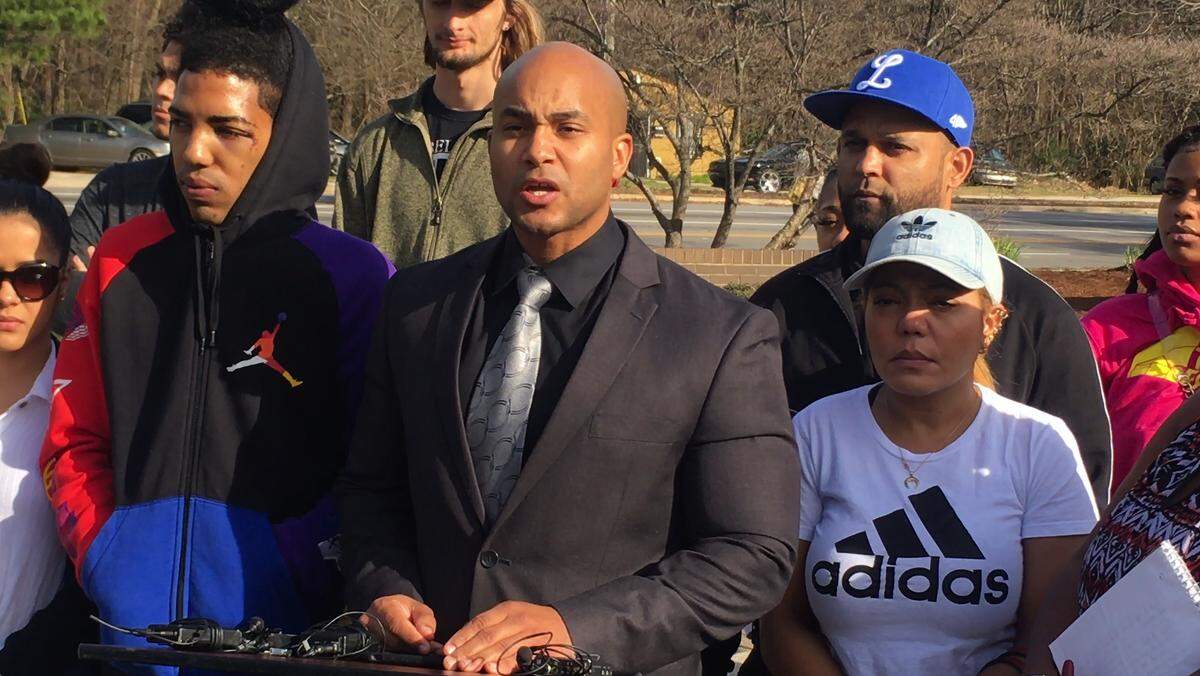
ACORNS also has its detractors.
Kerwin Pittman, a community organizer with Emancipate NC, would prefer a program that consistently sends social workers to crisis scenes, or even better one with no police at all.
“We know and understand when law enforcement shows up and it just exacerbates the situation,” he said. “The more social workers we put on these calls, the less likely we are to have these different incidents” where people are killed or injured during a metal health crisis.”
Pittman said he is skeptical of a follow-up model.
“It seems kind of pointless in all honesty,” he said. “I understand the follow-up portion, but we have services that already do that.”
Patterson said more officers responding to 911 calls have received crisis intervention training and she hopes to expand and adjust the unit in the future.
Durham’s Community Safety Department
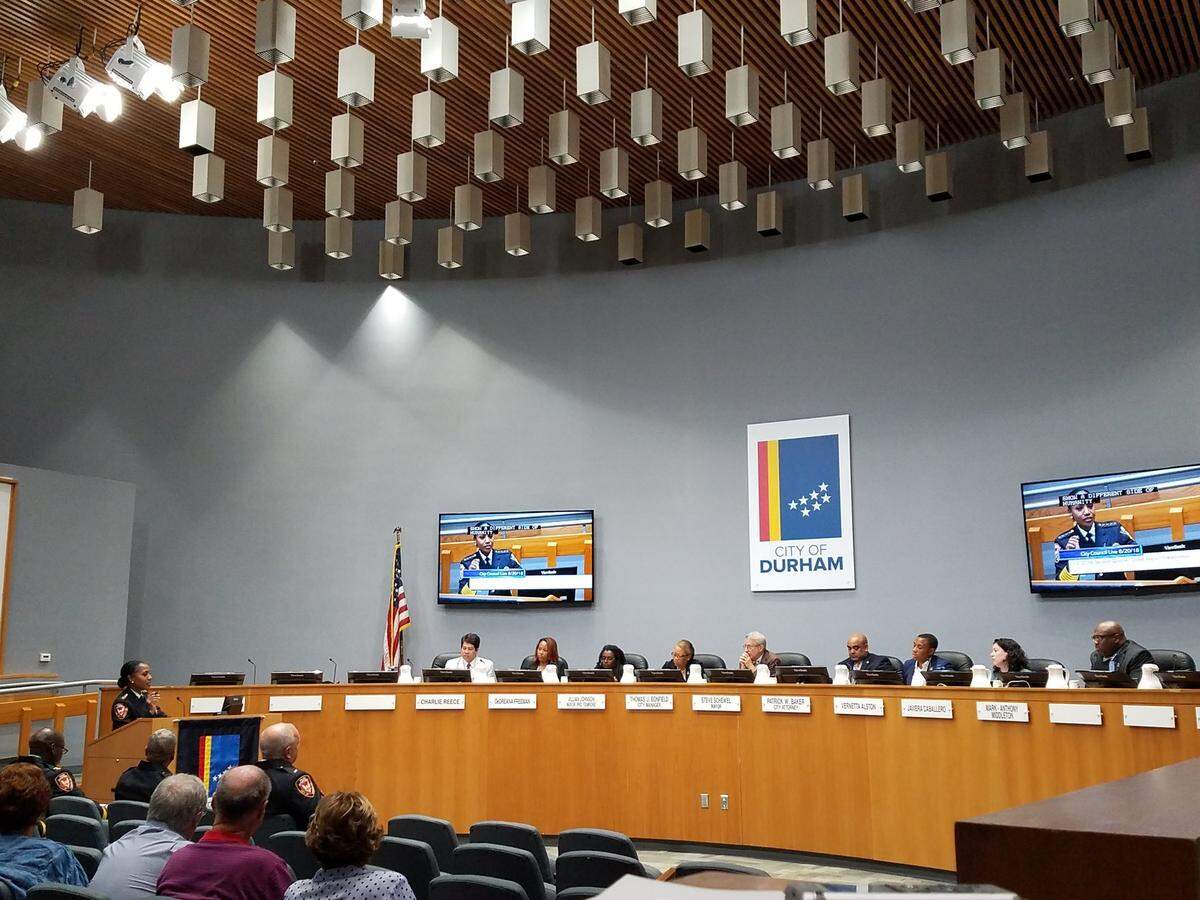
Durham recently created a new Community Safety Department — outside of the police department — that is launching new programs based on the city’s 911 calls and programs in other states.
“The department will engage broadly, and through research and collaboration, to identify, implement, and evaluate new approaches to enhance public safety that may not involve a law enforcement response or the criminal justice system,” its mission states.
Specifically, the department is looking at how to respond to mental health calls, dispatch mobile crisis units when needed and send trained civilians to minor traffic incidents
It has a budget of more than $4.1 million that includes 15 positions, two supported with outside funding. A federal grant will support three additional positions for two years.
The Police Department has a budget of more than $70 million.
In July, the city named Ryan Smith to lead the safety department, which has six employees so far. He previously led the city’s Innovation Team, which took a research-based approach to help restore driver’s licenses and expunge the records of people convicted of traffic charges.
Recently, Smith presented four pilot programs to the City Council the department hopes to launch by summer.
“We view these pilots as interdependent part of a holistic crisis response,” he said. “We recognize that matching needs with the right response mean more than one approach, means more than one model.”
The pilots are:
▪ Crisis Call Diversion: A licensed mental health clinician will work in the 911 call center to triage, assess and respond to behavioral and mental health related calls for non-emergency, non-life threatening calls.
This person could divert calls that don’t require an in-person response, connect people to resources and de-escalate situations before first-responders arrive. The clinician will also follow up to check in after a crisis.
Potential calls could include mental health crises such as suicide threats.
▪ Community Response Team: An unarmed two- or three- person team will provide in-person care for nonviolent behavioral, mental health and quality of life related 911 calls.
The teams will include a licensed clinician, an advanced EMT or a peer support specialist, or both. The teams could be dispatched after a 911 call, a request for assistance from a first-responder or through self initiated services.
Potential calls could include a disturbance, intoxicated person, welfare check or mental health crisis.
▪ Co-response pilot: Licensed clinicians and police officers will jointly respond to high-risk calls involving people with mental and behavioral health needs. The clinicians will help assess and de-escalate situations, along with connecting the person and family with community resources.
Goals of the program include sending an alternative response to a wider range of crisis calls and exploring different calls types to better understand scenarios for unarmed responses in the future.
▪ Care Navigators: A two-person team, a peer support specialist and licensed clinician, will provide follow-up care within 48 hours of an initial encounter with a crisis response team.
The department is also working with the police department on other pilots that include a telephone or civilian response to minor traffic accidents.
Purifoy, with Durham Beyond Policing, said she is enthusiastic about all but one of the pilots.
“I think it is a really good start to shifting this culture in this city away from policing and incarceration, “ said Purifoy, an assistant professor at UNC-Chapel Hill who studies environmental racism.
She has concerns with the co-responder model pilot.
The model supports an armed response when there is danger of violence, she said, although a police presence often escalates such situation.
“I think we need to be build more of a consciousness about what is possible with de-escalation outside of police,” she said. “I think we need to have get a better understanding of what those incidents are like, what the risks are and what other tools we have to deal with it.”
This story was originally published February 5, 2022 at 8:00 AM.