Raleigh has a new gun violence problem. Will it spend $2 million to fight it?
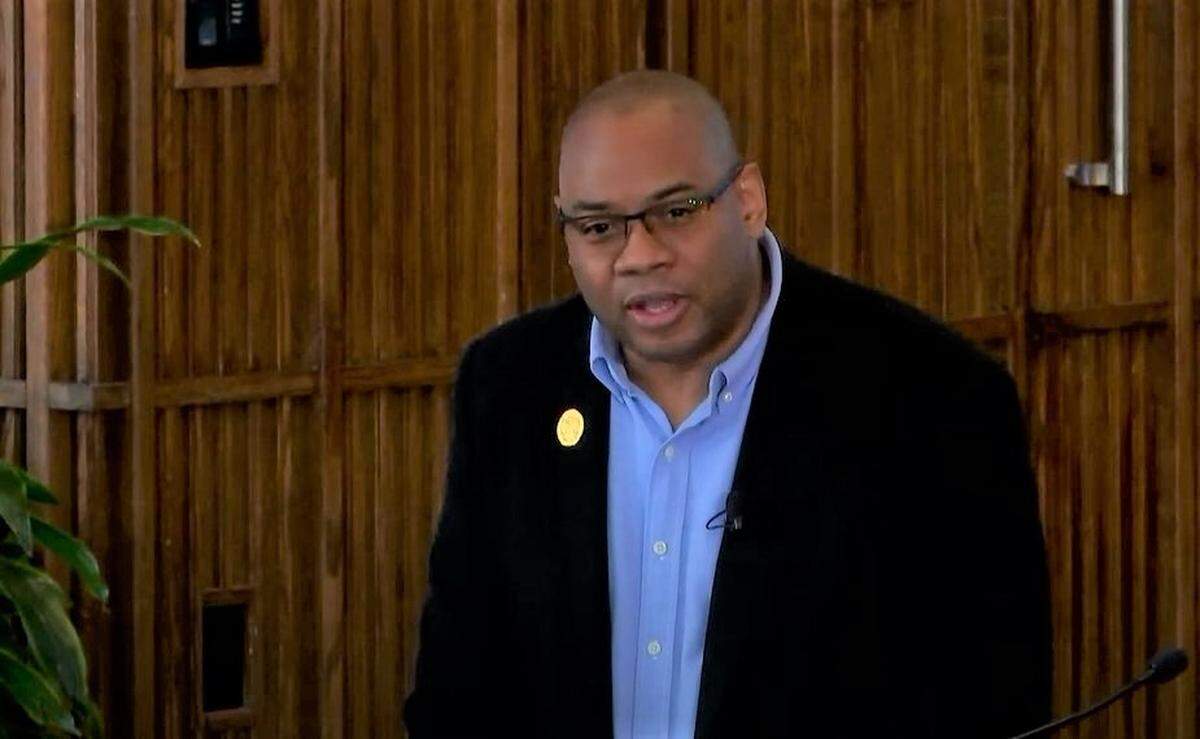
Gerald Givens Jr. has a lot to back up his asking Raleigh for a big investment in fighting gun violence.
By the time he was 15, he had been robbed at gunpoint growing up in Detroit, where his grandfather was shot and killed.
Shootings also took the lives of his younger brother, three cousins and an uncle, said Givens, now the president of the Raleigh-Apex chapter of the NAACP.
“My brother was 22 years old — for 16 days,” he told the Raleigh City Council last week. “Nothing in the universe could have prepared me for the pain that I felt when walking away from my brother’s casket.”
“There is nothing more important to me than public safety, with an emphasis on gun violence,” he said.
Community support helped him heal and reject the influences that would have led him to gun-related crime as a Black youth, he said.
Now with Raleigh facing the city’s highest levels of shootings and gun-related crimes seen in recent years, Givens asked the city to back a partnership between the NAACP and Raleigh Police Department.
Police Chief Estella Patterson helped pitch the proposed Community Violence Intervention (CVI) to the council during its annual retreat Saturday.
The pitch includes $2 million to fund the program using federal American Rescue Plan Act funds for economic relief, or 2.7% of the funding allotted to the city.
A total of $1.3 million annually would fund the program with another $700,000 to create an Office of Violence Prevention.
Givens called it a “bare minimum investment” during the presentation.
Raleigh’s spike in gun crimes
Raleigh saw a significant rise in gun violence last year.
In 2021, there were 499 aggravated assaults involving guns, Patterson said. That was a 35% increase from 2020 and a 74% increase from 2019.
Twenty-eight people were fatally shot, the majority of the city’s 33 reported homicides last year, Patterson said. Another 131 people were shot and survived, compared to 105 in 2020 and 99 in 2019.
“It’s not going to be anything new when I say that violent crime is public health crisis,” Patterson said. “I think we all realize that it’s going to take a lot of partners in order to reduce that. It’s not just a police problem.”
Patterson first spoke about a violence prevention program shortly after starting her role at the police department last August.
Raleigh’s proposed gun violence program
In the presentation, Givens laid out the proposed program’s four parts:
▪ establishing community and hospital-based programs that intervene in interpersonal and group conflicts to negotiate ceasefires and shift “neighborhood cultural norms”
▪ providing at-risk individuals and survivors of gun violence with cognitive behavioral therapy
▪ providing at risk-youth and gun violence survivors with job programs, housing and services like trauma therapy
▪ providing holistic programs focused on the “ecology of communities most impacted by gun violence”
The program calls for hospital-based violence intervention programs, which assist gun violence victims in the aftermath of trauma to prevent retaliation and provide social services, counseling and relocation.
Givens cited the success of similar CVI programs in Charlotte, Greensboro, High Point, Winston-Salem and New Hanover County.
Raleigh’s proposed program has the support of a coalition that includes the Community Justice Action Fund, North Carolinians Against Gun Violence, Moms Demand Action and the national NAACP.
Givens said he wants the city of Raleigh to be its newest partner.
He praised Durham’s efforts to fight gun violence in that city, such as the Bull City United violence interrupter program that received nearly $1 million from the city of Durham to expand this year from two to six census tracts.
“When properly funded and scaled these programs have been shown, in some cities, to reduce gun violence by as much as 30%,” he said.
Similarly sized cities in other states have approved millions in their budgets to fund efforts like these, such as Louisville, Baton Rouge, Birmingham and Richmond, he said.
Mayor Mary-Ann Baldwin joined council member Corey Branch in speaking in support of the proposal.
“We were all talking about priorities yesterday. One of my top priorities reducing gun violence,” she said. “This is such a critical issue. We have to do something.“
The city will consider the exact amount of funding for the program in creating the budget for the 2022-23 fiscal year that begins July 1.
This story was originally published March 11, 2022 at 5:30 AM.