6 changes Wake County officials hope will reduce bias and the number of people in jail
In traveling from courthouse to courthouse, Judge Vince Rozier says he has learned that “justice is jurisdiction.”
“Within any workplace, and within any courthouses I travel to, there is a culture,” the Wake County Superior Court judge explained. “And sometimes it becomes a thing that people are more accustomed to than looking back to what the law requires.”
To help fight the bias that courthouse culture and other factors might influence, Wake County officials are making six changes they hope will reduce the number of people in jail and help people on pretrial release be more successful.
The changes standardize and sharpen the tools that judges and magistrates use when deciding on bail. They also seek to catch cases that can slip through the cracks, keeping people in jail on low bail bonds they still can’t pay, risking their job and housing, court officials said.
“What we have done, I think in my opinion, requires us to try to slow down and take the time to look at each individual’s circumstance in order to apply the law,” Rozier said.
For more than a year, about two dozen court officials and others have been meeting on a stated mission to build a pretrial system in Wake County “that promotes fairness and equity by balancing community safety, concern for victims and rights and needs of those charged with crimes.”
District Attorney Lorrin Freeman led the committee, which included Rozier, the chief magistrate, the chair of the county commissioners, the sheriff and the chief public defender.
Senior Resident Superior Court Judge Paul Ridgeway and Chief District Court Judge Ned Mangum signed an order adopting the recommendations and calling for several to begin April 1.
Rozier said more can be done but called the new steps a “substantial change.”
“I think there will be a greater certainty that bias isn’t being utilized for the determination of whether someone will go to jail or not,” he said.
Not everyone agrees, however, that the changes will bring substantive results.
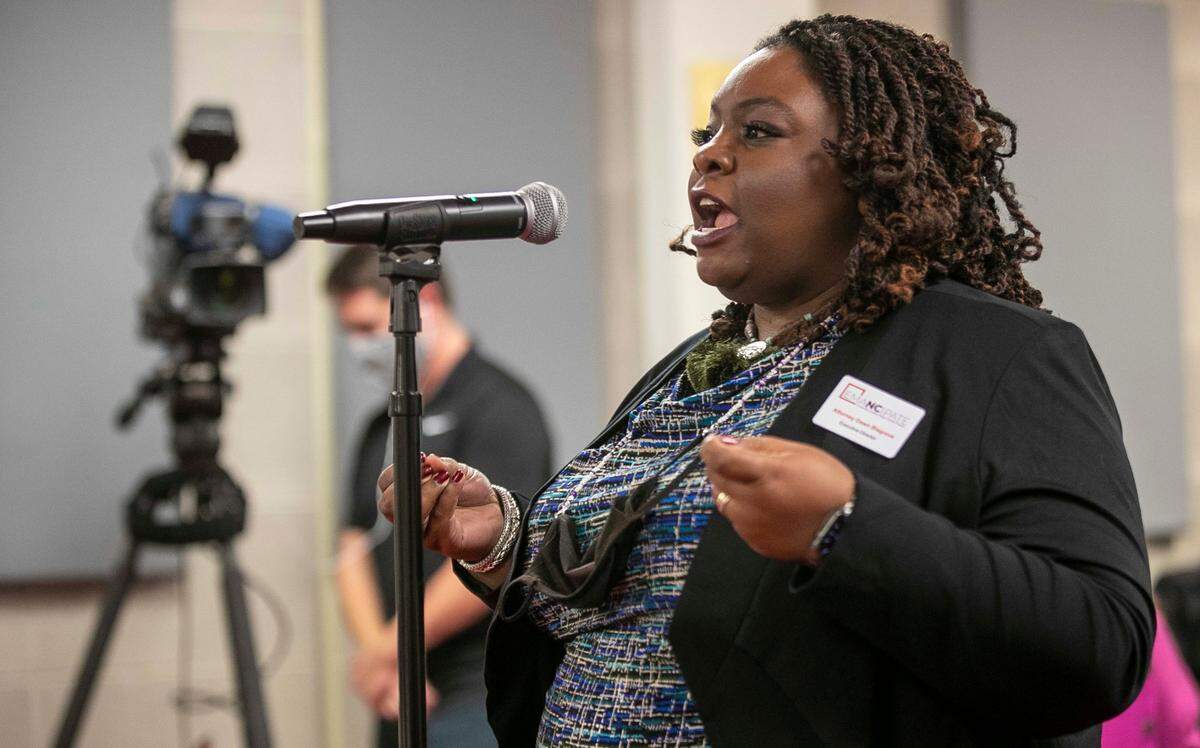
Dawn Blagrove, executive director of Emancipate NC, called the changes “smoke and mirrors.” They sound good to the general public, she said, but those involved in the court system know better.
“We know they are changes without changes,” she said.
Blagrove said recommending no secured bond for all misdemeanors would more effectively keep people charged with crimes linked with homelessness and poverty out of jail. A secured bail bond, unlike a promise to appear in court, requires a person to post money or property in order to stay out of jail before a court date.
Here are the committee’s recommendations:
▪ Standardize the initial appearance process before magistrates.
When someone is arrested, they are fingerprinted and photographed and taken before a magistrate for an initial appearance.
Wake magistrates follow North Carolina law and the Wake County bond policy to determine whether a someone is eligible for release and under what conditions.
In some circumstances, such as domestic violence cases, the law limits magistrates. With other charges, such as misdemeanor larceny, they have a wide discretion, said Chief Magistrate Chris Graves.
In all but potential death penalty cases, state law says judicial officials should not use cash bail unless they determine the person likely won’t appear in court, or could pose a danger or destroy evidence.
Freeman said some people felt that Wake County officials were defaulting to a secured bond practice.
The recommended change, which is already being followed, includes all magistrates using an initial appearance card. The card has eight boxes that guide them through questions such as whether pretrial release is an option and if a secured bond is needed.
“It puts a speed bump in place, that if they are going to set a secured bond, they have got to put the reasons why they are going to set a secured bond,” Freeman said.
If a secured bond is required, judicial officials have to write out their justification.
▪ Implement a public safety assessment at the first court appearance
When Wake County started its pretrial program in the 1980s, official started using a risk assessment tool that considered socioeconomic factors and an interview. It helped identify people who might be eligible for a pretrial release program, but it wasn’t used on everyone that came through, Freeman said.
This new Public Safety Assessment uses criminal court history to determine risk, said Jennifer Gibbs, executive director of Criminal Justice Alternatives, a nonprofit that Wake County pays to provide pretrial release services, electronic monitoring, teen court and some juvenile justice programs.
The assessment uses nine factors, such as age, past convictions and past failures to appear in court. The weighted scores can help judges make pretrial decisions.
For now, the tool is being used for those making first appearances on misdemeanor and low-level felony charges, Freeman said, but they hope “some day, to back it up and administer it [to everyone] before they get to the magistrate.”
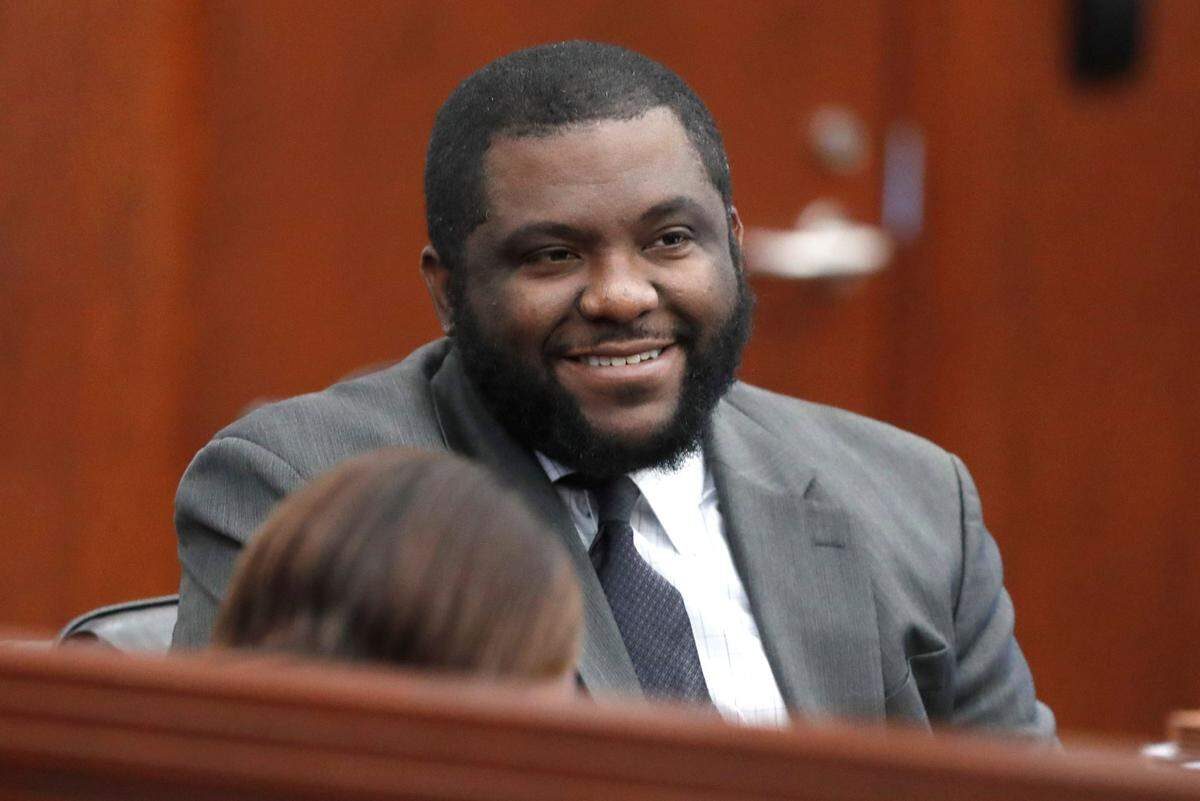
Deonte’ Thomas, Wake’s chief public defender, said he appreciates that the new assessment no longer relies on questions like how long a person has been at their address and other factors that penalize people for being poor.
▪ Reorganize pretrial services
The new assessment is also going to be key in the next change in Wake County’s pretrial process.
The previous pretrial supervision process included one supervision level in which clients checked in with the agency once a month, Gibbs said.
Officials provided court date reminders and connected clients to resources like transportation, she said.
Under the new system, the clients’ ranking on the assessment helps determine whether they would be in a lower or higher risk category.
The change lets the office focus on those who need the most help meeting their pretrial release conditions, Gibbs said.
▪ Provide public defender representation at all first appearance hearings.
State law doesn’t consider the initial appearance before a magistrate and first appearance before a judge a critical part of the process, so defendants aren’t entitled to court-appointed counsel at those stages. Starting this week, however, Wake County public defenders will staff first appearance hearings.
At first appearances, public defenders can look at cases, evaluate the circumstances and if they can’t get an affordable secured bond for lower level charges, public defenders can work to get a quicker court date, putting defendants on an ankle monitor and other actions that could help reduce time in jail, Thomas said.
If public defenders detect a mental health or drug concern, they can get them analyzed early in the process, he said.
They can also remind judges that sometimes a $500 bond is like a $1 million bond for some individuals, Thomas said.
“Our main goal is just to make sure that no one can slip through the cracks,” he said.
▪ Adjust the secured bond schedule
The secured bond schedule guides magistrates and judges when considering a cash bond for pretrial release.
Some of the changes to the bond schedule include:
▪ Reducing a class H trafficking from a suggested range of $50,000-$100,000 to $25,000-$100,000.
▪ Reducing class 1, 2 and 3 misdemeanors from a suggested range of $5,000-$10,000, to up to $10,000.
▪ Reducing class I felony charges from a range of $10,000-$20,000 to up to $10,000.
The tweaks, Freeman said, will let judicial officials set lower bail bonds in some cases.
Rozier said the misdemeanor and class I felony changes are significant because they take away the minimums and cap the amount at $10,000.
“Now the perception is the starting point has a ceiling,” Rozier said.
▪ Realtime dashboard
The Wake County Sheriff’s Office is developing a process to identify people being held in jail too long or for longer than the sentence they would receive if convicted of their alleged crime.
The report will be updated daily and allow users to search by charge, bond amount and days in custody, according to the report.
Freeman said gathering this data has been hard and that she has been pushing for it for years.
Blagrove said the database should be public to help nonprofit organizations pay the bonds of people in need.
“It would be such a great tool for folks who are trying to fight the system,” she said. “Why in the world would we keep it private?”
This story was originally published April 7, 2022 at 3:04 PM.