New automated license plate readers help police in Garner and Raleigh search for cars
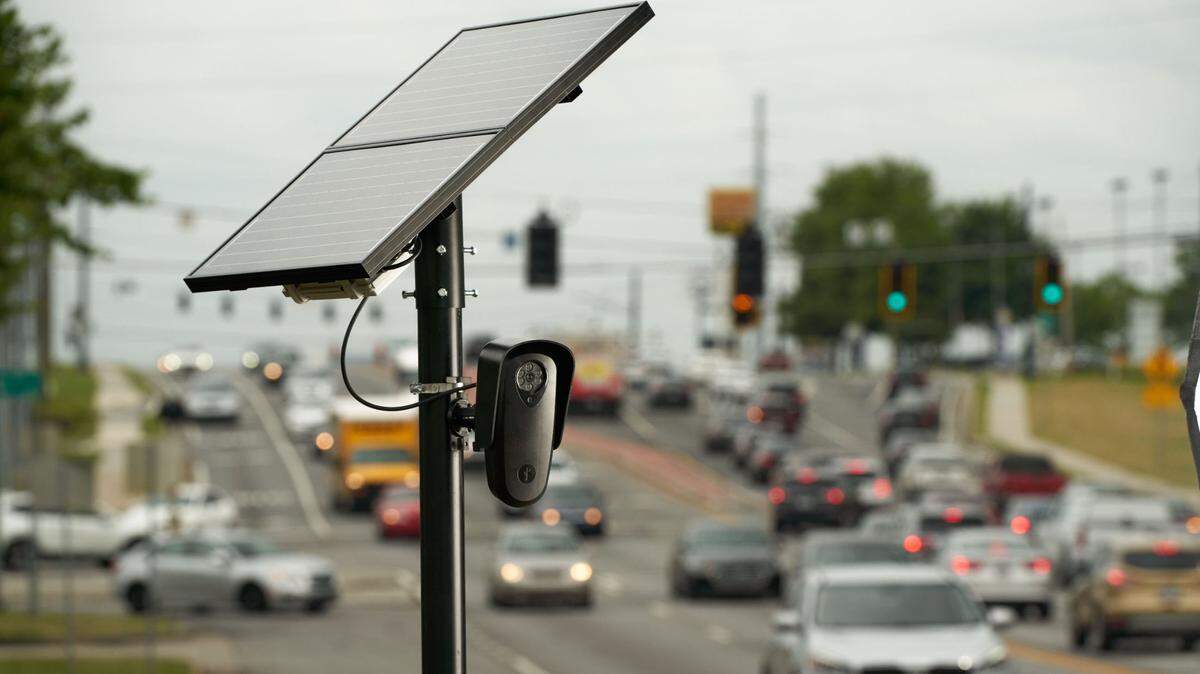
Police in Raleigh and Garner have a new surveillance tool that they say is helping them find stolen vehicles and criminal suspects by automatically reading license plates on thousands of cars and trucks each day.
The departments have contracted with a private company, Flock Safety, to set up cameras along busy streets that can read rear license plates on passing cars and trucks. The cameras are connected to state and national crime databases and will alert police when a vehicle they’re looking for passes by.
Alerts from 15 Flock Safety cameras in Garner helped town police recover 43 stolen vehicles and file 122 criminal charges last year, said Capt. Christopher Adams. Within 24 hours of the first cameras being turned on in February 2022, police got an alert for a vehicle thought to be connected to a string of car break-ins at a park, which led to an arrest.
Garner police have also used the system proactively, Adams said, by looking for vehicles officers think may have passed by a particular camera. In one instance, the victim of a burglary was able to describe the suspect’s car, and officers found it nearby using Flock.
In Raleigh, police have arrested 41 people on outstanding warrants after Flock alerts. The department, which has used similar license plate readers mounted on patrol cars in recent years, began receiving alerts from 25 Flock cameras around the city last June.
Raleigh Police Chief Estella Patterson told City Council members in November that the cameras are a great tool.
“We have expanded our use of LPRs, license plate readers, which has proven successful for us,” Patterson said. “In fact, just last week we were able to identify a vehicle used in a homicide because of our Flock cameras.”
Both departments declined to disclose precisely where the cameras are mounted, but they are easy to recognize once you’ve seen one. The black cameras, about the shape and size of a small shoe, are mounted on poles, just below a small solar panel that provides all the power it needs.
More than a billion images a month nationwide
Founded in 2017, Flock says more than 2,000 law enforcement agencies are now using its cameras, capturing more than 1 billion images a month and producing 120 alerts an hour. The cameras are not used to issue speeding tickets or catch red-light runners, but they can look for vehicles tied to missing persons or Amber alerts.
The company says it doesn’t photograph a vehicle’s occupants and doesn’t use face-recognition software. In addition to the license plate, the camera records the type, make and color of a vehicle and other unique features such as bumper stickers, decals and roof racks.
The collection of so much data using automatic license plate recognition or ALPR cameras raises privacy concerns for some. In a report about Flock Safety last spring, the American Civil Liberties Union warned about the potential for mistakes and misuse of the data.
“In our past work on ALPRs, we have written that license plate readers would pose few civil liberties risks if they only checked plates against legitimate hot lists and these hot lists were implemented soundly,” ACLU policy analyst Jay Stanley wrote. “But we also noted that a proliferation of cameras and widespread sharing allow for the creation of intrusive records of our comings and goings, create chilling effects, and open the door to abusive tracking.”
Flock says it deletes the data it collects after 30 days, though Stanley says no laws compel the company to do that. And even 30 days is too long, he wrote.
“Given the scale of this system, 30 days is a long enough window that it poses real privacy risks, especially if Flock cameras continue to grow,” he wrote. “People can engage in a lot of perfectly legal yet private behavior within 30 days — movements that would reveal things about their political, financial, sexual, religious, or medical lives that nobody in the police or in a company like Flock has a right to track.”
Under North Carolina state law, data collected by ALPR systems for law enforcement agencies are not public records and can be used only “for a legitimate law enforcement or public safety purpose.” The data also can’t be sold.
Private groups use license plate readers, too
Police departments have their own policies on the use of information from the cameras. In Garner, for example, officers must run their own check to confirm that an alerted vehicle is indeed still wanted.
“The officer will then establish reasonable suspicion or probable cause before conducting stops, making detentions, or initiating arrests,” the policy says. “Enforcement actions should not be taken solely on the ALPR alert.”
Flock Safety also markets its camera systems to homeowners associations and neighborhood groups as an alternative to security guards. When a camera spots a license plate from a crime database, the company says, “we will send a real-time alert to local police, so you don’t need to call 911.”
Adams said Garner police encourage property owners, neighborhoods and shopping centers to get their own ALPR cameras to improve security. Their presence can be a deterrent, he said.
“One thing we have seen is oftentimes criminals become aware that there are ALPR cameras located in certain areas and start to avoid those areas when conducting criminal activity,” he wrote.