No explosives found? Bomb threats are still serious crimes in North Carolina
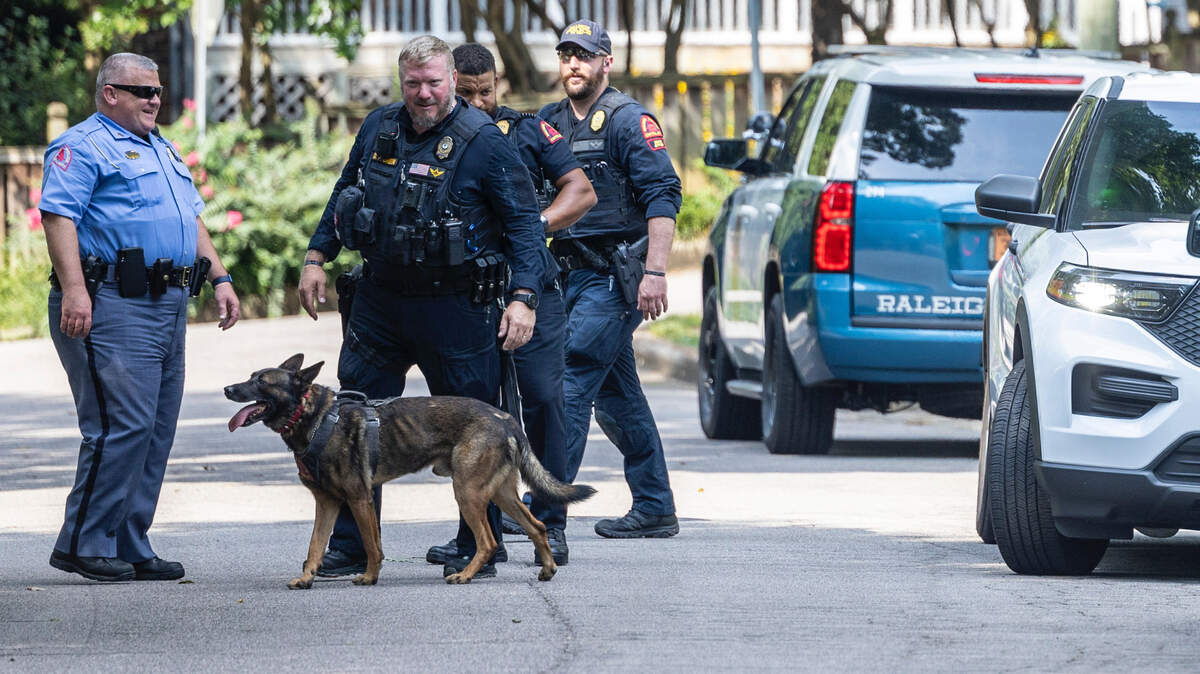
Last month, police wearing tactical vests fanned out in a Raleigh neighborhood with a bomb-sniffing dog to search near the home of a man accused of burning a Trump sign.
They were investigating threats that explosives had been placed there. City officials and several media outlets, including The News & Observer, received emails saying the explosives were going to detonate.
James Dennis White Jr. had been seen on camera setting a “Trump won” sign on fire at the home of a local Republican activist, and subsequently was charged with two misdemeanors. Many media outlets reported the story.
A Raleigh police spokesperson declined to talk specifics in that case, but made it clear that such bomb threats are a crime that police take very seriously — even when no explosives are found. Not easy-to-solve crimes, but crimes nonetheless.
If you receive a similar threat, you should call 911, said Detective Christopher Gay, a former commander for the Hazardous Devices Unit.
“Take it seriously because you never know,” he said.
Police take threats seriously
Following such reports, Raleigh police deploy bomb technicians and apprentices, along with possibly bomb sniffing dogs, robots, X-ray devices or other tools needed to determine if actual explosives are present, Gay said.
Other police departments take similar actions, but sometimes they may have to reach out to better equipped agencies for assistance or resources.
Hendersonville Police Department might seek help from other law enforcement agencies that have bomb-sniffing dogs or other tools, Henderson Police Chief Blair Myhand said.
“We don’t disregard the validity of them until we can prove otherwise,” said Myhand, who is also president of the North Carolina Association of Chiefs of Police.
“None of us want to have ignored a threat that turns out to be legitimate and people get injured or killed because of it,” Myhand said.
Meanwhile, other officers, such as ones in Raleigh’s Intelligence Unit, start searching for the individuals responsible, Gay said.
That’s not an easy task as email addresses and phone numbers can be disguised, he said. Sometimes the messages come from out of the state or out of the country, he said.
No strangers to bomb threats
So far this year, the Raleigh Police Department has responded to 10 bomb threats, compared to 13 at this time last year, according to numbers provided by Gay. Last year, there were a total of 16 incidents.
Raleigh police typically don’t pull in other agencies to investigate such threats, unless they learn the incident is connected to threats made outside the state, Gay said. In those cases, they might work with the FBI.
Regardless of whether explosives are found or not, the North Carolina General Assembly has adopted laws over the years that seek to hold people responsible ccountable with felony charges, said Wake County District Attorney Lorrin Freeman.
The laws recognize that there is still damage when somebody makes a false threat, Freeman said.
Some possible charges include making a false threat concerning a nuclear, biological, or chemical weapon of mass destruction, which is a Class D felony.
Under that law, the court could order a convicted party to pay restitution to cover the costs and consequential damages from the disruption.
Making a false report regarding a disruptive device is a class H felony in which a conviction could also include restitution.
Related misdemeanor charges might include communicating threats, stalking and making a false report to law enforcement.
Communicating threats of mass violence on school property and making a false report of mass violence on educational property are also Class H felonies.
Virginia Bridges covers criminal justice in the Triangle and across North Carolina for The News & Observer. Her work is produced with financial support from the nonprofit The Just Trust. The N&O maintains full editorial control of its journalism.
This story was originally published August 30, 2023 at 9:00 AM.