Former NC Central University president and chancellor dies at age 102
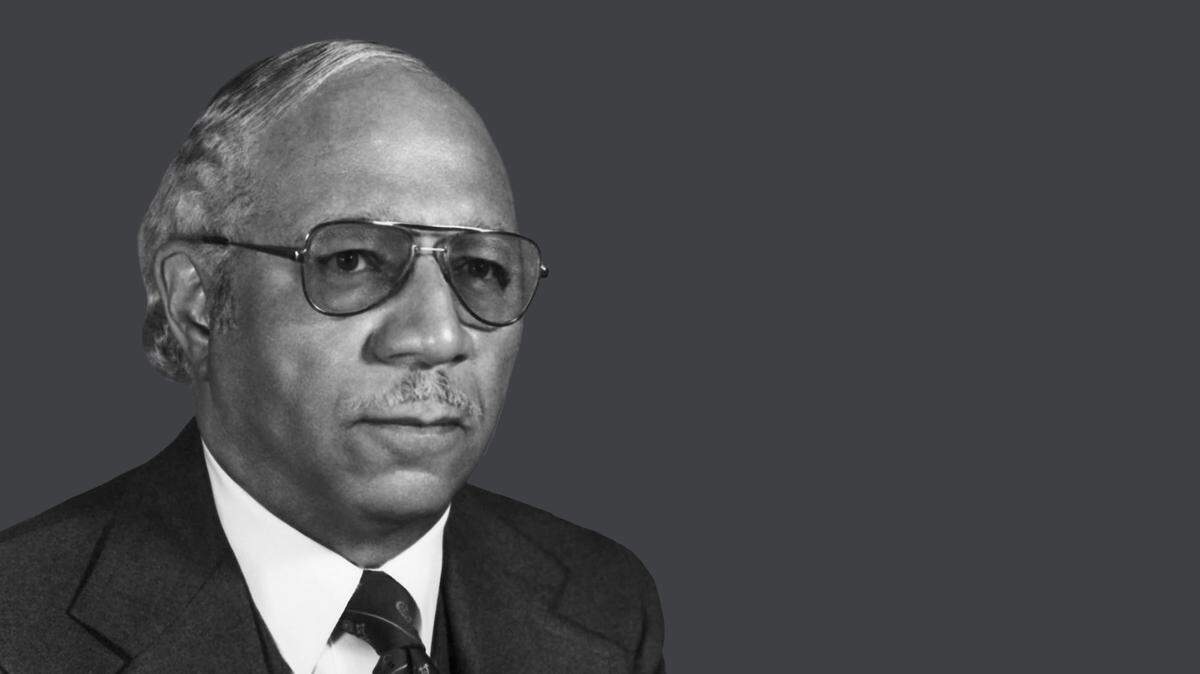
Former president and the first chancellor of N.C. Central University, Albert Nathaniel Whiting, has died at age 102. An academic and U.S. Army veteran who led the historically black university through significant growth, died on June 4 in Maryland. .
Whiting came to Durham when he was elected as the fourth president of North Carolina College at Durham in 1966. He served the university for more than 15 years as president and chancellor and was named chancellor emeritus when he retired in 1983.
NCCU’s growth under Whiting
The college became N.C. Central University under Whiting’s leadership and he was known as a “builder” of the institution, according to the university.
NCCU added its School of Business in 1972, the same year it became part of the University of North Carolina System and presidents became chancellors.
Enrollment increased from about 3,000 students to more than 5,000 and the university added several new academic programs, including criminal justice, public administration, elementary education, jazz and music while Whiting was at the helm.
Twelve new buildings were also added to campus during his tenure, including a four-building physical education complex, Eagleson Hall, the Alfonso Elder Student Union and the annex to James E. Shepard Memorial Library. The university also built a new chancellor’s residence in Emorywoods in 1974 under his leadership.
Whiting was a successful fundraiser for the university and helped establish the NCCU Foundation, Inc. and the Office of Development and Public Relations, which became the Office of Institutional Advancement. He was the first NCCU leader to start a major fundraising campaign to create a university endowment, according to the university. During his time at NCCU, the operating budget went from $5.5 million to $34 million.
The university applauded his efforts to advocate for professional development for faculty, particularly through collaborative programs with the University of Michigan and University of Wisconsin to help N.C. Central faculty earn doctorate degrees.
His legacy is also marked by some controversy involving the student newspaper and a lawsuit from two student leaders. Whiting cut off funding to the Campus Echo, which came from student fees, after the student newspaper published an article that criticized the increasing number of white and non-black students at NCCU. Then editor-in-chief Johnnie Edward Joyner and Harvey Lee White, president of the Student Government Association, sued Whiting, and the court’s ruling established protections for press on college campuses.
Decades later in 2010, Whiting spoke about “militancy and student protests” that he considered challenges during his role as chancellor, according to the university.
“I believed in student rights in the governance of the school,” Whiting said, “so I tried to accommodate as much as possible without damaging the university.”
Whiting was also actively involved in the Durham community while at N.C. Central.
In 1969, he became one of only two African Americans to become members of the Durham Rotary Club, according to the university. Whiting was a member of Alpha Phi Alpha Fraternity Inc. and Sigma Pi Phi Fraternity Inc. He founded the first member Boule in North Carolina and is considered “The Father of the Member Boules” in North Carolina, according to NCCU. He was also a communicant at St. Titus’ Episcopal Church in Durham.
Whiting received an honorary degree of Doctor of Humane Letters from NCCU just before retiring.
Before and after NC Central
Whiting was born in Navesink, New Jersey and earned his undergraduate degree from Amherst College, a master’s degree from Fisk University and his Ph.D. in sociology from American University.
He was also a soldier during World War II and First Lieutenant, Company Commander in the U.S. Army, from 1943 to 1946.
Before coming to Durham, Whiting was a professor of sociology at Bennett College and Atlanta University, which is now Clark Atlanta University. He also served as dean of the faculty at Morris Brown College and at Morgan State College, which is now Morgan State University.
Whiting was married to the late Lottie Luck Whiting, who died in 2004, for more than 50 years. They had two daughters Dr. Brooke Whiting and Dr. Lila Ammons.
When Whiting retired from NCCU, he moved to Columbia, Md., and served on the Maryland Higher Education Commission and University of Maryland’s Board of Regents University of Maryland’s Board of Regents..
Despite moving away, Whiting stayed connected to NCCU for years. In 1988, he was the Founder’s Day speaker and the next year The Albert N. Whiting Criminal Justice Building was dedicated in his honor.
At NCCU’s Centennial celebration in 2010, Whiting was presented with the James E. Shepard Medallion and his own 100th birthday was celebrated by the university, faculty and alumni in 2017.
In lieu of flowers, the family is asking for contributions to the NCCU Foundation, Inc., to support the Albert N. Whiting Endowment.
This story was originally published June 9, 2020 at 6:43 PM.