Have questions about Wake’s Plan B Transition and Virtual Academy? Here are answers.
This Q&A originally published on July 15 and was updated on July 21, 2020.
When Gov. Roy Cooper announced the plan on July 15 for North Carolina public schools to reopen for the 2020 fall semester, he also called on each individual school district in the state to construct their own plan for exactly how to meet these requirements.
All North Carolina schools closed in mid-March to help slow the spread of the COVID-19.
The Wake County Public School System initially approved an in-person plan — called Plan B — for a rotating schedule to help with social distancing, and also opened registration for Wake Virtual Academy.
But on July 21, the school board voted that all students will start the fall semester in remote learning, potentially moving to a mix of remote and in-person learning if public health conditions improve. That new model is called Plan B Transition.
Here are answers to your questions about the upcoming Wake County school year. Have other questions about the reopening of Wake County schools? Send them to bcain@newsobserver.com or khui@newsobserver.com.
When does the Wake County school year start?
The first day of classes will be Aug. 17 for traditional and year-round students. The board moved the first day for modified-calendar schools back by 10 days to Aug. 13.
What is the current plan to reopen schools in Wake County?
Wake County voted on July 21 that all students start the school year in remote learning. This is called Plan B Transition. If public health conditions improve, Plan B can resume. In that case, Wake County will divide students into three groups, and those groups will have a rotating schedule of one week of in-person classes followed by two weeks of learning from home.
Why did Wake school board members change their minds about how to reopen?
Superintendent Cathy Moore said delaying face-to-face classes will give more time for COVID-19 trends to improve, to allow schools to get more personal protective equipment and to make sure staff are ready to carry out new state-mandated health procedures.
What are other counties in NC doing to reopen schools?
Wake joins at least 22 other North Carolina school districts who have decided it’s not safe yet for students to return for face-to-face classes. This group includes districts such as Chatham County, Chapel Hill-Carrboro, Charlotte-Mecklenburg, Durham and Orange County.
Is there a dedicated remote learning option in Wake County?
Students in Wake County had the option of enrolling in the Wake Virtual Academy. As of the July 20 registration deadline, 49% of Wake students had registered for the Wake Virtual Academy classes for fall.
What’s the difference between Wake Virtual Academy and remote learning through Plan B Transition?
Academically they’re going to be the same. The primary difference is that Virtual Academy students will stay on that schedule for the entire semester. Plan B Transition students could switch to Plan B or Plan A or to Plan C at any time, depending on health numbers.
Are all students eligible to attend Wake Virtual Academy?
The Virtual Academy is open to all K-12 students in Wake County. Students enrolled through the Virtual Academy will still be enrolled at their current school as assigned by the WCPSS.
If students return to classrooms, will in-person students and Virtual Academy students have the same teachers?
Whenever possible, students will be assigned teachers from their current school. But in some cases, students may be assigned to different schools within a region to form classes, according to WCPSS.
Will remote-learning students learn the same as in-school students?
WCPSS says that Virtual Academy students will have the same core instructional program, and that grading structures will be consistent across the board.
For magnet school students, programs will be implemented as much as possible.
But, WCPSS notes that it may not be feasible to offer all specials or elective programs in a fully online environment. Virtual Academy students may need to adjust specials and elective schedule choices, according to WCPSS.
If students return to classrooms, will students at home have the same schedule as students who attend in person?
WCPSS says that students will “experience a daily school schedule that includes the same components of the school day as their grade level peers participating in face-to-face or blended instruction to the degree feasible.”
But students will also have a little more freedom to work at their own pace through the Virtual Academy.
There will be some times when students will need to be in attendance during specific hours of the day, according to WCPSS. There will be at least 2.5 hours of live instruction per day, and approximately 5-6 hours of instruction or activities total per day (amounts could increase based on teacher planning).
Instruction will be a mix of live and recorded sessions, and will happen Monday through Friday.
That sounds like a lot of screen time. Is that OK?
WCPSS says the amount of time a Virtual Academy student will spend in front of a device will depend on the age of the student and which courses they are taking. There will be time for independent learning activities and breaks, including lunch and time for physical and other activities, built into the schedule.
On which school calendar will the Virtual Academy operate?
▪ If your assigned school is on a traditional school calendar, your Virtual Academy program will operate on the same calendar.
▪ If your assigned school is year-round, your Virtual Academy program will be on the Single Track 4 calendar.
▪ If your assigned school is on a modified calendar, your Virtual Academy program will be on the modified calendar.
Do we need to own a laptop to attend Wake Virtual Academy?
On the Virtual Academy application form, parents can indicate whether their students need devices and internet access. WCPSS says they will work with families to provide access.
If a student starts out in remote learning, can they switch back to attending in person?
Virtual Academy students are still technically enrolled at their current school. If a student enrolls in Virtual Academy for the entire year (Fall and Spring semesters) and they decide mid-semester that they’d like to return to classroom instruction, they can request to return at the start of the next semester. BUT there is no guarantee that the request can be granted, since the decision will be based on the availability of space at their currently assigned school (remember, the in-school environment will be designed around having limited capacity for social distancing).
But there is no option to request a transfer back to the classroom mid-semester. If you enroll for Fall, you must complete the Fall semester through the Virtual Academy, according to WCPSS.
If a student starts out attending school in person, can they switch to Virtual Academy?
WCPSS says that decision will be up to your individual school principal and based on staffing.
If a student is enrolled in Virtual Academy for Fall 2020, can they extend registration into Spring 2021?
WCPSS revised Virtual Academy rules to say that students who applied for the Fall semester only will get a chance in late October or early November to apply to stay in the Spring 2021 semester. Those students get priority over other applicants.
If we move to Plan B, will children and teachers have to wear masks to school?
Yes, the state’s Plan B requires a face covering for all students, K-12, and for teachers and staff. On Wake County campuses, that includes visitors to campus and anyone on school grounds, even if outside. It also includes those riding school buses or other contract transportation.
Are there exceptions to the face mask rule?
Students will not be required to wear a face covering if they cannot due to developmental, medical or behavioral health needs, or because of a “sincerely held religious belief.”
Face masks can also be removed while “actively” eating or drinking, during strenuous exercise, or while trying to communicate with a hearing impaired person in a way that requires the mouth to be visible.
Where can I get face masks for my children?
The state will provide five reusable face masks for each student. Students should wear a clean mask to school each day.
If we move to Plan B, what safety measures will schools take to keep students and teachers safe?
▪ Schools will do daily health screenings of any person who enters a school. The screenings consist of a checklist of symptom questions and a temperature check.
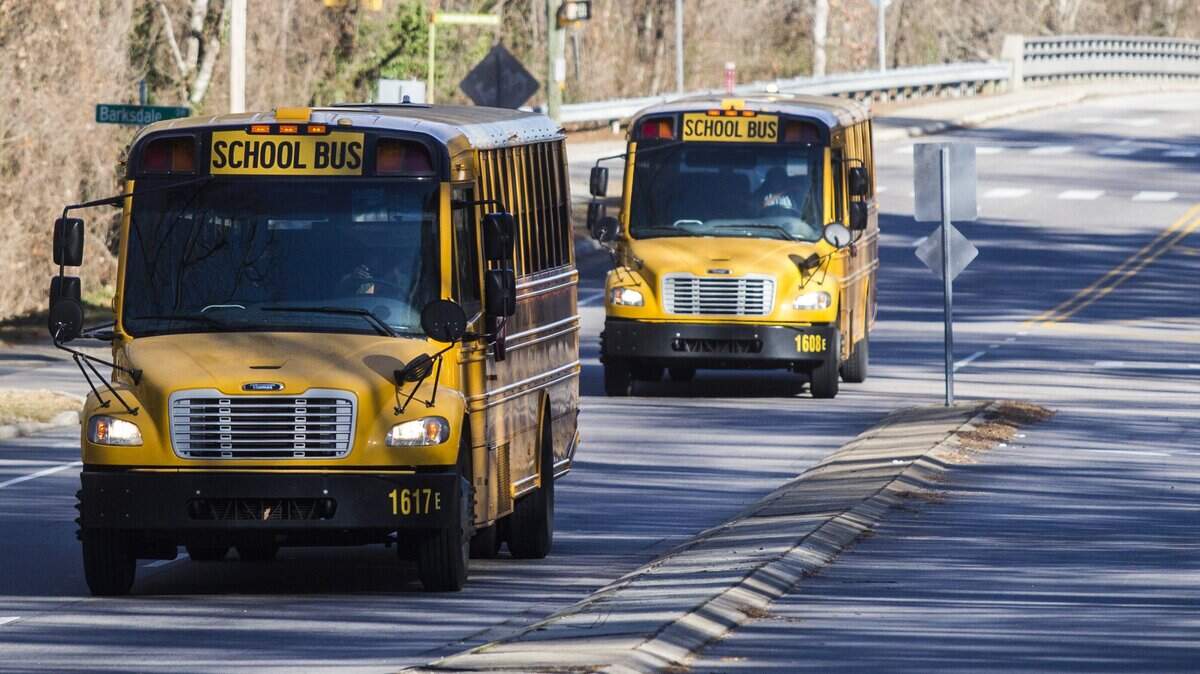
▪ If a student rides the bus or participates in a car pool, they must be “screened” at home before boarding their transportation, and will be screened again when they arrive at school.
▪ To board a school bus, children will have to present an Attestation Form daily, verifying that they have passed their home screening. If a student does not have their Attestation Form, they will be screened at the bus. Elementary age children must have a responsible adult or older sibling with them at the bus so that they can be helped to return home if they do not pass the screening.
▪ All students riding a bus or other vendor transportation must wear a face mask unless they cannot tolerate a mask due to developmental, medical or behavioral health needs or due to a “sincerely held religious belief.” Students who cannot wear a face covering will be required to complete a form to notify transportation services. Those students must also stay 6 feet apart from other students and the driver (this will reduce bus capacity and alter bus routes and schedules).
▪ If a student has a temperature of 100.4 or higher, they must stay home. Students must also stay home if they have the following symptoms: fever or chills, a new cough, shortness of breath or difficulty breathing, and a new loss of the sense of taste or smell.
▪ If a student or teacher doesn’t feel well, they must stay home from school.
▪ While in school, teachers will be teaching hand-washing in the classroom and will have hand-washing breaks throughout the school day. Students will wash their hands before and after eating, after using the restroom and after touching shared objects.
▪ Wake County schools will provide hand-sanitizing stations at every school entrance and exit, in the cafeteria, in every class and on every bus and transportation vehicle.
What happens in Plan B if a student gets sick?
▪ If a student has symptoms but has not been confirmed to have COVID-19, they must be able to answer “YES” to the following questions before returning to school: 1. Has it been at least 10 days since they first had symptoms? 2. Has it been at least 3 days since they had a fever (without using fever-reducing medicine)? 3. Has it been at least 3 days since the symptoms have improved, including cough and shortness of breath?
▪ If a student has been diagnosed with COVID-19, but did not have symptoms, they must remain out of school until 10 days have passed since the date of their first positive COVID-19 diagnostic test. If a student develops symptoms, they cannot return to school until they meet all of the criteria for students who have experienced at least one symptom (see above).
▪ If a student has been exposed to COVID-19 and does not have symptoms they must remain out of school for 14 days since their last exposure, even if they test negative for COVID-19. If they develop symptoms, they cannot return to school until they meet all of the criteria for students who have experienced at least one symptom.
When in-school students are doing their 2 weeks of remote learning during Plan B, will they be attending live online classes?
During their remote-learning weeks, in-school students will get a mix of live and recorded activities, just as it works with Virtual Academy students.
How can I learn more about Wake Virtual Academy?
You can get more information about Wake Virtual Academy at wcpss.net/Virtual-Academy.
This story was originally published July 21, 2020 at 5:08 PM.