
NC State scientists make a fabric that can cool itself, and whoever is wearing it
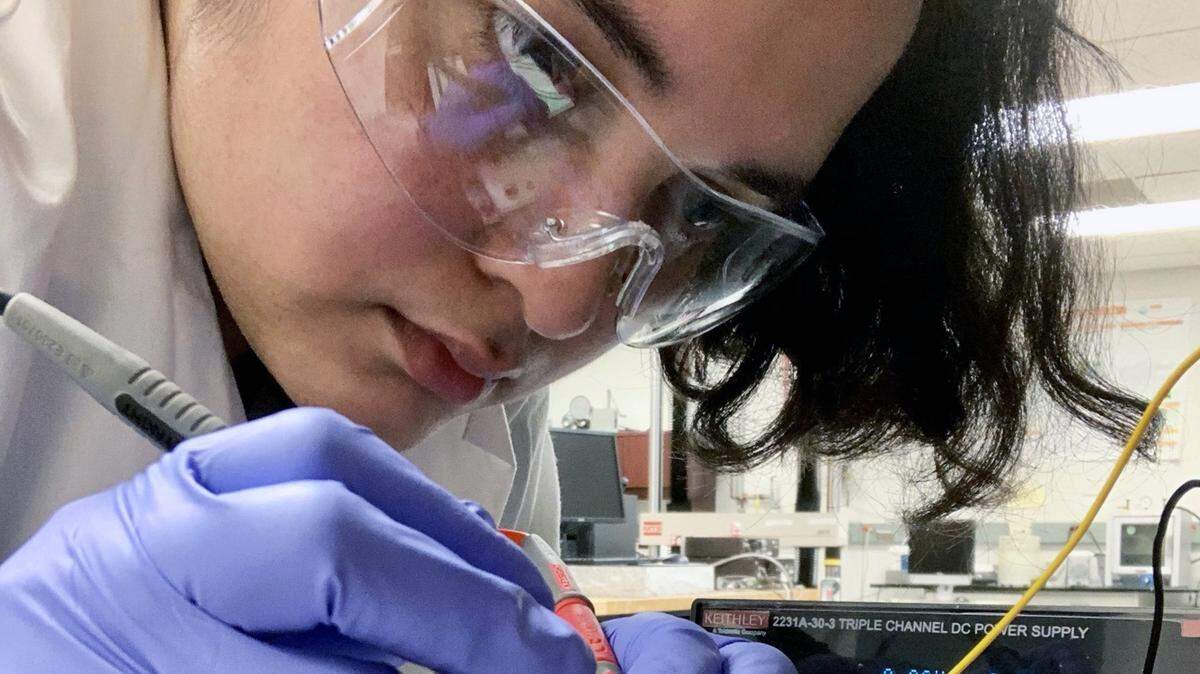
North Carolina, it’s hot outside. Now, imagine if the shirt on your back could help you cool off. A team of researchers at NC State is developing new materials to make that possible.
Tushar Ghosh, a professor in the Wilson College of Textiles, studies ways to make “smart textiles.”
His group’s latest project was to make a new flexible material with thermoelectric properties. Thermoelectric materials convert temperature differences into electricity and vice versa. Anyone who has used a USB-powered beverage can cooler has benefited from this class of material.
Kony Chatterjee, a PhD student in fiber and polymer science, posed the key question about their work: “Can this be integrated into a fabric easily? Is it easy to work with?”
Existing thermoelectric materials tend to be heavy and brittle. That’s fine for a can koozie, not so much for a shirt or blouse. Many thermoelectric materials also contain toxic elements like lead.
The new material the NC State team worked on was made out of carbon nanotubes, sheets of carbon atoms rolled up into cylinders hundreds of times thinner than human hair. Nanotubes are strong, flexible, and nontoxic.
Chatterjee said nanotubes are especially promising for a smart fabric because they don’t need significant processing to make them usable. The researchers just needed to give the nanotubes an hour-long bath in an alcohol solution.
The goal is to take this thin film of nanotubes and weave it into thread based on existing textile manufacturing processes. That thread could be sewn into fabrics to give temperature-regulating properties.
In testing, the material can cool the surface by 1.8 degrees Fahrenheit when powered by a coin battery of only 5 volts. That might not sound like a lot, but even that small difference can be noticeable on a person’s skin and encourage them to shift their thermostat.
“If somebody in Miami is wearing this fabric, and you set your thermostat at 70 degrees Fahrenheit and move it to 73, you could get anywhere between 15 to 30% in energy savings,” Chatterjee said.
Ghosh says the fabric could make “personal thermal comfort systems” in a variety of ways.
Cooling the wearer by just a few degrees could help workers in personal protective equipment stay comfortable longer. Firefighters, for instance, could safely stay in high temperature environments longer with the active cooling the thermoelectric fabric provides.
Ghosh also thinks thermal comfort systems could find use in health care. In the current coronavirus pandemic, doctors and nurses have to wear bulky protective equipment to prevent infection. A self-cooling fabric could make the equipment less stifling. Because the fabric can pull heat directly from or send it directly to the wearer’s skin, it could also help regulate temperature for a patient suffering from heat exhaustion or hypothermia.
The next step? Ghosh’s group will try to incorporate this material into other textile structures and see how to scale that up practically for manufacturers.