As students pour back in, wary Chapel Hill wants more off-campus enforcement from UNC
The Instagram video from Chapel Hill that spread across social media this week shows about 50 young women filing out of a small house a few blocks from UNC’s campus. It’s 11 p.m. on a Tuesday night, less than a week before classes start, and most of them aren’t wearing masks or practicing any sort of social distancing.
For Chapel Hill officials, it’s a scary image of exactly the sort of thing they don’t want to happen as the fall semester begins at UNC.
As thousands of college students celebrate their first weekend being back in town, local officials say UNC must do more to keep students and the community safe during the coronavirus pandemic.
The sorority events shown in the video offer an opportunity to test how the university, town and Orange County will respond when students violate public safety standards off campus, Chapel Hill Mayor Pam Hemminger said.
“We want to send a clear message that what happened is not acceptable,” Hemminger said.
“The people care, and we want residents to help educate new residents, and we want students to be part of the solution — not just penalize them — but to really understand this has a direct effect on lots of people,” she said. “While they feel invincible for themselves, they don’t realize they can be asymptomatic and spread it.”
UNC administrators sent a letter to fraternity and sorority chapter presidents Thursday chastising them for recent reports of parties and large student gatherings at Greek Life houses and other residences.
“This is extremely disappointing as it puts your well-being and the health and welfare of our community — fellow students, faculty, University staff and thousands of our neighbors — at unnecessary and great risk,” the letter says. “Aside from public condemnation, these reckless actions impugn the integrity of the UNC fraternity and sorority system and call into question your collective ability to self-govern the behaviors of your members.”
Greek Life organizations have agreed to host virtual recruitment events this fall to comply with state guidelines. UNC said it will follow up with all individuals and fraternities and sororities that host unsanctioned gatherings, particularly those with more than 10 people indoors and 25 people outdoors, according to the letter.
They said students who “blatantly disregard” UNC’s community standards, including hosting large gatherings, could face disenrollment. And student organizations that do not comply “jeopardize their university recognition” and could lose funding and access to UNC resources and facilities.
University leaders made clear that guidelines extend beyond “our stone walls” and the community includes the tens of thousands of local residents.
“The only way we can resume on-campus teaching and learning is if everyone does their part,” the letter says. “We — and everyone who lives here — are counting on you to help us promote a safe and healthy campus and local community.”
Concern over campus reopening
The video of the sorority event started circulating on the same day that news spread of a letter from the Orange County Health Department asking UNC to adjust its fall plans during the coronavirus pandemic.
Orange County Health Director Quintana Stewart asked the university to go fully online for the fall semester or to at least delay in-person classes and offer online classes for the first five weeks of school. She also asked UNC to limit campus housing to only at-risk students and those who need it. Despite the warning, UNC is continuing with its fall plans for limited in-person instruction and campus housing.

UNC has spent months consulting public health and infectious disease experts about how to safely bring students, faculty and staff back. The university has rearranged classrooms and class schedules, reduced residence halls down to about 65% occupancy and will keep in-person classes down to about 30% of students in seats. The reductions in dorms were a result of students canceling their housing contracts and UNC reserving two residence halls for COVID-19 isolation and quarantine. The university also requires everyone to wear face masks on campus and abide by social distancing guidelines, including limiting social gatherings.
Even with those adjustments, the Orange health department, Chapel Hill mayor and some UNC students, faculty and staff say it isn’t safe enough for tens of thousands of people to return to the college town during a pandemic.
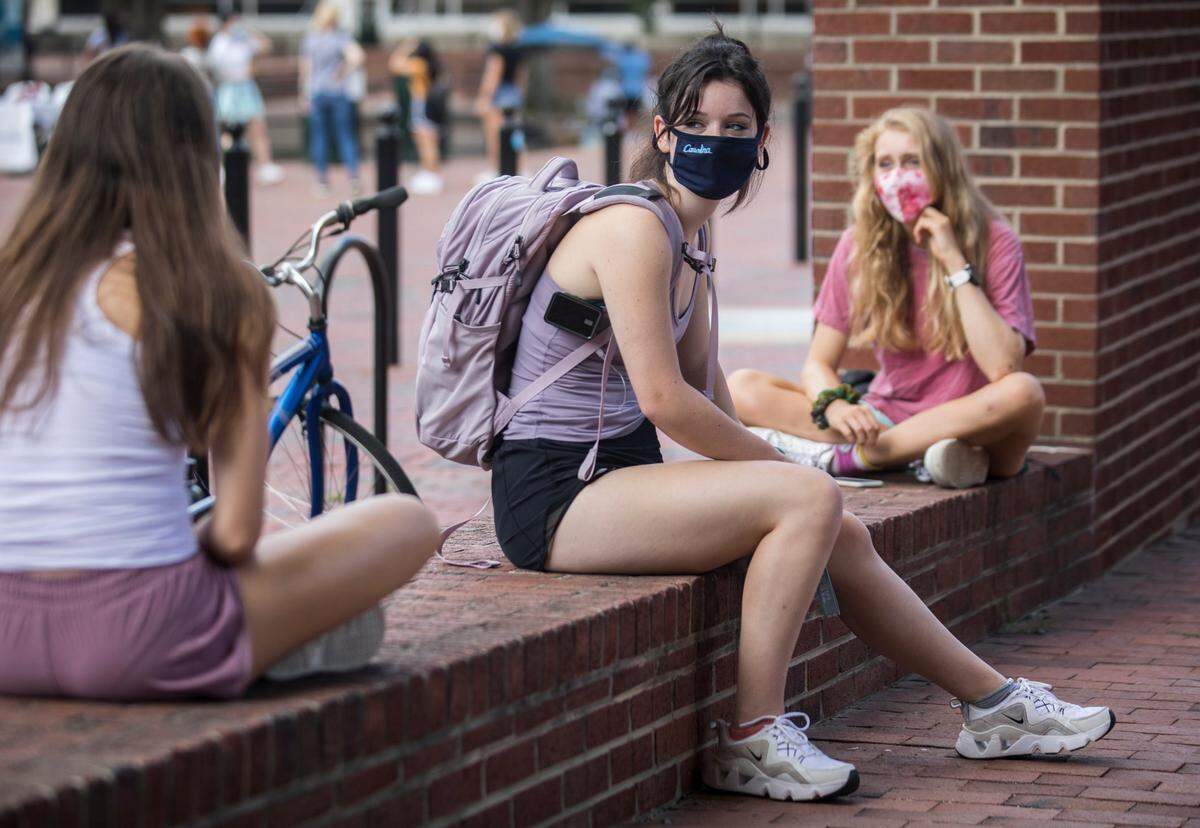
They’re particularly worried about students going to bars and restaurants with friends, about fraternities and sororities throwing parties and rush events, and about how face mask mandates and physical distancing standards will be enforced off campus.
Stewart’s recommendation was also based on COVID-19 cases continuing to rise, particularly among college-age individuals. She said she has received a “massive amount of emails” from local residents and UNC faculty, staff and students expressing concerns about UNC’s reopening plan.
“We could quickly become a hot spot for new cases as thousands of students from all across the country/world merge onto the UNC Campus,” Stewart’s letter says.
Neighboring Carrboro has not had any issues so far with house parties, Mayor Lydia Lavelle said, but the Town Council is concerned about returning students and met with UNC Provost Bob Blouin in July to ask questions.
The town, which is home to many graduate students and university-affiliated professionals, shares the same concerns, goals and expectations that Chapel Hill and the greater Orange County community have, Lavelle said.
“We’re kind of nervously trying to address what might be coming,” Lavelle said. “I think in Chapel Hill, you have more of the big group houses of undergraduate students than you do in Carrboro, but it’s a concern of ours, too, because we certainly have a lot of students that live in our community and have parties, as well.”
Hemminger, Lavelle, Hillsborough Mayor Jenn Weaver and Penny Rich, chairwoman of the Orange County Board of Commissioners, sent their concerns to UNC leaders Wednesday asking the university to better enforce its community standards with penalties for violating them off campus. They also requested monitoring and surveillance testing to “high-risk” areas where students live and frequent.
Their letter reinforced Stewart’s concerns and recommendations.
UNC’s plan for enforcement
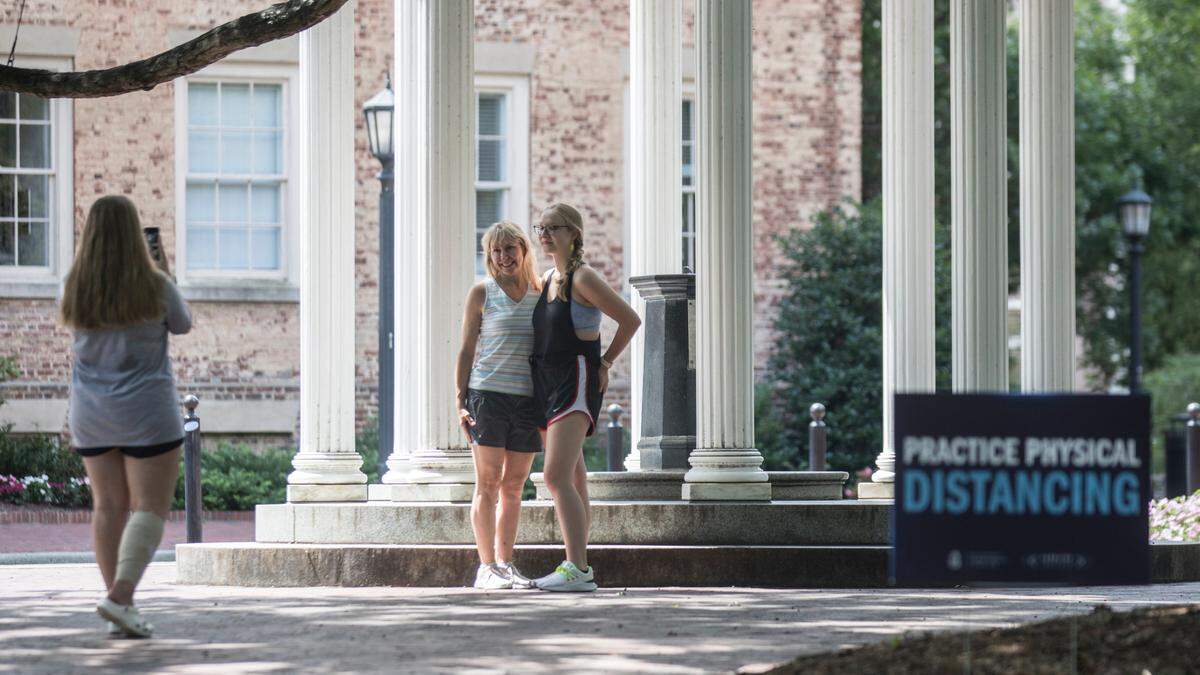
The university has some policies in place, but it is limited in enforcing those guidelines throughout the town.
UNC students signed a pledge to abide by local public health guidelines and the university’s community standards that include physical distancing, limiting social gatherings, monitoring their symptoms and wearing face masks. Students were required to sign the agreement to enroll in classes this fall, whether the classes are in-person or virtual.
Blouin said the university is also telling students that these rules extend beyond the campus and into the towns of Chapel Hill and Carrboro or wherever students live.
“We are expecting our students to stay faithful to those standards,” Blouin said.
UNC is also working with the towns and the county health department to develop “meaningful, enforceable ways to make sure our students stay compliant as much as possible,” but that’s a work in progress, he said.
If students or student groups are breaking the rules, they can be reported to UNC’s dean of students, who will investigate off-campus violations.
Individuals can also report violations to UNC campus police, Chapel Hill Police or Orange County officials.
When there’s an incident, a Chapel Hill Police Department officer and a member of the UNC Student Affairs team from Off-Campus Student Life will talk to the residents about expectations for student behavior and the complaint. They will also collect the names of the students involved and the people they interact with, according to the university.
If those students are affiliated with a Greek chapter, the director of Fraternity and Sorority Life will follow-up.
The university plans to track these reports and take compliance-related action if necessary. Potential consequences for violating the guidelines on campus include restrictions on use of UNC facilities, removal from campus housing, disenrollment from one or more in-person courses and transition to remote-only instruction.
In the case of “willful failure to comply” or repeated violations UNC could take additional disciplinary actions. This disciplinary process will also apply to violations involving off-campus behavior or activities.
Local businesses await students’ return
There’s not a singular feeling among business owners about students returning to campus, but they “have been desperately waiting for students to be back” after a “very difficult summer,” said Matt Gladdek, executive director of the Chapel Hill Downtown Partnership.
“Students are a significant amount of our customer base, and our businesses have seen huge cuts in their revenue, which hurts their ability to stay open,” Gladdek said. “Having students back will hopefully make a difference, but that remains to be seen, as well.”
Many businesses are only reporting 30% of normal sales, while bars and nightlife venues, such as the Cave, Local 506 and Pit Chapel Hill, are still closed, he said.
This week, the popular student bar He’s Not Here announced it would open a bottle shop with beer and cider to go.
Meanwhile, money from the federal Paycheck Protection Program has run out for the few businesses that got it, and unemployment has ended for their employees, he said.
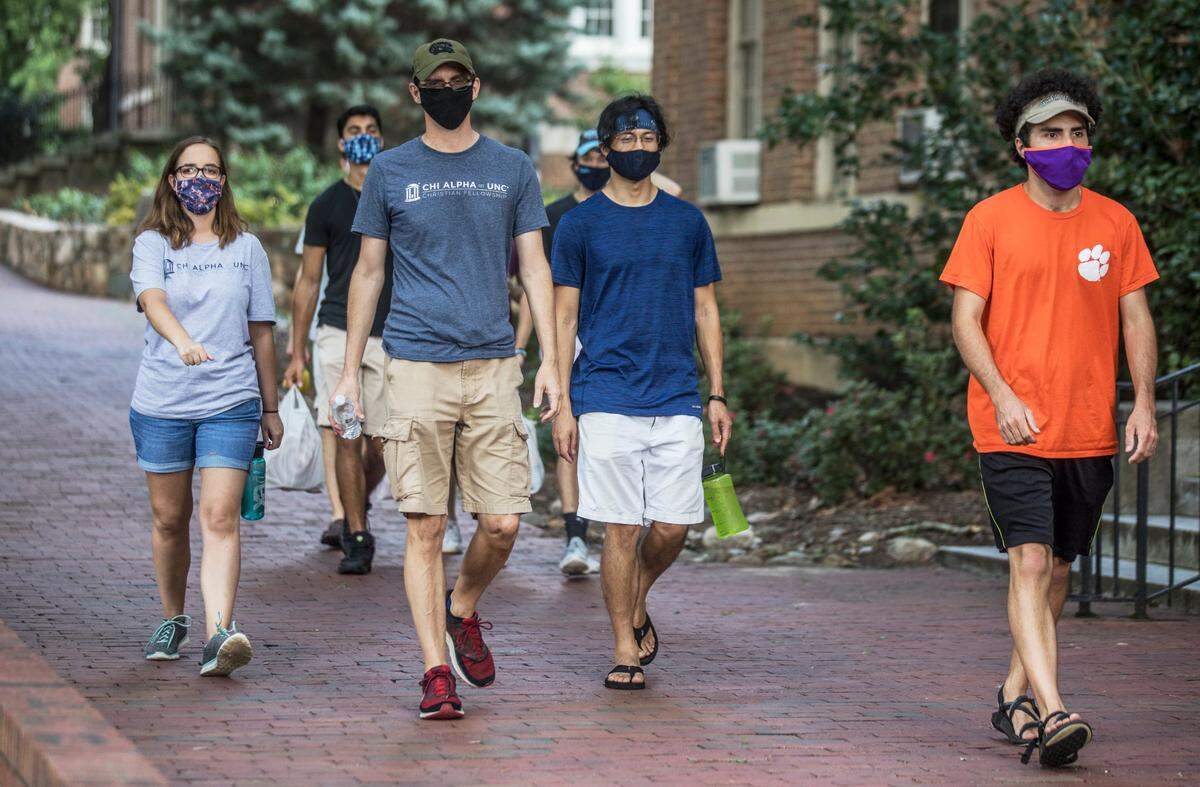
Gladdek hopes the image of students that spread on social media this week is an exception, he said.
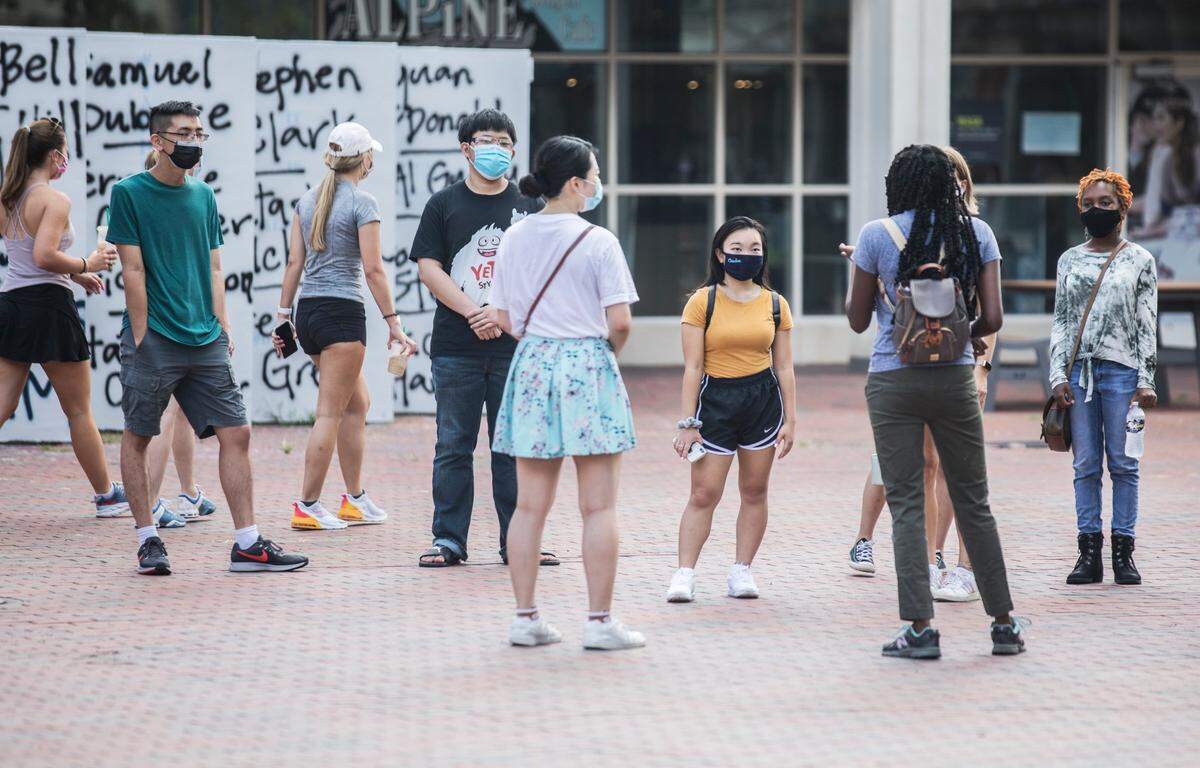
The Downtown Partnership has tried to help with signs reinforcing physical distance rules and masks for customers. Restaurants hope a temporary expansion of the sidewalk into Franklin Street will let them serve more customers, at least for the next month, he said.
Other college towns and mayors across the state are wrestling with similar issues as students return to their campuses, Hemminger said. She had a virtual meeting scheduled later Thursday with those mayors to talk about best practices, she said.
“They’re excited to have the economy open back up around that and love having the energy that students bring,” Hemminger said. “But have the concerns that students aren’t realizing how important it is to not spread the virus to the rest of the community.”
This story was originally published August 6, 2020 at 5:14 PM.