NC approves new rules for in-person school. Some say they don’t go far enough
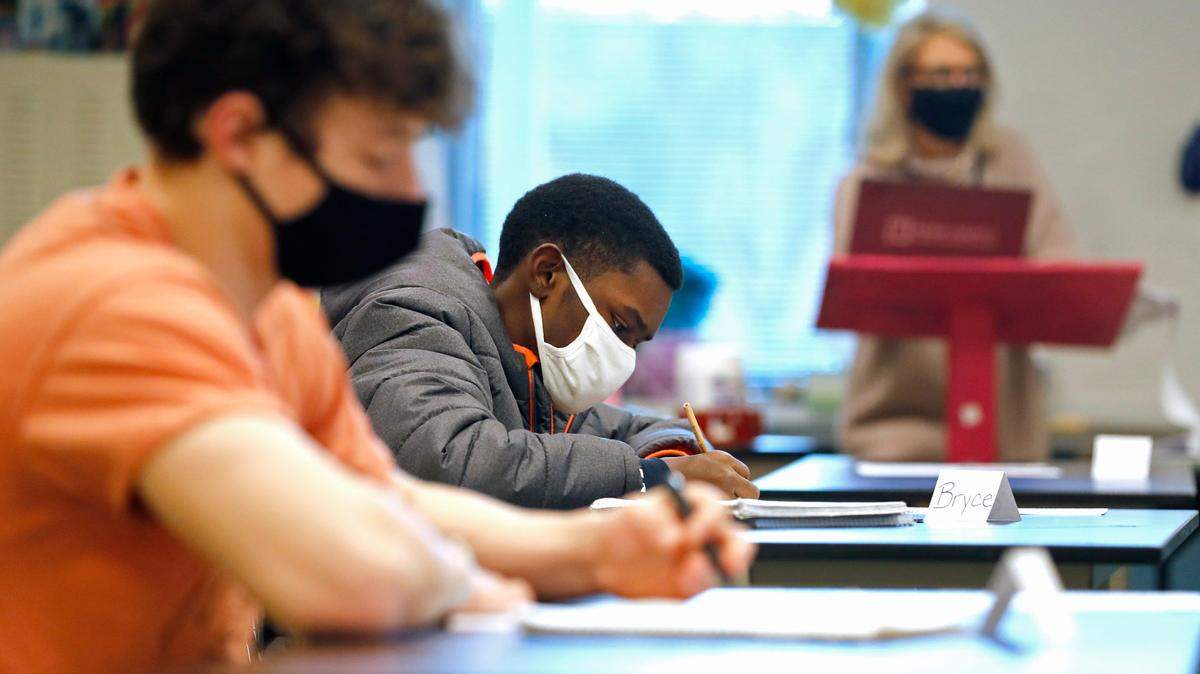
North Carolina public schools will now be required to offer in-person classes. But the change isn’t enough to satisfy Republican lawmakers who are still pursuing their own reopening plans.
The State Board of Education on Thursday approved a school reopening resolution saying public schools must offer at least some in-person instruction by the end of March. The board also adopted updated state Department of Health and Human Services guidelines saying school districts and charter schools should only use remote learning for higher-risk students and for families who want a virtual option.
“It is absolutely essential that we get our students back into school,” said state board chairman Eric Davis. “Every student, every day into every school.”
But GOP lawmakers say the resolution falls short because it will still leave many students without daily in-person classes a year into the coronavirus pandemic.
“There is no issue more vital to the health and wellbeing of children in North Carolina than letting them return to in-person learning as soon as possible,” state Rep. Chuck McElraft, Carteret County Republican, said in a news release Thursday.
“The General Assembly will pursue every available opportunity to address the devastating harm to our students that closed schools have caused. Our kids are not just failing — they are being failed by a refusal among elected leaders to let them learn.”
Daily in-person classes sought for older students
The main split between the state board/DHHS and GOP lawmakers is over what options are being given to middle schools and high schools for in-person instruction.
The state board and DHHS are only allowing middle schools and high schools to use “Plan B,” where 6 feet of social distancing is required in classrooms. The restriction means middle schools and high schools are mainly only offering a mix of in-person and online classes instead of daily in-person classes.
Only elementary schools can use “Plan A,” which has minimal social distancing requirements that allow them to offer daily in-person classes. Elementary schools can use either Plan A or Plan B but are being encouraged to move to Plan A.
“While our older children tend to transmit in the same way as adults do, younger children have much lower rates of transmissibility, and that’s why we see that difference there,” said Susan Gale-Perry, DHHS chief deputy secretary.
Republican lawmakers and GOP state board members want middle schools and high schools to also be able to use Plan A. They say the state can’t move forward until more children are getting five days a week of in-person classes.
“We need a definitive road map about how this is going to work, because it’s not just impacting the kids who aren’t able to get back into the classroom,” said State Treasurer Dale Folwell, a Republican and member of the state board. “It’s also impacting the parents who can’t get back to work because their kid is not in the classroom.”
Lawmakers want to bypass Cooper
The vote comes as most of North Carolina’s school districts and many charter schools have already resumed in-person classes. But the change means some students who haven’t had in-person classes since the coronavirus pandemic hit in March 2020 will now have to be allowed back on campus if they want to return.
The past year has seen a drop in student grades and test scores. School districts estimate that 23% of their students are at risk of academic failure and not being promoted at the end of the school year.
A growing number of parents have become more vocal about the pace of school reopening, which they say has been too slow.
The Senate and House are both pursuing plans to expand school reopening options.
Senate Bill 37 would allow middle schools and high schools statewide to use Plan A, which is one of the reasons that Democratic Gov. Roy Cooper vetoed the bill. The Senate is pushing forward with trying to override the veto.
House Speaker Tim Moore announced Thursday that the House Education Committee will consider a bill next week requiring Asheboro City Schools, Carteret County Schools, Haywood County Schools, Randolph County Schools and Yancey County Schools to offer Plan A to all grade levels.
House Bill 90 is a local bill, so wouldn’t need to go to Cooper.
Rules for middle, high schools questioned
Much of the debate at Thursday’s state board meeting was over middle schools and high schools only being allowed to use Plan B.
“It is not adequate because Plan B, essentially for middle and high school students, means that they are in class with their teachers 20% of the time, and we know that’s not working,” said State Superintendent Catherine Truitt, a Republican.
Gale Perry said DHHS isn’t ready yet to recommend allowing secondary schools to use Plan A.
Gale Perry pointed to how 99 of the state’s 100 counties have such high rates of COVID transmission that they meet federal Centers for Disease Control and Prevention guidance saying 6 feet of social distancing is required for middle schools and high schools.
Truitt said DHHS needs to publicly reveal the metrics of when the change will be made. She said 3 feet of social distancing is sufficient for these older students.
“We need more clarity,” Truitt said. “It feels like we are pushing the goalposts and kicking the can down the street.”
Davis, the board chairman, said the board will be ready to call a special meeting when DHHS says all schools can use Plan A.
Free testing kits for schools
Starting Thursday, all of the state’s public schools can begin requesting free COVID-19 antigen tests from DHHS. It’s an expansion of a pilot program where 53,000 free tests were given to 17 school districts and 11 charter schools from December through February.
Schools will get access to the testing kits through the end of the school year. It’s based on the recent CDC guidance recommending COVID testing as part of the strategy for school reopening.
The expanded testing program comes as DHHS says almost 50,000 K-12 and child care employees have received COVID-19 vaccinations since Feb. 24, when the state opened up vaccine prioritization to them. Board member Amy White questioned the need for the tests now that vaccinations are more widespread.
Dr. Betsey Cuervo Tilson, the state health director and DHHS chief medical officer, explained that they know that some people will refuse to be vaccinated. She also said they know that the vaccines aren’t 100% effective.
“This is an extra layer of protection that schools can add on to,” Cuervo Tilson said. “It’s not meant as a way to invoke lack of confidence in the vaccine, but just that nothing is 100% and all these layers of prevention strategy lower the risk as much as possible.”
This story was originally published March 4, 2021 at 12:01 PM.