Could judge hold NC lawmakers in contempt of court to fully fund school spending plan?
North Carolina lawmakers are heading for a legal showdown over a state budget that doesn’t include most of a court-ordered plan for increasing K-12 education spending.
State Superior Court Judge David Lee warned in a court order last month that he’d take action if legislators didn’t begin funding a plan that calls for at least $5.6 billion in new education funding by 2028. But the budget adopted by the state Senate funds a fraction of the first two years of the Leandro “comprehensive remedial plan.”
The budget is now being reviewed by the state House. Lee may need to take steps such as holding state lawmakers in contempt of court and fining them to get the Leandro plan fully funded, according to Rick Glazier, executive director of the left-leaning N.C. Justice Center.
“I think and I hope that good faith and good minds will prevail,” Glazier said to other members of Gov. Roy Cooper’s Commission on Access To A Sound Basic Education at their meeting this week. “But there are sanctions, and we have the experience of four or five other states.
“A lot of people ... would be interested after 25 years in saying ‘Enough is enough. We need to proceed,’ who will be looking at that if there’s not concerted action by us all to ensure that the political will is there to enforce the judgment.”
That would lead to a “constitutional crisis,” according to Terry Stoops, director of the right-leaning John Locke Foundation’s Center For Effective Education.
“If the debate intensifies and the courts and the General Assembly don’t agree, then we may be seeing additional litigation that may involve the federal courts,” Stoops said in an interview Thursday.
Providing a sound, basic education
The issue facing lawmakers is how to respond to the latest order in the Leandro school funding case that was initially filed in 1994 by low-wealth school districts to get more state funding.
Over the years, the state Supreme Court has ruled that the state Constitution guarantees every child “an opportunity to receive a sound basic education” and that the state was failing to meet that obligation.
The Supreme Court assigned Lee to oversee the case after Judge Howard Manning retired.
In June, Lee approved a 7-year plan agreed to by the State Board of Education, the Cooper Administration and the plaintiffs. The $5.6 billion plan includes things such as a 5% pay raise this year for teachers, more funding for low-wealth school districts and expansion of the NC Pre-K program.
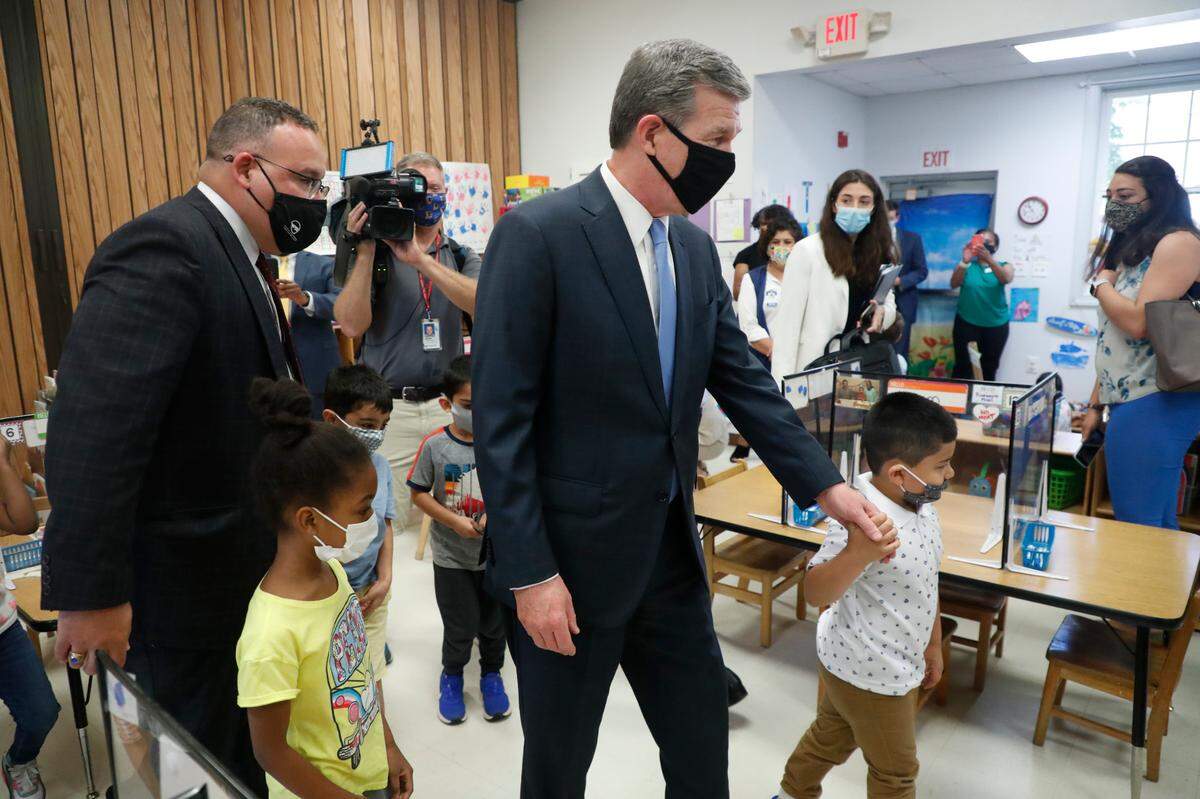
“That plan provides our state with a unique and once in a generation opportunity to leverage our state’s resources to truly transform and strengthen our public education system,” said Brad Wilson, chair of the Governor’s Commission on Access To A Sound Basic Education and former CEO of Blue Cross and Blue Shield of North Carolina.
In his order, Lee cited how Cooper’s budget proposal and legislation filed by House Democratic lawmakers fully funds the first two years of the plan. He warned that if the state failed to act, “it will then be the duty of this Court to enter a judgment granting declaratory relief and such other relief as needed to correct the wrong.”
Republican lawmakers have criticized Lee’s order, saying he has no authority to direct them how to spend money.
Senate budget provides tax cuts
In June, the Republican-controlled Senate passed a state budget plan that includes tax cuts, an average 3% raise for teachers and most state employees over the next two years and billions of dollars in federal spending, the News & Observer reported.
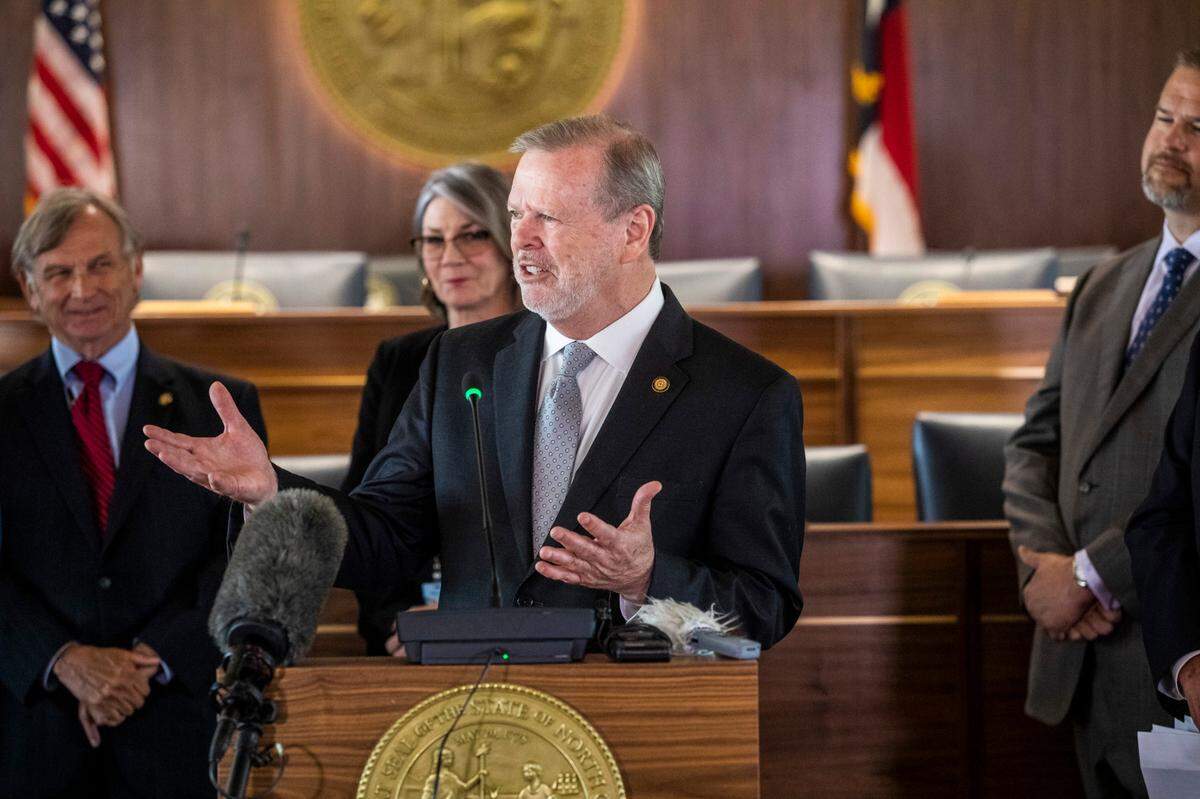
“This budget does more for the people of North Carolina than any budget I’ve seen in the years that I’ve been here, including those people that actually pay for everything,” said GOP Senate leader Phil Berger. “And that’s the taxpayers of the state of North Carolina who, when we collect more money than is necessary to operate the state, deserve to get a good bit of money back. And that’s what this does.”
The Senate budget includes an additional half-billion this year in state funding for K-12 education. Senate Republicans also say they’ve spent $5.6 billion in federal COVID-19 relief funds on education over the past 15 months.
Sen. Deanna Ballard, a Watauga County Republican, said “the aim of this budget is to serve our students with a sound and basic education.” She pointed to features such as more money to train teachers on how to teach literacy and expansion of state voucher programs to help more families pay for attending K-12 private schools.
“In developing this budget, we actually took a very simple and intentional approach: student-focused,” said Ballard, who co-chairs the Senate Education Committee. “Our state Constitution guarantees every child of this state an opportunity to receive a sound and basic education. The right of a child, not teachers, not principals.”
But the N.C. Justice Center says the Senate budget only has $106.8 million of the $626.2 million that’s called for in the 1st year of the Leandro plan and $129.3 million of the $998 million in the second year. Senate Republicans say the budget has $173.8 million in “Leandro items” this year and $146.9 million next year.
Democratic lawmakers said the Senate budget doesn’t do enough, pointing to the billions in surplus funds that are available.
“The Governor’s budget includes money to do what the courts have said, but he cannot do it without you funding it,” said Sen. Gladys Robinson, a Guilford County Democrat. “It is an atrocity that we sit here with the funds and we refuse to fund more than about a third of what the Governor is asking for.”
Republicans blocked several Democratic budget amendments, including those that would have fully funded the first two years of the Leandro plan.
Hold lawmakers in contempt of court?
The Republican-controlled state House will come up with its own plan. Lawmakers will reach a compromise that they’ll send to Cooper, a Democrat, who could veto the budget. Enough Democratic senators voted for the budget to override a veto.
Supporters of the Leandro plan are lobbying state leaders to fully fund the court order.
Glazier of the N.C. Justice Center said that school finance litigation in other states shows how Lee could use judicial sanctions on lawmakers to compel them to act.
“My sense is that those sanctions that had to happen would start with the potential of holding the legislature in contempt of court and enforcing by sanction, usually monetary sanction,” Glazier said. “In some cases they have ordered the budget in certain categories not be allocated. They have issued sanctions of tens of thousands a day in order to enforce it.”
In 2015, the Washington State Supreme Court held the state government in contempt of court and issued $100,000-a-day fines to try to force state lawmakers to pass a plan to fully fund public schools, the Seattle Times reported.
Stoops and other conservative critics say it would violate the separation of powers in the state Constitution for Lee to order lawmakers to carry out the Leandro order. But Glazier, a former Democrat state lawmaker, disagreed.
“Separation of powers was never intended to allow one branch to abdicate its constitutional responsibility to its citizens,” Glazier said.
This story was originally published July 1, 2021 at 8:28 PM.