UNC renaming buildings by honoring first Black professor and American Indian student
UNC-Chapel Hill officially renamed a residence hall and the Student Affairs office building that have for decades honored individuals tied to white supremacy and racism.
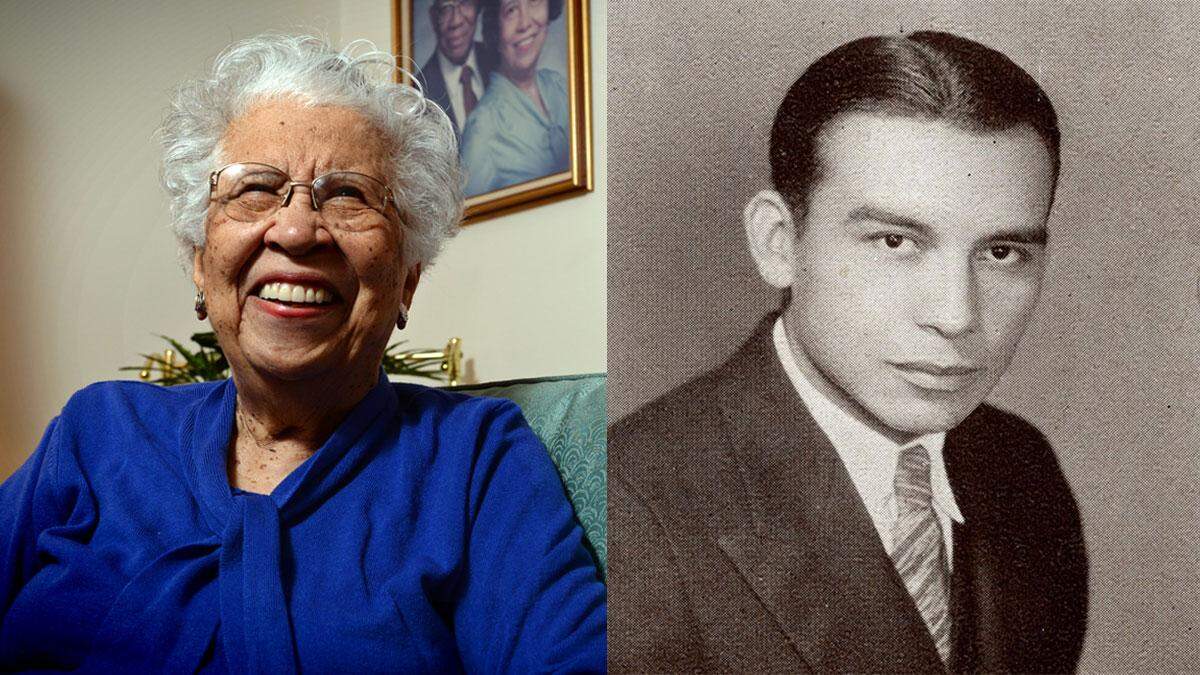
The two buildings will honor Hortense McClinton, a Black professor, and Henry Owl, an American Indian student, whose legacies at the university will now be physically established on campus.
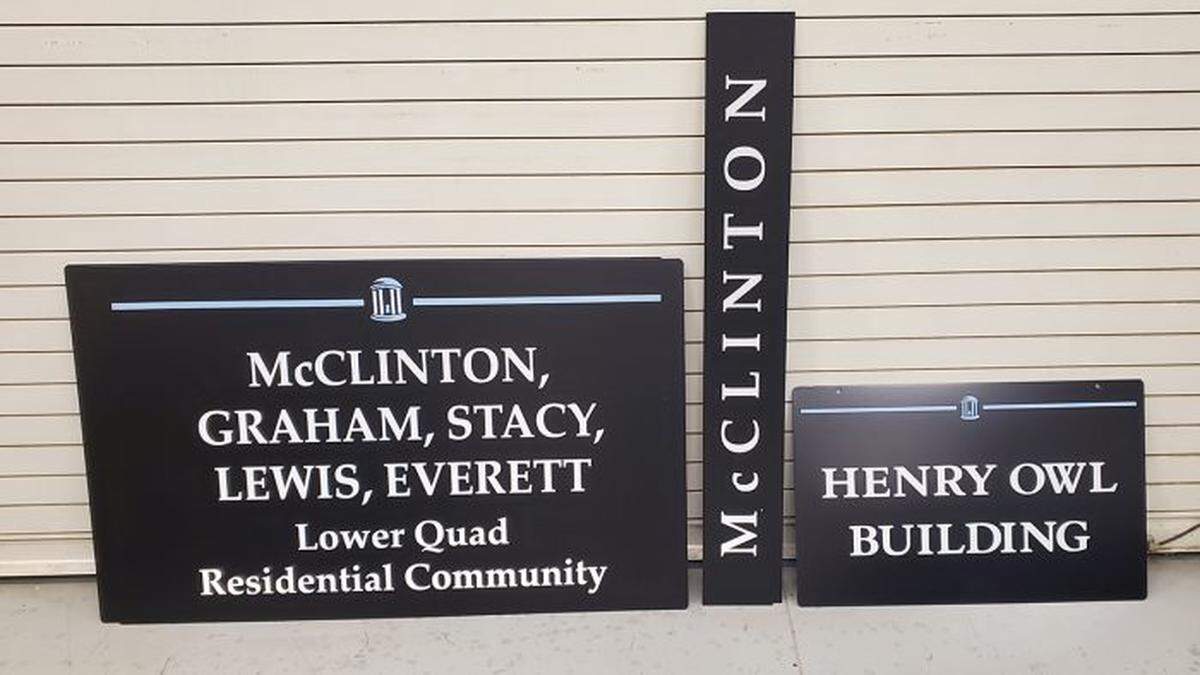
Aycock Residence Hall will now be known as McClinton Residence Hall. Carr Building, which houses the UNC-CH Student Affairs office, will now be the Henry Owl Building.
The new names will be installed about a year-and-a-half after the Board of Trustees voted to remove the buildings’ names in July 2020, lifting a 16-year moratorium on renaming places on campus. Students, faculty and alumni have been protesting and pressuring UNC leaders to remove the names for years, and the decision came as local and national racial justice protests called attention to Confederate monuments and buildings with racist ties.
“Hortense McClinton and Henry Owl were trailblazing pioneers who left an indelible legacy at Carolina,” Chancellor Kevin Guskiewicz said in a statement. “They embody the values that define our University, and naming these buildings after them marks an important step in building a campus community where everyone feels that they belong and can thrive.”
Who is Hortense McClinton?
The new McClinton Residence Hall name will be installed on black metal signs on and in front of the North Campus dorm, replacing Charles B. Aycock.
McClinton was the first Black professor hired at UNC-CH. She joined the UNC School of Social Work faculty in 1966, becoming the first African American to hold a tenure-track appointment.
McClinton “overcame the obstacles of a Jim Crow society and distinguished herself as a pioneer in desegregating the social work profession,” the nominating committee wrote. She was also recognized nationally for teaching social workers to practice “without racial and cultural basis.”
“I am very much honored,” McClinton told UNC-CH, according to the university’s website. “I’m glad they’re doing it before I died, because I am 103.”
McClinton was born and raised in Boley, Okla., an all-Black town and was the granddaughter of slaves. She attended Howard University, an Historically Black College and University, then University of Pennsylvania’s School of Social Work, where she was the school’s only Black student at the time.
She then moved to Durham, where she worked at Durham County Department of Social Services and then the Veterans Administration hospital before joining UNC-CH’s faculty.
While on the faculty, McClinton helped to establish the predecessor organization to the Carolina Black Caucus, an advocacy organization for Black faculty and staff.
McClinton now lives in Silver Spring, Md.
Aycock is a former North Carolina governor and UNC alumnus who led the white supremacy campaign of 1898 that “condoned the use of violence to terrorize black voters and their white allies” and was the “principal architect of the regime of Jim Crow,” according to a university report.
Who is Henry Owl?
Owl was the first person of color to enroll at the university. Owl, a Cherokee from the Qualla Boundary in western North Carolina, came to campus in 1928 as a graduate student and earned a master’s of arts degree in history. After graduating, he fought for Cherokee Indians’ civil rights and helped secure U.S. citizenship for the people of the Eastern Band of Cherokee Indians.
The committee highlighted Owl’s “study of Cherokee history, told from a Cherokee perspective, that challenged the racist myths of white settler colonialism.”
Before coming to UNC-CH, Owl graduated from Hampton Institute in Virginia, which was founded shortly after the Civil War by the American Missionary Association. He earned a degree in carpentry and served as a sergeant in the U.S. Army. He also taught in Indian reservation schools and worked as a counselor to Indian World War II veterans. Owl died on in 1980 at age 83.
“This is an honor that he would have been very pleased to get. He felt so strongly about education, so he would take a great deal of pride in having his name on a building there at UNC,” Owl’s daughter, Gladys Cardiff told UNC-CH.
“What this does for UNC is that it makes Native students across the country aware that they will be welcomed there, that they will be valued in a special way,” she said.
Julian Carr, a self-proclaimed “proud” member of the Ku Klux Klan, helped fund the Democratic Party’s white supremacy campaign of 1898, which “stripped black men of the right to vote and institutionalized racial segregation,” according to a university report.
Owl’s name will be etched in stone over the building’s entrance and a new sign bearing his name will be installed in front of the building, replacing Carr’s name.
Carr was also a university trustee and gave a racist speech at the dedication of the Silent Sam Confederate statue that stood on UNC’s campus for more than century until it was torn down by protesters in 2018, The News & Observer previously reported.
How the names were selected
Guskiewicz chose the names from a list of at least 30 names provided by his Advisory Committee on Naming University Facilities and Units. The university also sought suggestions from the community last spring that garnered more than 1,100 submissions.
Guskiewicz recommended McClinton and Owl, and the University’s Board of Trustees voted to add their names to two buildings at the Nov. 4 meeting, though it was not done publicly.
The board has not decided on a new name for the Daniels building, which houses the UNC Student Stores. Trustees voted to remove white supremacist Josephus Daniels name from the building along with Aycock and Carr. They also changed the name behind Ruffin Residence Hall from Thomas Ruffin Sr. to Thomas Ruffin Jr.
Daniels, a former News & Observer publisher and former UNC trustee, used his platform to demonize Black voters and help shape the strategy for the Democratic Party’s white supremacy campaign of 1898 and 1900. He and Aycock “rolled back reforms that would give Black North Carolinians political and social equality and established the system that would become known as Jim Crow,” The News & Observer previously reported.
A statue of Daniels in downtown Raleigh was removed in 2020 and N.C. State University and a Raleigh middle school have also removed the Daniels name from buildings.
What UNC buildings could be renamed?
The university’s Commission on History, Race & A Way Forward, which recommended the removal of these building names, is researching other historic figures whose names should be removed.
Another committee is reviewing the group’s list of 10 historic university figures who were slave owners, Klansmen, white supremacists and Confederate officers that have campus buildings named after them. Students and faculty have also identified about 30 places on the Chapel Hill campus that honor people with ties to racism.
Those buildings were named in the early 1900s, and include Battle Hall, Pettigrew Hall, Vance Hall, Swain Hall, Phillips Hall, Steele Building, Grimes Residence Hall, Mangum Residence Hall, Manly Residence Hall, Manning Hall, Murphey Hall, Saunders Hall (which has been renamed), Spencer Residence Hall, Bingham Hall and Graham Residence Hall.
A university policy for renaming campus buildings and public spaces includes approval by the trustees and sets a standard for the name to be considered. Honorees must show a commitment to teaching, research and public service; been historically underrepresented; and have “demonstrated positive impact” on the campus and community.
The committee reviewing the 10 names will make an official recommendation to Guskiewicz who will then share his recommendation with the trustees. The full board of trustees makes the final decision on any name removals.
This story was originally published December 3, 2021 at 11:42 AM.