After years of ignoring it, NC Gov. Cooper signs a proclamation for School Choice Week
School Choice Week has an unexpected new supporter in North Carolina — Gov. Roy Cooper.
For the first time during his tenure, Cooper has issued a proclamation declaring Sunday through Jan. 29 as “North Carolina School Choice Week.” The proclamation is a surprise, considering Cooper’s opposition to the state’s private school voucher program and his concerns about expansion of charter schools.
“The NC Association for Public Charter Schools requested this proclamation and we honored that request,” Jordan Monaghan, a spokesperson for Cooper’s office, said in an email. “Over the past two years, educators at all levels have responded to unprecedented challenges with grace, flexibility and determination.
“We must do more particularly to support our public schools and owe all educators our thanks and recognition.”
It’s a victory for school choice groups who’ve been promoting alternatives to traditional public schools.
Rhonda Dillingham, executive director of the N.C. Association for Public Charter Schools, said the group had asked Cooper, a Democrat, to issue a proclamation each year since he took office in 2017. The last proclamation had been issued in 2016 by Republican Gov. Pat McCrory.
“It’s an olive branch that we’re happy about and hope that we can even take it further and see where it goes,” Dillingham said in an interview.
The proclamation was so surprising that Terry Stoops, director of the Center for Effective Education at the John Locke Foundation, wrote in a blog post that he thought it was a hoax at first.
The N.C. Association of Educators declined comment on the proclamation. NCAE has backed Cooper during his tenure and opposed charter schools and the voucher school program.
Public schools lose students as choice expands
National School Choice Week has been celebrated annually since 2011, with events across the nation. It’s billed as an event to equally celebrate all types of school choice, including options in traditional public schools. But usually it’s celebrated more by charter schools, private schools and homeschooling parents.
This week’s celebration comes at a time when enrollment in North Carolina’s traditional public schools has continued to decline while enrollment continues to rise in charter schools, private schools and home schools.
“It just goes to the trend that we’re seeing in the country and in North Carolina,” Dillingham said. “Parents are more supportive, citizens are more supportive of school choice than ever before.”
Charter schools are taxpayer funded schools that are exempt from some of the rules that traditional public schools must follow. But they are still considered to be public schools.
The Opportunity Scholarship program was expanded in the new state budget to provide $5,900 a year for low-to-middle-income families to pay tuition costs to attend private schools.
Heather Koons, a spokesperson for Public Schools First N.C., said the most effective way to provide school choice is to fund high quality public school systems. She said families should look at all their options in traditional public schools.
“Public dollars need to stay in public schools,” Koons said in an interview.
‘Don’t damage public education’
Critics have argued that charter schools and private school vouchers drain money from traditional public schools. It’s a view that Cooper has historically backed.
“While some charters are strong, we see troubling trends, such as a resegregation of the student population, or misuse of state funds without a way to make the wrongdoers reimburse taxpayers,” according to a now-deleted post on Cooper’s campaign website. “We need to manage the number of charter schools to ensure we don’t damage public education, and we need to better measure charter schools so we can utilize good ideas in all schools.”
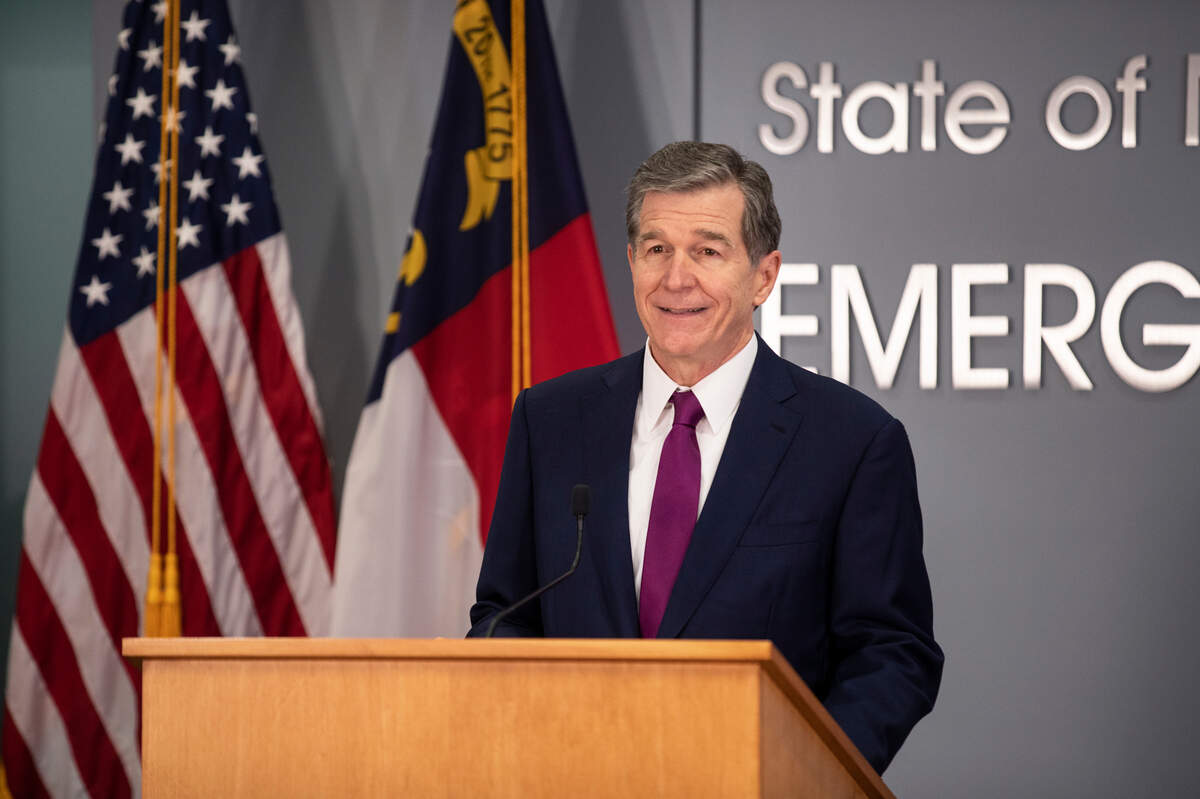
Cooper has also tried to cut funding for the Opportunity Scholarship program in his budget proposals.
“School vouchers are wrong,” Cooper said at a September 2020 online forum during his re-election campaign against Republican Lt. Gov. Dan Forest. “They hurt our public schools.”
In contrast, the proclamation signed by Cooper declares “North Carolina is home to a multitude of high-quality public and nonpublic schools from which parents can choose for their children, in addition to families who educate their children in the home.”
“Educational variety not only helps to diversify our economy, but also enhances the vibrancy of our community,” the proclamation continues.
This story was originally published January 21, 2022 at 11:59 AM.