NC Board of Education member resigns, saying schools moving from learning to activism
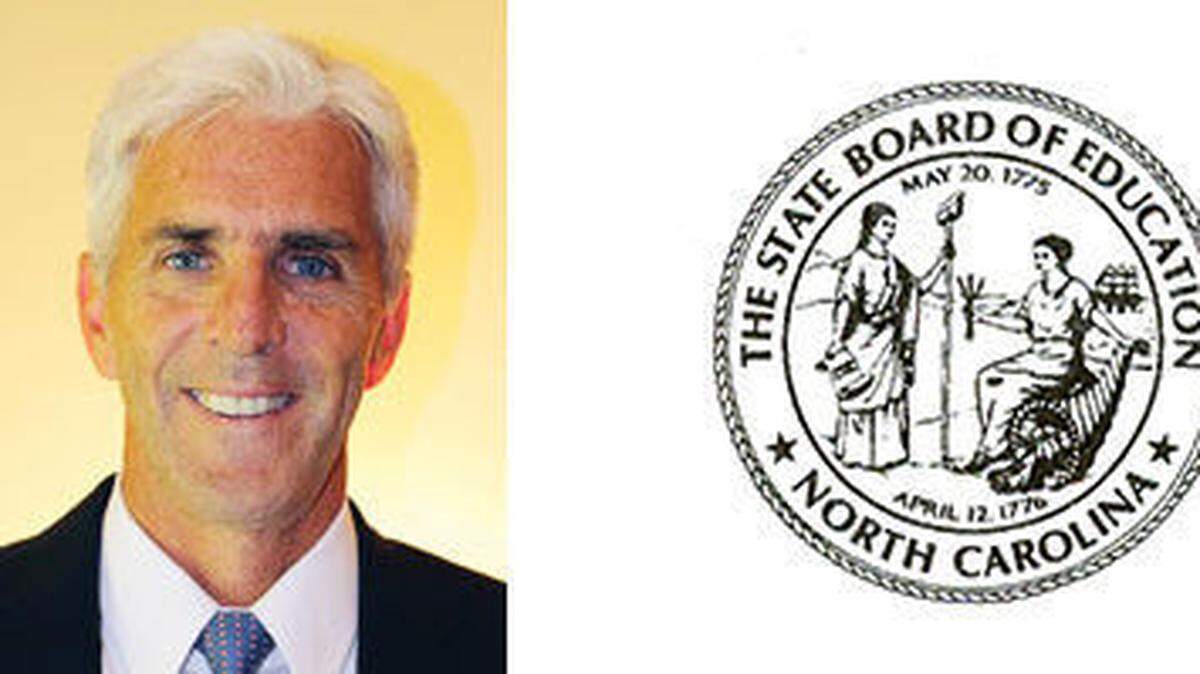
A member of the State Board of Education has resigned, citing the state’s controversial new social studies standards and what he calls a shift away from education towards activism.
In February 2021, the State Board of Education adopted new K-12 social studies standards that supporters say are more inclusive of different groups. But in his resignation letter dated Feb. 1, state board member Todd Chasteen says the standards are “regressive” and that he disagrees with the direction the board is now taking.
“In February when the board passed Social Studies Standards by a slim majority, standards that many of us concluded, and thousands of parents agreed, were unproductive, regressive and unhelpful to the students of this wonderful state, it became more difficult to see where I could add value,” Chasteen wrote in his letter. “The trajectory away from what some of us believed actually helped students, away from education towards activism, became much more likely, if not inevitable.
“With that trajectory almost certain to follow unless parents engage on a large scale, it made it evident that it was time to step down as a member of the North Carolina State Board of Education.”
The resignation was announced at last week’s state board meeting and first reported Tuesday by The North State Journal.
Eric Davis, the chairman of the state board, did not immediately return a telephone call Tuesday from The News & Observer requesting comment.
Chasteen’s resignation highlights the divide between the state board’s Democratic majority and Republican minority. Democratic Gov. Roy Cooper will nominate a replacement for Chasteen. The appointee will be voted on by the Republican majority in the General Assembly.
Chasteen is vice president of public policy and general counsel for Samaritan’s Purse, the international nonprofit run by Franklin Graham. Before that, he was a senior attorney adviser to a U.S. Tax Court judge.
The Watauga County resident was nominated to the state board in 2015 by Republican Gov. Pat McCrory.
How should history be taught?
Chasteen has been relatively quiet during his tenure on the board. But he and the other GOP members spoke out during the adoption of the new social studies standards now beginning to be taught in the state’s public schools
The board majority said the new standards will be more relatable to students of color who now represent the majority of the state’s public school enrollment. The standards encourage teachers to discuss racism, discrimination and the perspectives of marginalized groups.
“History is the study of change, and by adopting these new social studies standards, we are embracing the essence of what makes the study of history useful and our nation great,” board member Donna Tipton-Rogers said when the standards were approved. “To include racism, identity and discrimination is what we should do.”
For instance, suggested examples of people to discuss in fifth-grade classes include former U.S. Supreme Court Justice Ruth Bader Ginsburg, former First Lady Eleanor Roosevelt, abolitionist Sojourner Truth and suffragette Susan B. Anthony. But the GOP board members complained the list didn’t include Sandra Day O’Connor, the first female justice on the U.S. Supreme Court.
Critics accused the social studies standards of incorporating “Critical Race Theory,” a “scholarly framework that describes how race, class, gender, and sexuality organize American life,” according to the UNC-Chapel Hill history department. This view holds that systemic racism has been and continues to be a part of the nation’s history.
“Discrimination and oppression must be covered and it will be,” Chasteen said at a Feb. 2021 state board meeting. “Yet the last thing I want to do is to mislead students to think the U.S. is hopelessly bigoted, irredeemable and much worse than most nations, unless that were true. But I don’t believe it is.”
This story was originally published February 8, 2022 at 12:03 PM.