‘What risk are you willing to take?’ NC teachers feel pressure to censor what they say.
Some North Carolina teachers approached Black History Month with caution this year, concerned that whatever they say will be interpreted as promoting Critical Race Theory.
Teachers now run the risk of being accused on social media of indoctrinating students while they also deal with school board policies and legislation adding rules on how they teach about racism and history. Amid this climate, some teachers say a chilling effect has been produced over what can be taught in classes.
“We’re more under a microscope than ever before,” April Lee, a middle school social studies teacher and president of the Johnston County Association of Educators, said in an interview. “What risk are you willing to take?
“Teaching truth should not be bold. It should be what it is. Now I feel we have to be bold to teach the truth, and that’s wrong.”
But Terry Stoops, director of the Center for Effective Education at the John Locke Foundation, said good educators can use curriculum controversies to reflect on how best to teach their students. He said teachers can still have these hard conversations in class as long as they maintain open and honest communications with parents.
“Most parents do not fear an honest fact-based discussion about the complexities of racism and prejudice,” Stoops said in an interview. “ I think most educators understand that issues of racism and prejudice are complex and need to be approached with care and approached from multiple angles.
“When it becomes simplistic or is used to adopt a particular worldview, parents are understandably concerned.”
Debate over Critical Race Theory
At the heart of the issue is the battle over Critical Race Theory, which holds that racism has been a systemic part of the nation’s history that still influences society today.
Conservative groups have accused schools of promoting Critical Race Theory. School leaders have denied the charge, saying that anything involving the discussion of diversity, equity and race has been conflated to be about Critical Race Theory.
“Critical Race Theory has come up as part of general classroom discussions — what it is and what it’s not,” Andy Jenks, a Chapel Hill-Carrboro schools spokesman, said in an email. “We are explicit about teaching the history of race and racism in the U.S. and in our community, and how the vestiges of racism are interwoven in every aspect of our society.
“But that’s not the same as ‘Critical Race Theory.’”
Since January 2021, 37 states have introduced bills or taken other steps that would restrict teaching Critical Race Theory or limit how teachers can discuss racism and sexism, according to an Education Week analysis. Fourteen states have imposed these bans and restrictions either through legislation or other avenues.
In September, Democratic Gov. Roy Cooper vetoed a bill passed by Republican lawmakers that they said was targeted at keeping Critical Race Theory from being promoted in North Carolina’s public schools.
At a legislative committee meeting last week, Republican Lt. Gov. Mark Robinson said that teachers shouldn’t be vilified. But Robinson also created a task force that released a report in August that included names of individual teachers who were accused by parents of indoctrinating students.
Rodney D. Pierce, an eighth-grade social studies teacher in Nash County Public Schools, said he’s seen an increase in complaints from parents this school year. Even during Black History Month, Pierce said teachers have to be careful about what they discuss.
“It can be more arduous to discuss these topics given the social and political climate we’re in,” Pierce said in an interview. “My own personal experience, while I feel confident in what I say, I am more cautious based on what I’ve personally experienced and what I’ve seen my colleagues go through in this state and across the country.”
Teachers pressured to censor themselves
Several teachers contacted by The News & Observer declined to be interviewed, saying they were concerned that their comments would lead to them being targeted by critics.
“My fear right now is that the political pressure is having the desired effect on teachers,” Beth Shaver, a doctoral student at N.C. State University, said in an interview. “ I feel that teachers are censoring themselves to avoid attention, to avoid criticism, and to me that’s incredibly scary.”
Until June, Shaver had been an award-winning high school history teacher in the Wake County school system. Shaver said she had the support of both her school, the district and most parents.
But Shaver said that when she was teaching a hybrid class last school year that included in-person and online students, she wondered if parents listening from home would become angered by what she said.
This school year, Pierce said he’s made changes such as not asking his students to contrast how abolitionist leader John Brown was treated compared to Confederate Gen. Robert E. Lee. They have a unique tie because Lee led the U.S. forces that captured Brown after he seized a federal armory in 1859.
Brown, who hoped to incite a slave rebellion, was executed for his actions. Lee was not imprisoned for his role leading Confederate forces during the Civil War.
“Historically speaking, who should we view as the hero and who should we view as the villain?” Pierce said. “That’s inquiry. But given the climate we’re in, you never know if someone will go home and ask the question. You could have Confederate sympathizers.”
Lee, the Johnston County teacher, had her students do a Black History Month project researching the lives of famous Black Americans. One person she considered but didn’t include was Stacey Abrams, a voting rights activist and former Georgia state lawmaker who is running for governor.
“If I put up Stacey Abrams, people would have lost their minds,” Lee said. “I did pick people cautiously.”
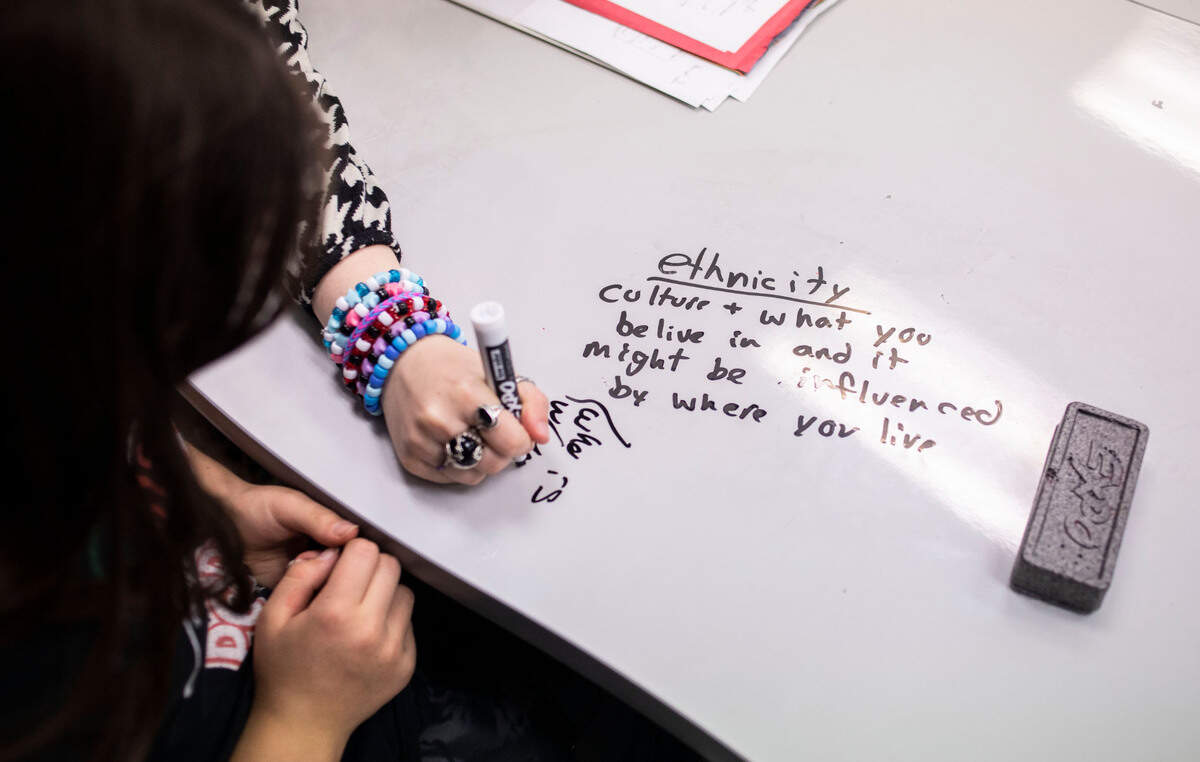
Schools put limits on race talk
In the absence of a state law, some North Carolina school boards like Johnston County have passed their own policies that they say are intended to keep Critical Race Theory from being taught.
For instance, Johnston County’s policy says “no student or staff member shall be subjected to the notion that racism is a permanent component of American life.” Teachers also have to be careful about how to discuss historical figures because the policy says “all people who contributed to American Society will be recognized and presented as reformists, innovators and heroes to our culture.”
Lee said she knows of at least two high school teachers who resigned because of the policy. She said other colleagues told her they made changes to their lesson plans because of it.
“There are teachers who are definitely using different materials, not spending the same amount of time, not even allowing kids to discuss some things,” Lee said.
Lee said she’s tried to not let the policy constrain how she teaches American history. But Lee said she does wonder daily if that will be the day that she says something that gets her into trouble with the policy.
The new policy is why Todd Johnson, director of the Johnston County Heritage Center, said he’s halted visiting schools. He used to talk to students about topics such as how enslaved people were auctioned in Smithfield and the genocide of Native Americans.
“There’s not enough clarity about what’s considered acceptable and not acceptable,” Johnson said in an interview. “I don’t want to get teachers and principals in trouble about what I present in schools.”
The Johnston County school system did not return an email from The N&O requesting comment.
“School board members need to do a good job of communicating their intent with educators and administrators to avoid any misunderstanding or to prevent educators from thinking that the school board is inhibiting classroom instruction, which I don’t think is the purpose,” said Stoops of the Locke Foundation.
Chapel Hill encourages talks about race
In contrast, Chapel Hill-Carrboro teachers are expected to have critical conversations about race with their students, according to Christy Stanley, the district’s director of humanities for secondary schools. Stanley said Superintendent Nyah Hamlett told teachers at the start of the school year that the district would have their back.
Chapel Hill-Carrboro also received a grant to use material from The 1619 Project, the New York Times initiative created by Nikole Hannah-Jones that reframes the legacy of slavery and places the contributions of Black Americans at the forefront of the country’s history. The 1619 Project is often cited in the debate over teaching Critical Race Theory.
As part of Chapel Hill’s work with the 1619 Project, a team of district middle school teachers developed a sample lesson plan about how slavery shaped American society.
“Black history does not begin with slavery,” Stanley said in an interview. “We go back in time to make sure that we’re accounting for all the contributions of marginalized populations making sure that we have multiple perspectives on topics that we’re teaching, so we see both sides of any given context.”
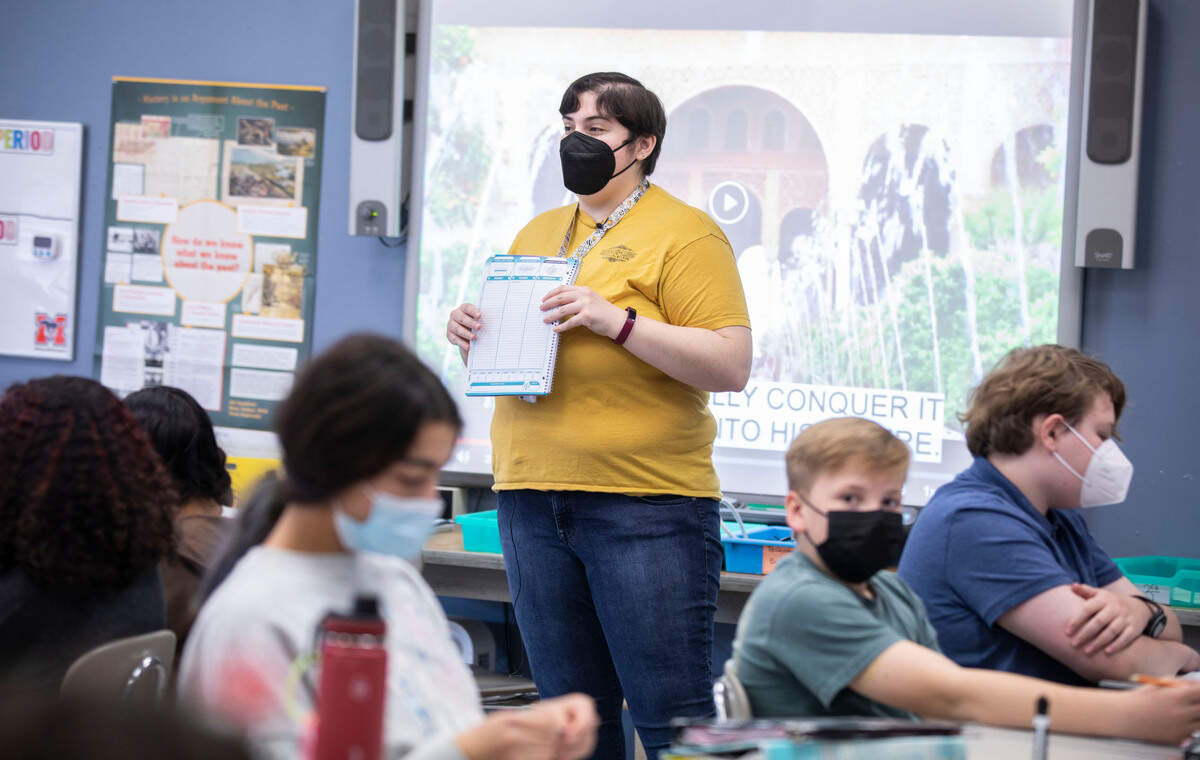
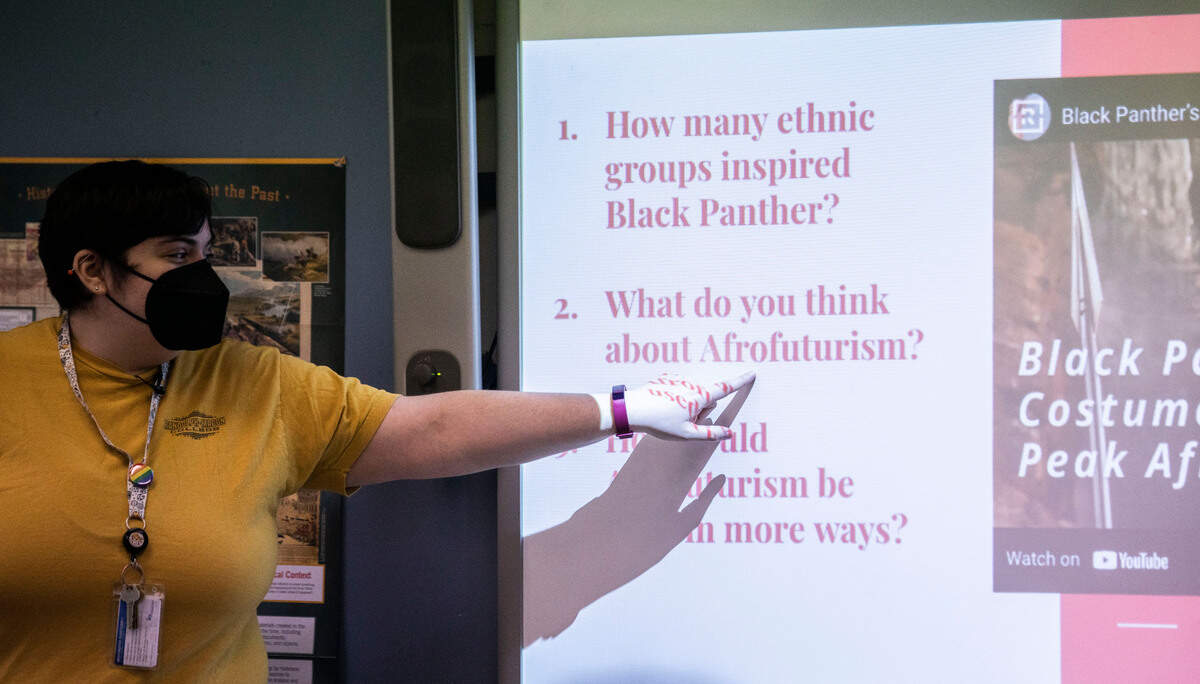
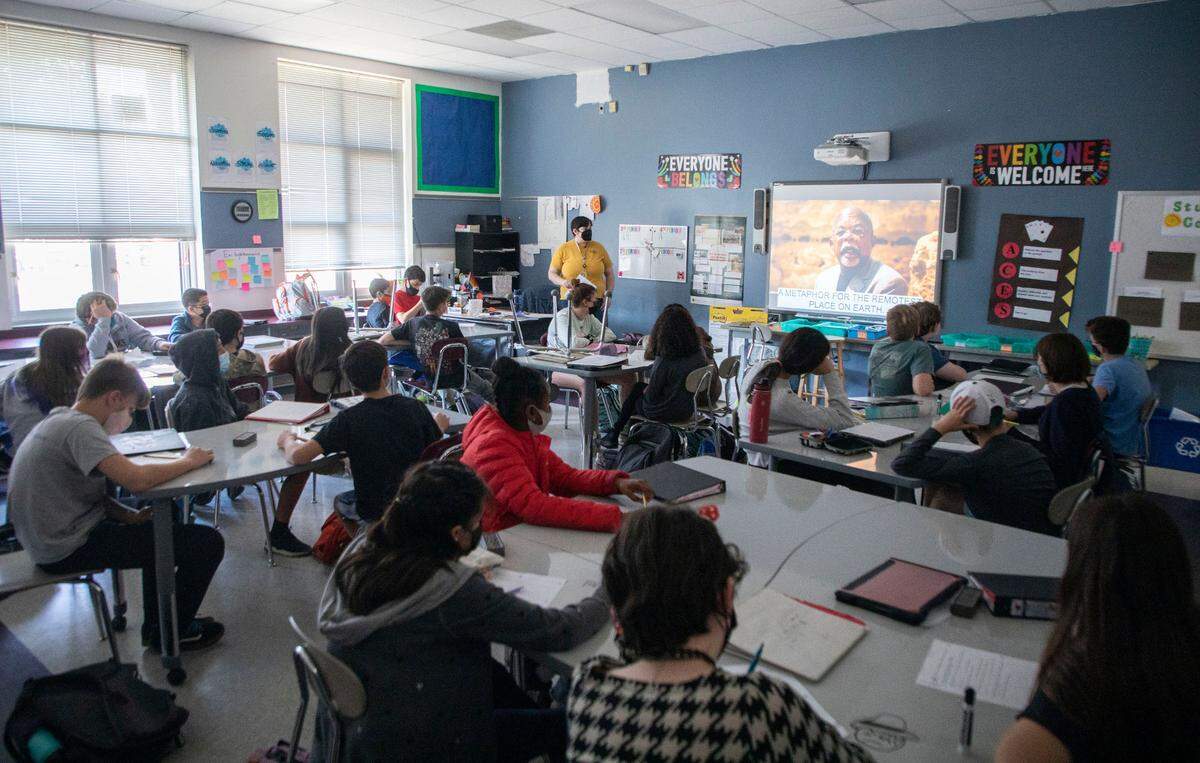
At McDougle Middle School in Carrboro, World History teacher Jessica Caso has turned February’s focus on the diversity of African culture. She wants her seventh-grade students to learn about the positive contributions made by Africa’s many different ethnic groups before they move on to discuss the impact that European colonialism had on the continent.
“A lot of times when people study African history, they’re doing it from a Euro-centric perspective where it’s like Europe came in to like ‘save African countries,’” Caso said in an interview. “That’s even kind of a thing that’s talked about now, so I want them to see the African side of that history.”
Caso said she feels she has the support of the school, the district and her parents. At the same time, Caso says that as a white teacher she has to acknowledge her privilege and bias when she discusses these issues.
When McDougle Middle students walk in the hallways, they can scan QR codes to learn about African Americans like Tamika Mallory, who helped organize the 2017 Women’s March, and Dr. Kizzmekia Corbett, who helped develop a COVID-19 vaccine.
Similar activities have occurred all February at schools across Chapel Hill-Carrboro. Things won’t end when end Black History Month is over.
“Black History Month is not just one month a year,” Stanley said. “It’s something we infuse throughout the school year.”
This story was originally published February 25, 2022 at 6:04 PM.