Are NC schools unsafe? Lt. Gov. Mark Robinson says student discipline is ‘abysmal.’
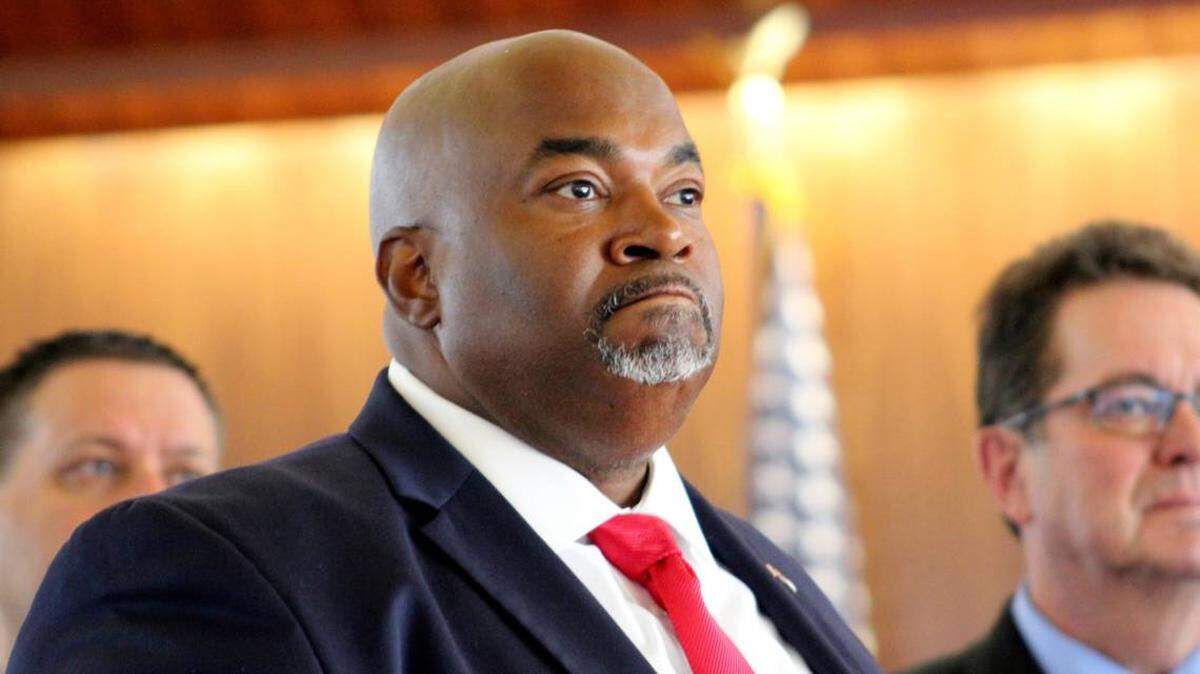
Lt. Gov. Mark Robinson said Monday that North Carolina public schools have become unsafe places because disruptive students aren’t being disciplined for their bad behavior.
Robinson told a legislative committee that restoring order and discipline in classrooms is key to transforming the state’s K-12 education system. Robinson said some teachers have told him they feel unsafe due to the lack of discipline.
“Teachers have got to stop going to school in fear for themselves, and the same thing is true for our students,” Robinson, a Republican, told the House Committee on an Education System for North Carolina’s Future.
“We see the chaos in the schools right now. Part of the reason is we’re no longer providing the discipline inside those walls that we need to.”
Monday’s presentation comes at a time when suspensions have dropped statewide and nationally over the past decade, even before the pandemic. Educators have looked to alternative forms of discipline while questioning whether the disproportionately high suspension rates of Black students may be due to racism.
But Robinson said school crime is a problem, and he pointed to the number of reports of students having weapons or a controlled substance. Robinson said removing the “bad actors” from classrooms and giving them “to the proper authorities” will allow teachers to focus on teaching. Those authorities could include law enforcement or social workers, he said.
“The state of our school safety right now is abysmal, and I can tell you right now it ain’t got anything to do with my gun at home,” Robinson said. “It’s got something to do with the way we’re administering these schools and taking care of bad actors within the schools.”
James Ford, a State Board of Education member, argued more context is needed behind the crime and discipline statistics that Robinson presented to legislators. Both Ford and Robinson are Black. Robinson also serves on the state board.
“Again, 96% of suspensions are for NON-CRIMINAL offenses,” Ford tweeted Monday in response to Robinson’s comments. “But those who bear the brunt are Black and brown kids. Yes, let’s have tough conversations.
“They talking about ‘tough on crime’ responses to Black students who are NOT committing crimes. Let’s be real.”
‘Social theories’ in schools
Since being elected in 2020, Robinson has been vocal about keeping what he calls “social theories” out of public schools. That has included criticizing LGBTQ books in schools that he says have obscene content and speaking against what he calls “political indoctrination” of students by some teachers.
Robinson also opposed the state’s new social studies standards, saying that they promote Critical Race Theory. Supporters say the new standards will better represent the view of historically marginalized groups while Robinson says they paint an overly negative view of the nation.
Robinson charged Monday that “social theories and political ideologies” are allowing disruptive students to stay in school. He said students showing unacceptable behavior should be placed in online settings or alternative learning programs
“The state school board needs to make plain that we’re not going to make excuses for you,” Robinson said. “We’re not going to say that because you didn’t get enough cookies last night at home or because ‘XYZ problem’ exists that you can come to school and disrupt the class.”
But Eric Davis, chairman of the state board, told the committee that when students experience trauma, anxiety or depression, it can be misinterpreted as unacceptable behavior. He said those students need professional care and support so their education isn’t interrupted.
Davis cited an example of a student who turned over all the desks in their classroom because the child wasn’t getting the medication that they needed.
Fatherless households cited
Robinson received a receptive response from lawmakers. The House Committee is expected to make recommendations for changes to public education in a year or two.
Rep. Jeff Zenger, a Forsyth County Republican, said much of the problem of school discipline can be traced to the increase in the number of households without fathers.
“For years we’ve emasculated men, “ Zenger said. “We’ve not held people up to be honorable. I think one of the things we’re going to have to do — even though it’s really supposed to be the role of the parents — we’re going to have to start to do some things to teach young men how to be young men.”
Robinson answered that he believes many parents will do the “right thing” if schools set standards of behavior and discipline.
Rep. Hugh Blackwell, a Burke County Republican, asked how lawmakers could help improve school discipline. Robinson suggested more funding for law enforcement and social services.
Ford, the state board member, said people should be worried about what could result from the presentation.
“PAY ATTENTION,” Ford tweeted. “They talking about more police for non-violent/non-criminal offenses where Black kids are disproportionately suspended. The assumption as always is that the problem is Black children and families. But you can’t dare imply that racism is at work?”
This story was originally published February 21, 2022 at 6:32 PM.