How federal cash will help NC’s small farmers put local food on the school lunch table
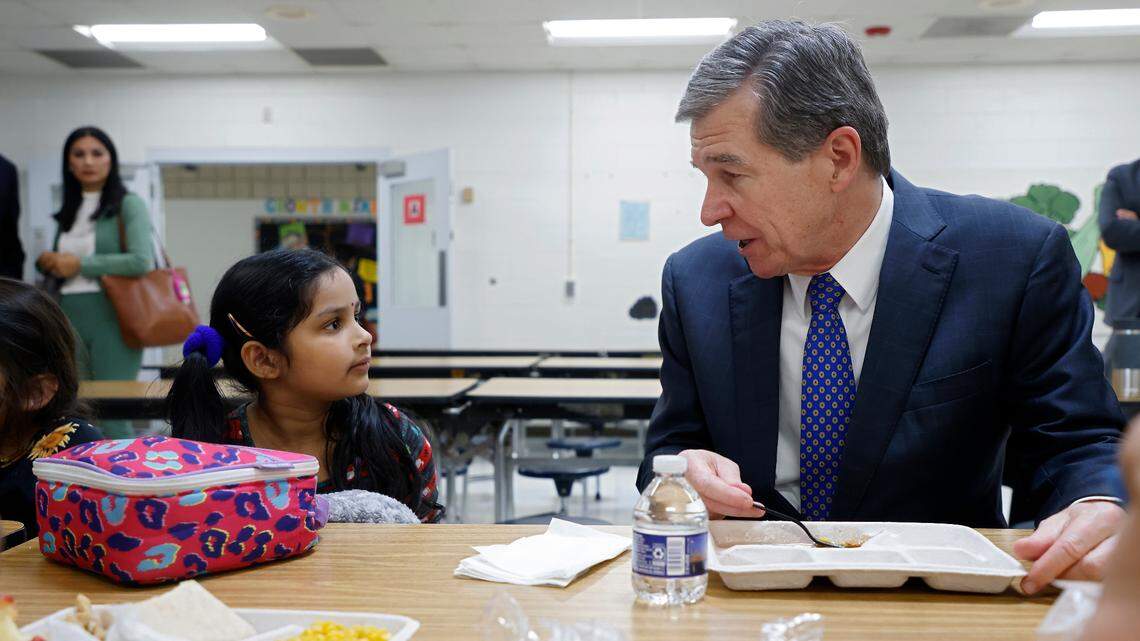
Apples, basketball and broccoli dominated the conversation at a Durham elementary school where self-proclaimed school-lunch lover Gov. Roy Cooper sat to have a snack Tuesday.
“I love school cafeteria food, always have all my life. Growing up in public schools in Nash County, I was the guy. If somebody didn’t want something, they gave it to me,” Cooper said in a press conference at Bethesda Elementary School.
Cooper was in Durham to celebrate a $13.2 million injection of federal cash that will put more locally grown food in North Carolina public schools.
“The studies are overwhelming that students who’ve had a couple of meals do better in school and have fewer discipline problems,” he said.
U.S. Department of Agriculture Deputy Under Secretary Mae Wu also spent the morning at the school, as did a smattering of local and state officials.
“It’s a win for North Carolina farmers. It’s a win for North Carolina teachers. It’s a win for North Carolina students. It’s a win for our local economies and communities,” Wu told the crowd.
Supporting North Carolina’s small farms
David Smith, chief deputy commissioner of the state Department of Agriculture & Consumer Services, the agency that buys the farm-grown foods, said they’ve had a program in place for 25 years.
“Since 1997,” Smith said. “It puts millions of dollars into the local economy for farmers every year.”
However, that program has not always been kind to the smaller players.
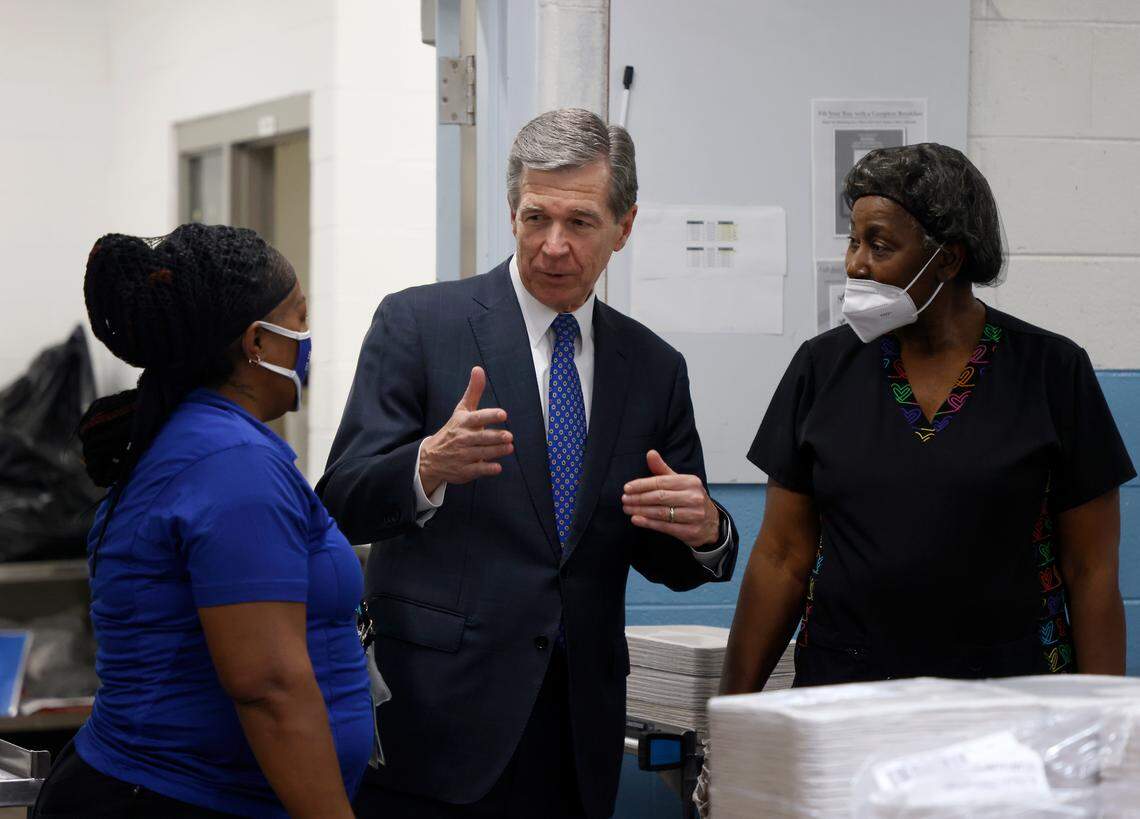
North Carolina is one of only seven states that enforce a GAP certification requirement, said Durham’s director of child nutrition services James Keaten. GAP is a USDA acronym for Good Agricultural Practices, a program that verifies that fruits and vegetables are produced and stored safely.
“So schools are not allowed to serve food from local farmers unless the farmer is GAP-certified. And the GAP certification is by crop. So if you have a crop of strawberries and a crop of fish and a crop of sweet potatoes, you have certifications for each of those,” Keaten explained.
That quickly adds up.
“It’s very expensive to do GAP certification. That’s why we currently don’t purchase a lot of local products,” Keaten said. “That’s where this grant comes in and why it’s so important.”
Wu, a Raleigh native who graduated from the N.C. School of Science and Math and got her law degree at Duke University, said they estimate the grant funding will help 200 producers enter new markets.
At this elementary school, all students get free lunch
DPS Chief Operating Officer Julius Monk said they know not all students get enough food at home.
“When our students don’t have a nutritious meal to eat, they can’t focus, their academics suffer,” Monk said.
Bethesda is a Title I school, meaning all students receive free lunch because enough of them come from lower-income families. Free breakfast is served in all Durham public schools.
“I know that I’ve been in the cafeteria and seen kids go back through more than once,” Principal Emory Wyckoff said. “This may be the only meal they get. We want it to be healthy, we want it to be nutritious.”
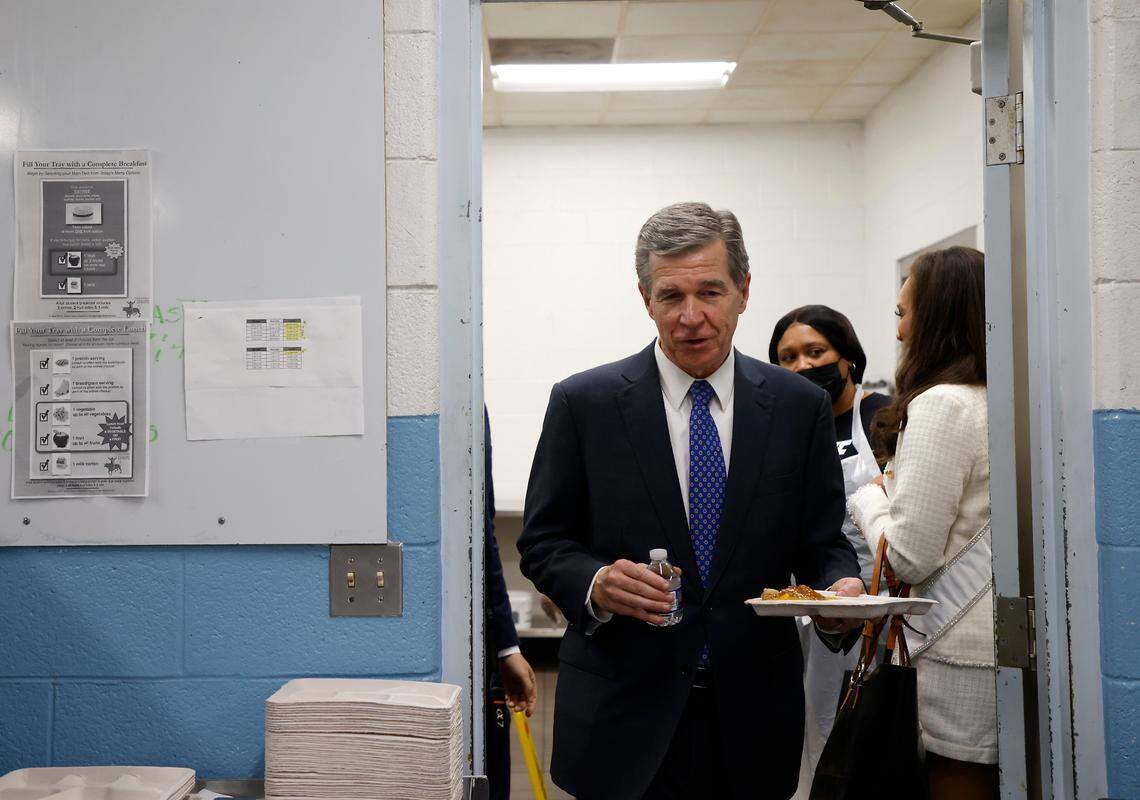
“We’re very sensitive to that need. We never try to make the child feel some kind of way,” cafeteria worker Ruby Lewis said. “It’s a beautiful thing to help the kids to taste different foods that they never would even get a chance to taste.”
Lewis said the kids’ favorite veggies are corn, string beans and broccoli with cheese. And, of course, potatoes.
“I really feel welcome. You guys have been really nice to me,” Cooper told the kindergartners who surrounded him as he finished his serving of peach cobbler.
“I tell a lot of people who criticize our public schools — go in one please. You probably haven’t been in one in years. Go in one,” he said. “Yes, we have a lot of challenges. Yes, we need to invest more. Yes, we need to do better, but it won’t take long before you will see something wonderful happen.”
This story was originally published October 11, 2022 at 4:06 PM.