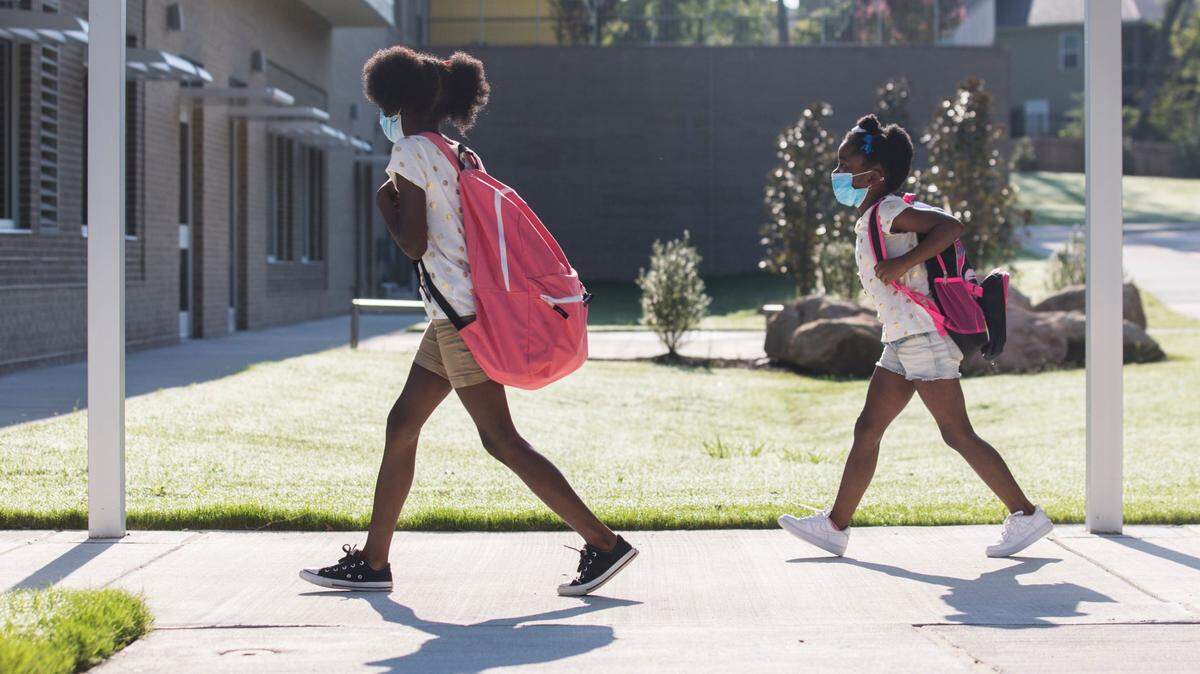
Can Wake students walk to school alone? It depends on if the principal says it’s safe.
Updated with school board approving policy on Oct. 3.
New rules could result in Wake County students losing their school assignment if they defy their principal’s decision that it’s unsafe to walk to school alone.
The Wake County school board gave final approval Oct. 3 to a new policy that standardizes the rules for when students can walk to and from school. It includes a provision where the district can take “appropriate measures,” such as reassign a student if the family ignores a principal’s decision that walking alone is unsafe.
How young is too young to walk to school alone?
Under North Carolina law, schools are not required to give transportation to students who live within 1.5 miles of the school. Bus service may still be provided to “walk zone” students if the route is not considered safe for walking.
International Walk To School Day is held to encourage students to walk or ride bicycles to and from school. Several Wake schools participate in the annual event.
Elementary schools in Wake have varying rules about how old students need to be to walk to and from school alone. Some allow it for students as young as second-graders while others restrict it to fourth- and fifth-graders.
The new walk policy would standardize it to say that, “in general, students in grades two and above may walk unaccompanied by a responsible adult.” The policy says families of students in pre-K, kindergarten and first grade should arrange for a responsible adult or older sibling to accompany the child.
Principals can bar walkers
Under the policy, a school may recommend that students not walk to school without a responsible adult due to their age or if their walking path would pose added risk.
“After notification, the parent/guardian must provide written direction to the school requiring release of the student to walk unaccompanied,” according to the policy. “It is the Board’s request, however, that parents/guardians uphold the recommendation of the school.”
But in “limited, exceptional circumstances, when there is a clear and substantial risk to the student,” the principal could deny the parent’s request, even if they say in writing they’re letting their child walk alone. The principal would need the approval of the superintendent’s designee in the transportation department to deny the parental request.
A parent could file a grievance to challenge the principal’s denial. But the principal’s decision would stand during the grievance process.
“In all circumstances where a student is not permitted to walk unaccompanied by a responsible adult, if a parent does not comply with the determination, the school district may take appropriate measures to address the concern,” according to the policy. “Those measures include, but are not limited to, an administrative school reassignment, the revocation of a voluntary transfer, or any other appropriate measure.”
This story was originally published September 20, 2023 at 8:00 AM.