Candidates are interviewing to become UNC chancellor, but you can’t know who they are
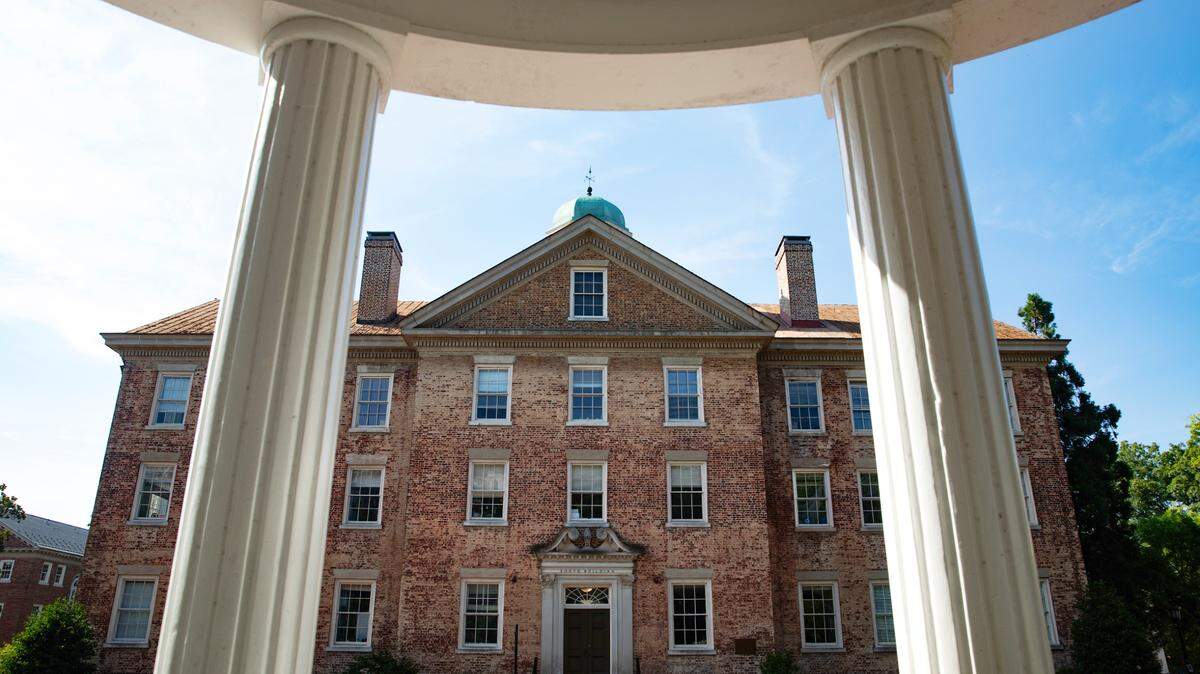
More than four months into the process, the search for UNC-Chapel Hill’s 13th chancellor is moving along quickly, with several candidates interviewing for the job this week.
Search committee chair Cristy Page, executive dean at the UNC School of Medicine, confirmed Thursday that a two-day meeting held this week involved candidate interviews.
“We’ve had two long days of multiple interviews,” Page told reporters.
She would not provide the number of candidates the committee interviewed, but said the committee spent a “long time” with each one over the two days it met in closed session, without the public or media present. Most of the candidates interviewed in person in Chapel Hill, Page said.
Page said the committee anticipates forwarding a slate of at least three finalists to the UNC Board of Trustees for its consideration “sometime in the upcoming weeks,” marking the next step in the search as outlined in UNC System policy.
But the public can’t know who the candidates are.
That’s because the system’s policy keeps searches confidential and dictates that none of the names and identities of the chancellor candidates, semi-finalists or finalists may be released to the public — even after the search is over. The only name officially available to the public will likely be the one who is chosen to become chancellor by UNC System President Peter Hans and is approved in a public meeting.
The policy is not new, with the UNC System Board of Governors adopting it in 2018. And search leaders, including Page and Laurie Wilder, president of Parker Executive Search, the firm leading the effort, have said keeping candidates confidential will attract high-quality applicants who would otherwise be wary of their names becoming public.
But the secretive process is raising eyebrows among some members of the UNC community as they wait to learn who its next leader will be — particularly after the search committee last month nixed plans to gather more input from students, faculty and staff in listening sessions this fall.
That includes Samuel Scarborough, a rising sophomore at UNC who is a member of groups Southern Student Action Coalition and TransparUNCy. He attended the committee’s brief open-session meeting Thursday afternoon.
“I’m mainly coming here as a student to make sure students are around,” he told The News & Observer, “even if we’re not really given the voice or any meaningful decision-making power with regard to this.”
Search firm emphasizes confidentiality
Chancellor searches in the UNC System have not always been confidential, at least under an official policy. Even before the Board of Governors made searches confidential in 2018, many campuses chose to keep the names of candidates private.
But two “problematic” searches led the Board of Governors to make the efforts confidential system-wide in 2018, The N&O reported. Those searches included one at Western Carolina University, in which a board member forwarded a candidate’s application materials to an outside firm, which in turn uncovered what the board member contended was a misrepresentation on the candidate’s resume.
Advocates for confidential searches, including Wilder and Page, say that such processes can quell candidates’ fears about entering a search, particularly for sitting university leaders. In previous meetings, Wilder has noted that it can impact leaders’ relationships with faculty and donors, among other groups, if it becomes public that they are seeking a new job.
“We’re all hoping to find the very best candidates, and that is the big picture,” Page said. “The very best candidates, the quality candidates, care deeply about confidentiality.”
But others argue candidates should be made available to public scrutiny, particularly at public universities. Scarborough, for instance, said the chancellor candidates should be prepared to assume the associated risk if they decide to put their names in the hat for the top job at the UNC System’s flagship university.
To Scarborough, the search committee’s process is a “sham.” He worries that interim Chancellor Lee Roberts has already been selected to become the full-time leader of the university.
“I have a strong hunch that no matter who is [being interviewed], Lee Roberts is going to be selected,” he said.
Roberts, a former state budget director who does not have a professional background in academia, has not publicly stated whether he wants the chancellorship on a permanent basis, nor whether he wanted to apply.
But Roberts has the support of high-profile leaders in the state, including Republican House Speaker Tim Moore and Senate leader Phil Berger — neither of which have an official say in the selection of the next chancellor, but both of whom appoint members of the boards who will weigh in.
Page does not think Roberts’ tenure as interim chancellor has dissuaded additional candidates from applying for the job, she said. She said the candidates who were interviewed this week were “a diverse group of people with a wide range of backgrounds,” with experience in and out of academia.
Next steps in the chancellor search
The search, which kicked off in March, was originally expected to wrap up by the end of the calendar year. But it has moved at a quick pace — with Wilder citing a need to ensure confidentiality as a key reason — and the selection of a new chancellor could come much sooner.
Hans, the system president, said at the committee’s previous meeting last month that searches generally take from six to nine months. But there is precedent for them to move faster: Former UNC Chancellor Kevin Guskiewicz, whose departure opened up the job that the committee is looking to fill, was picked for the job in a four-month search in 2019.
Page did not say whether the search committee would meet again before making a recommendation to the Board of Trustees.
“We had a really great, enriched discussion today,” she said. “And I feel good that we’re very close to a place where we’ll be able to pass those names.”
Once the search committee submits its preferred slate to the trustees, that board will then select three finalists to forward to Hans. He will choose a single nominee to submit to the UNC System Board of Governors.
The Board of Governors will then vote on the president’s nominee and the conditions negotiated for the candidate, including salary and other compensation, in a public meeting. The chancellor nominee is not allowed to be present at any meeting where a vote is taken on their selection.
Page did not provide an estimate for when a new leader would be named.
This story was originally published August 1, 2024 at 6:18 PM.