NC teachers spend 4th most in US on supplies. Why $1,300 is coming out of their wallets
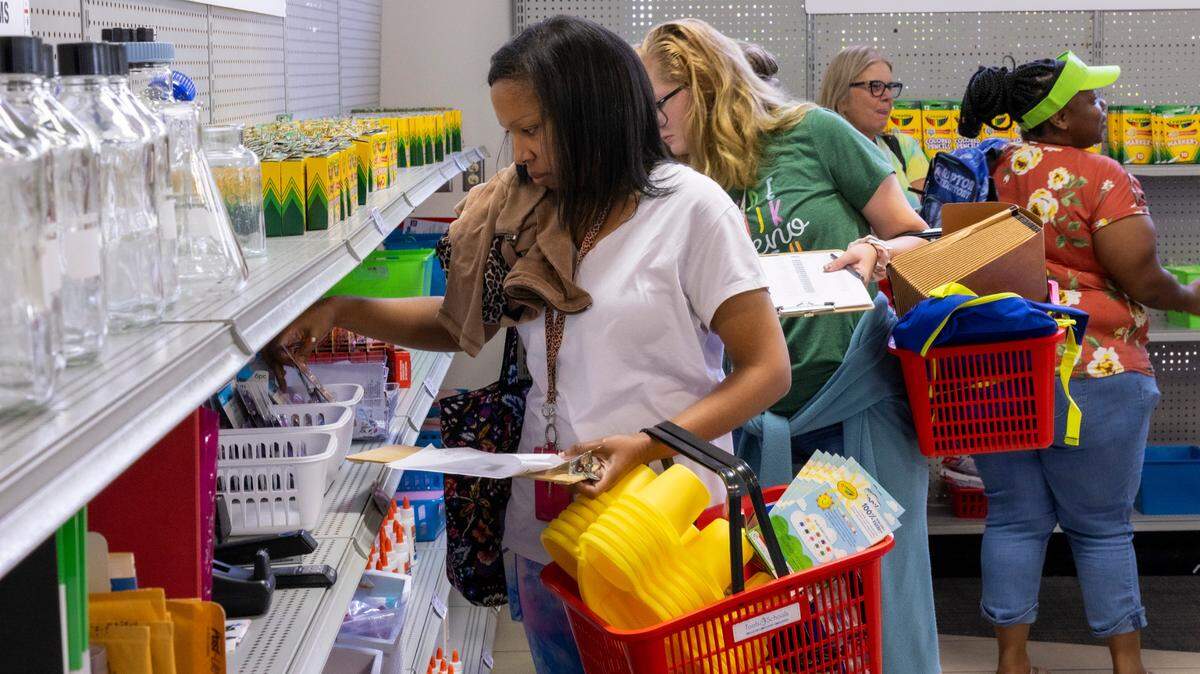
Teachers in North Carolina spend an average of more than $1,300 out-of-pocket on school supplies per year, according to a new survey. That makes the state the fourth most expensive in the country for teachers when it comes to classroom expenses.
The average teacher in North Carolina spends $1,338 per year on classroom supplies, exceeding the national average of $915. The study, conducted last month by CouponBirds, found 93% of teachers use their own money to pay for school supplies like pens, paper and classroom decorations.
According to the nation’s largest teacher’s union, the National Education Association, over 90% of teachers spend their own money on school supplies.
While teachers can earn a tax deduction of up to $300 for qualifying classroom expenses, that still means spending potentially hundreds of dollars out-of-pocket for many.
“Schools will provide basic furniture, but it varies from school to school,” Melissa Bucka, a Charlotte-Mecklenburg Schools kindergarten teacher, told The Charlotte Observer. “But a lot of times what’s not provided is stuff like organizational materials.”
Bucka says one example is the bulletin boards every teacher is required to decorate. While her school provides paper and a basic border, the rest is up to her.
“Whatever theme you want to do, you have to go buy it,” she said. “You want to create an environment that you’re happy with but that’s also inviting and fun for the kids.”
A spokesperson for CMS told the Observer each school receives an “instructional supply allotment” to aid with needed supplies, while 105 of the district’s 186 schools also have access to federal Title I funds. Each school’s principal, alongside the CMS procurement department and school treasurers, decides how those funds will be spent.
Parents also are tasked with buying school supplies for their students. However, at many schools with large portions of low-income students, like the one Bucka worked at for 16 years, she says many parents can’t afford to send their kids to school with all of the needed materials, and teachers make up the difference.
“A lot of our families won’t come with everything on the supply list,” said Bucka. “Some of the things I would spend my money on were juice boxes and snacks for our winter party, for example, because I knew those kids were going to be the ones to need it more.”
‘I want to do as much as I can’
Connie Danna has been a pre-K teacher in CMS for 22 years. She agrees with Bucka.
“We ask parents to bring a box of tissues with their kids at the beginning of the year, but when those run out, if no one donates more, I’m buying them myself,” Danna said.
Danna said she spends her money on items to make learning more engaging for students.
“They provide our curriculum, but they don’t make the games and things we need for it, so we make those ourselves,” said Danna. “So, for example, I buy my own card stock.”
Danna also buys clothes at Goodwill for her students to use as costumes in the drama area of her classroom.
“I have students that have never been to school before, and I want them to have things that they’ve never had before to work with,” she said. “I want to do as much as I can to help my students be successful.”
North Carolina educators reported higher spending on classroom materials than even educators in many states with higher living costs and average teacher salaries, including California, New York and Hawaii.
The average salary for teachers in North Carolina was around $58,300 in the 2023-24 school year, up 3% from the previous year. However, the state dropped once again in the NEA’s yearly rankings of average teacher pay in all 50 states and D.C., from 38th to 41st. The states with lower average teacher salaries than North Carolina are Arkansas, Florida, Kansas, Louisiana, Mississippi, Missouri, Montana, South Dakota, Tennessee and West Virginia.
State funding for public education in North Carolina has not kept pace with inflation.
While state per-student spending increased by $1,300 between 2008 and 2020, North Carolina’s funding for public education decreased by 10% over that time frame when adjusted for inflation. North Carolina spent approximately 2.32% of its GDP in 2020 on public K-12 education — the lowest percentage of any state in the country.
Meanwhile, between 2020 and 2023, the cost of school supplies increased by nearly 24%, according to the U.S. Department of Labor Statistics.
Bucka says, while she still finds her profession rewarding, it’s becoming more difficult to make ends meet herself as a single mom of two.
“I’ve had to cut back with everything costing more, and it bothers me that I can’t do some of the same things that I’ve always done for my classes,” she said. “But at the same time, I’ve got to make sure I have enough so my girls have what they need and I’m able to pay my bills.”
If she weren’t just seven years from retirement, Bucka said she might call it quits.
“It’s still rewarding to me, which is why I continue to do it, but it’s gotten so much harder,” she said. “If I could walk away right now, I absolutely would.”
This story was originally published August 6, 2024 at 5:00 AM with the headline "NC teachers spend 4th most in US on supplies. Why $1,300 is coming out of their wallets."