
Raleigh to partner with city’s HBCUs to help address schools’ financial challenges
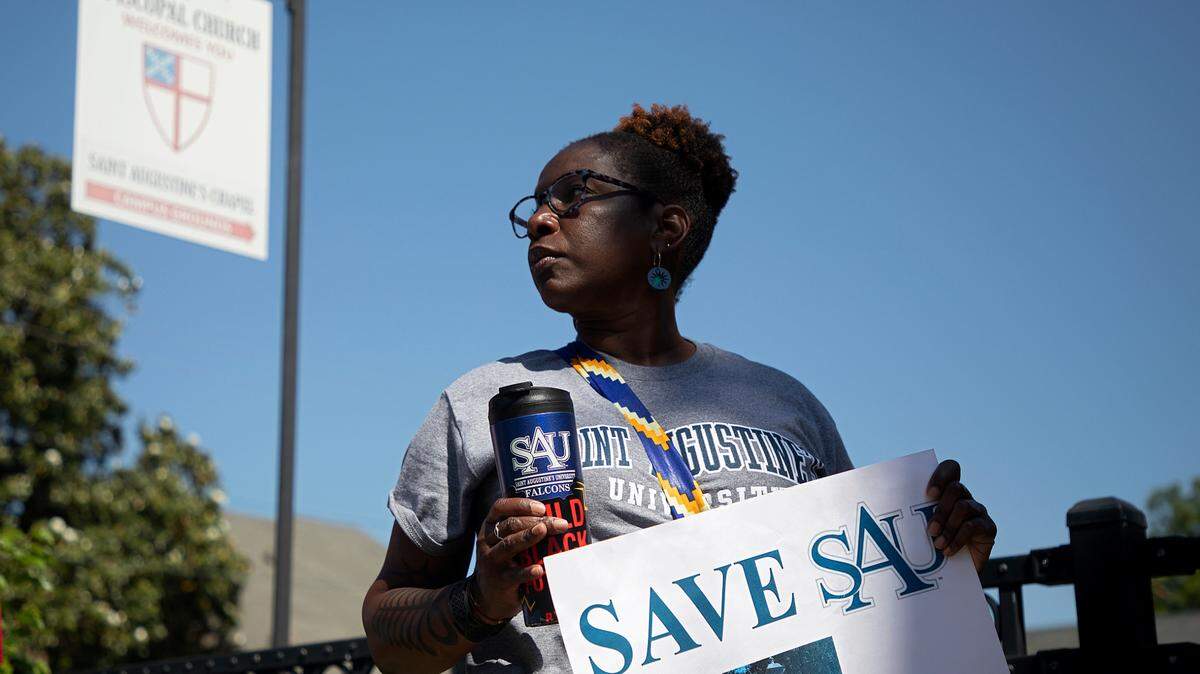
The Raleigh City Council voted Wednesday to partner with Shaw and St. Augustine’s universities to help get the schools on firmer financial footing.
The vote came two weeks after a council committee met with the presidents of the historically Black universities on Oct. 23 and recommended the city:
- create a partnership with the universities to buy or lease their surplus land for future affordable housing
- work with the universities to explore federal grant opportunities
- organize a fund for private entities to contribute to the HBCUs
Shaw President Paulette Dillard said at the October meeting that the city should utilize “what we bring to the table” in Raleigh’s plans for economic development.
“As the city has continued to be recognized as a great place to live, work, etc., that’s not the case for all of its citizens,” she said. “You have two of the oldest historically Black colleges and universities in the nation and we have been creating the Black middle class since our existence.”
Council approves recommendations
The schools are two of the oldest historically Black colleges and universities, with Shaw founded in 1865 and St. Augustine’s in 1867.
But both of the private, Christian schools have faced financial hardships.
After temporarily losing its accreditation earlier this year, St. Augustine’s enrollment fell to about 200 students at the start of the fall semester compared to about 900 students last fall. Shaw University had just over 1,000 undergraduate and graduate students this year.
In October, committee leaders and the presidents of the schools discussed creating a fund similar to Mayor Vi Lyles’ Racial Equity Initiative in Charlotte that helped Johnson C. Smith University, the city’s only HBCU, raise $250 million to address inequities and barriers to opportunity.
The fund is supported by private corporations, foundations and donors, as well as some public money from the city.
“We do not have the type of corporate giving that they have in Charlotte, so the scale of our initiative will likely be different,” said Council member Jonathan Melton.
Raleigh’s city manager will bring recommendations to the council on what the fund could look like at a later date.
Melton also said there is federal money available that could support the city’s HBCUs but the money is not being distributed because there is no “coordinated effort to seek it through grant writing.”
“If the city could be more of a leader or partner on that, in collaboration with the HBCUs, then we may be able to get them some additional funds from the federal government,” he said.
Selling or leasing surplus land for affordable housing or other city needs would also benefit the schools, both located in growing areas of downtown Raleigh. Marcus Burgess, St. Augustine’s president, said at the October meeting that the university is only using 20% of its 105 acres.
The city is also looking to use over 100 acres of city-owned land for future affordable housing.
‘Funding coming back’
Last June, the City Council approved a rezoning to allow part of Shaw’s campus to be developed for retail, office and residential space. Some future buildings could be 30 stories tall.
The controversial plans divided many Shaw alumni and supporters who said they didn’t trust the developers to protect the school or the nearby mosque that was closed in 2020 at the start of the COVID-19 pandemic. Dillard supported the measure.
At the October meeting, she said both Shaw and St. Augustine’s have been integral to the city’s community and have worked with leaders through other growth strategies but “at some point, we’re doing the lifting, we need a little help with the lifting because we’re lifting beyond our capacity.”
“I’m willing to be in front of any business, philanthropist, anyone else to make our case,” she said at the October meeting. Both of the universities get most of their funding from tuition paid by students and through student loans.
Though St. Augustine’s accreditation has been reinstated, the school remains on probation and questions linger about the future.
“We have been a pillar for a long time, and we want to remain that,” Burgess said last month. “What I have not seen outside of the graciousness of giving me some extensions on paying my water bill, is any funding coming back to the institution to support our programs, to support what we do for the community at large.”
There was no discussion about the recommendations Wednesday afternoon and the vote passed with all council members voting except for Stormie Forte, who was absent. The presidents of the two universities also were not present.
“Council member Forte wanted me to add that she is in full support of these recommendations,” Melton said.