Wake wants more JROTC programs in high schools. Here’s why they think it’s needed.
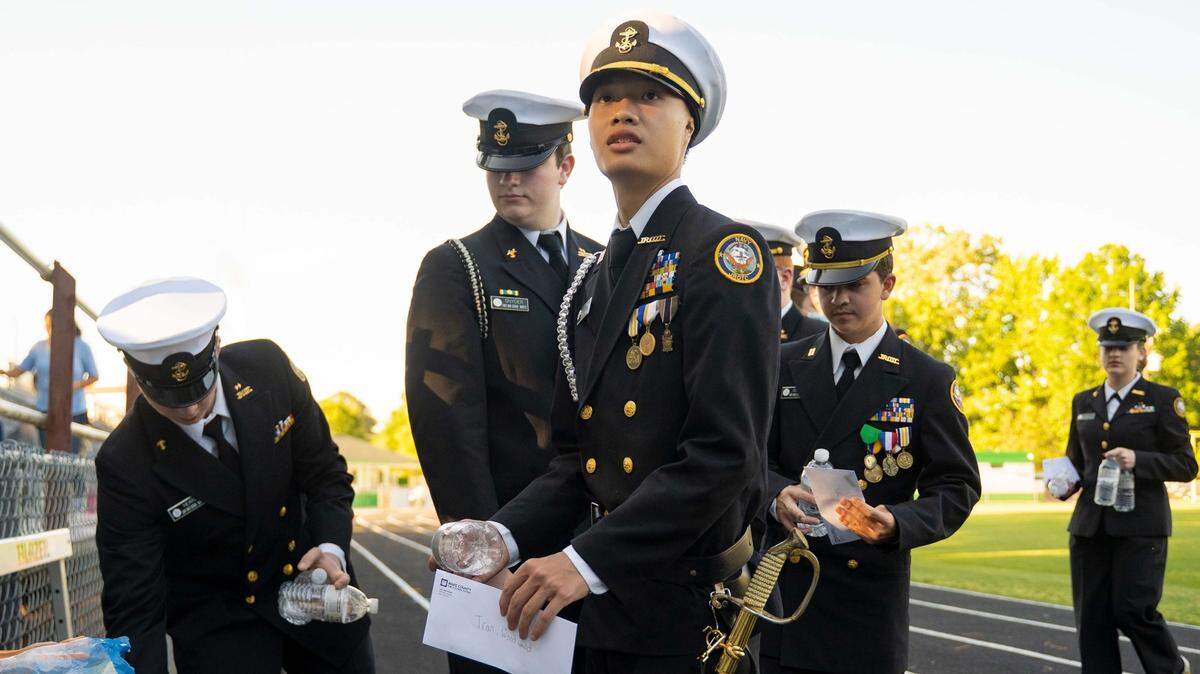
The number of uniformed Junior Reserve Officers’ Training Corps cadets walking the halls of Wake County high schools could rise in the next several years.
Wake County will start a Navy National Defense Cadet Corps program, which is a smaller-scale version of JROTC, at Rolesville High School next school year. It’s all part of an effort to lobby the military to award new Junior ROTC units to North Carolina’s largest school system.
“Our goal is to ensure that JROTC continues to serve as a pathway for leadership development, academic success and for community engagement for our students in the Wake County Public School System,” Drew Cook, assistant superintendent of academics, told the school board recently.
School administrators briefed the board on the district’s expansion plans at a work session on Nov. 12.
Is JROTC good or bad for schools?
Nationally, around 500,000 students attend JROTC programs in more than 3,400 high schools, according to a 2023 report from the Congressional Research Service.
JROTC is a high school elective program taught by retired military personnel with classes in areas such as leadership training, military science, financial literacy and weapons handling.
JROTC programs have come under scrutiny. A 2022 New York Times investigation found at least 33 JROTC instructors nationwide had been charged in criminal cases involving sexual misconduct in the prior five years.
Critics of JROTC programs say they militarize high schools.
Cadets are not required to join the military later. But JROTC statistics show that between 30% and 40% of the graduates continue in some military field, such as a military academy, active service or the National Guard.
“We want our students to be able to prepare for any path that they might choose in life,” Cook told the school board. “I think a lot of times historically anyway there’s been maybe a misperception that it’s just about a pathway to the military or armed services.
“But it’s actually a pathway to all kinds of careers and future skill sets and opportunities that will benefit our students.”
High level of JROTC community service in Wake
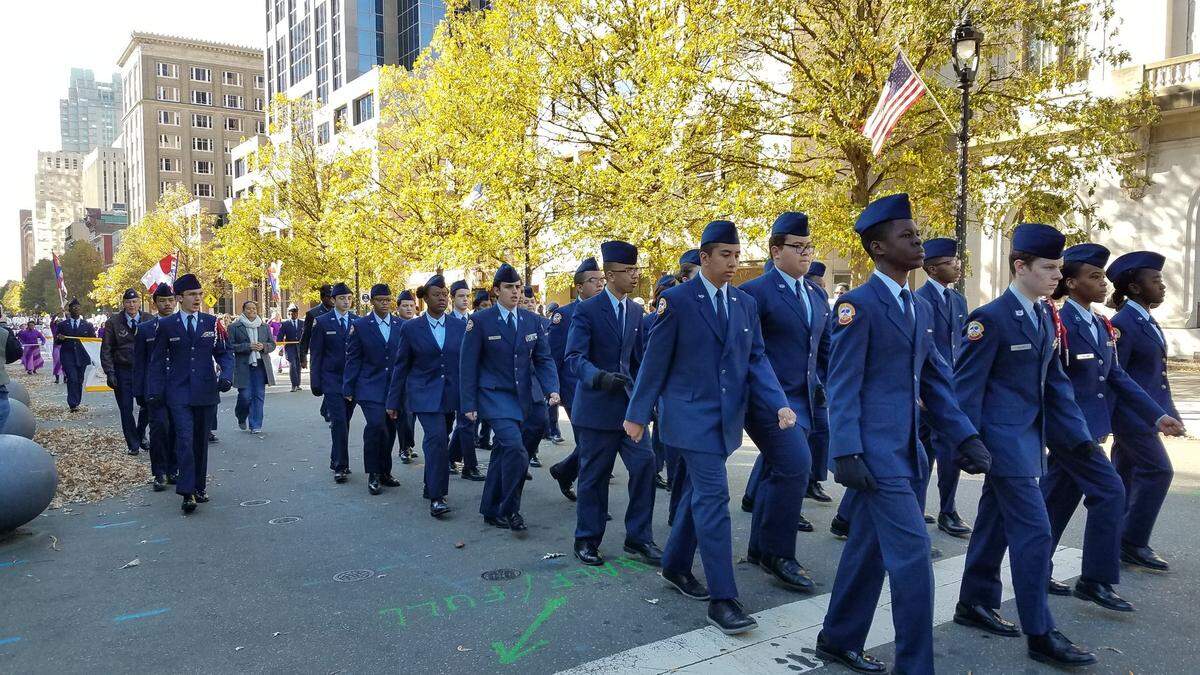
Wake currently has 1,008 JROTC students enrolled at eight high schools. There are Army units at Enloe, Garner, Knightdale, Millbrook and Wake Forest high schools; Air Force units at Broughton and Sanderson high schools; and a Navy unit at Cary High School.
Cook and Brian Glendenning, senior administrator for healthful living, presented the board with statistics showing that Wake students who took four JROTC courses have a higher graduate rate than non-JROTC students.
Wake’s JROTC students are also heavily involved in community service, such as participating in Veterans’ Day events, clothing drives, food bank drives, highway cleanups and Habitat for Humanity builds.
“I’m not sure that any program that we have in our schools competes with the amount of outreach that our JROTC programs does provide,” Glendenning said.
New program at Rolesville High
Wake has not added a JROTC unit since 2015. Glendenning said it’s not from lack of effort. He attributed it to a national slowdown in awarding new units.
Wake is hoping to get around this obstacle by starting a National Defense Cadet Corps (NDCC) program at Rolesville High. The goal is to show that the program has so much student interest that in a few years the Navy will convert it to a full JROTC program.
Glendenning said Rolesville High has wanted a JROTC program since the school opened in 2013.
“There’s a lot of folks in that community who have experiences — either in the military or with JROTC programming — and that has been loud and clear to leadership throughout the time Rolesville High School has been open,” Glendenning said.
Hope for more JROTC units
The climate has changed for JROTC expansion, according to Wake.
Glendenning said the district hopes to get some of the 10 new JROTC units that the Army will add each year.
“We have good candidates in our district,” Glendenning said. “I think we already have some longstanding programs that have demonstrated success.”
As a fallback, Wake will ask the U.S. Department of Defense for more NDCC programs. It’s easier to get a NDCC program because it’s funded by the high school while the military helps fund JROTC programs.
It can cost $41,000 to $53,000 to start a NDCC program, not including the cost for the salary of the instructor.
School board member Lindsay Mahaffey asked staff to also reach out to the Civil Air Patrol, which is an auxiliary of the Air Force. She said this could include forming after-school clubs at high schools.
Regardless of the form it takes, Wake plans to expand the “footprint” for JROTC-style programs.
“Our goal is to not only grow the numbers but also elevate the quality of the experiences offered, ensuring that JROTC remains a valuable asset for students and for the community,” Cook said.