St. Augustine’s University denied accreditation yet again. What’s next for the HBCU?
St. Augustine’s University is facing yet another hurdle in its fight to remain accredited, with the university’s accrediting agency again voting to remove the private, historically Black university from its membership.
St. Augustine’s announced the Southern Association of Colleges and Schools Commission on Colleges (SACSCOC)‘s decision on Tuesday, marking the third time over the past year that the agency or one of its committees has voted to strip the university of its accreditation.
Accreditation is crucial to several facets of university operations, including students’ eligibility to receive financial aid from the federal government.
SACSCOC voted to pull the university’s accreditation last December, citing a host of reasons tied to the university’s finances and governance. St. Augustine’s leaders appealed that decision on two separate occasions, with the second attempt a success. Under that decision, approved by a SACSCOC committee in July, St. Augustine’s was allowed to keep its accreditation, but was placed on probation, which required additional monitoring of the university by the accrediting agency.
Having been on probation continuously since December 2022, this month marked the maximum two-year period that the university was allowed to hold that status, per SACSCOC policy. That meant SACSCOC had two options: find St. Augustine’s in good standing and remove it from probation, or remove it from the agency’s membership if its financial woes had not been adequately addressed.
SACSCOC voted for the latter option at its annual meeting, held Dec. 7-10 in Austin, Texas, according to a Tuesday news release from St. Augustine’s.
Prior to the agency’s decision, St. Augustine’s leaders vowed to appeal an “unfavorable ruling.” While that process plays out, the university’s accreditation “would be temporarily restored,” with a hearing on the appeal expected in February, a Dec. 5 news release from the university said.
“While this may seem like a disappointing decision, we view this as an encouraging outcome that acknowledges our progress, and we are excited about the opportunity the appeal affords us,” interim St. Augustine’s President Marcus Burgess said in a statement Tuesday. “This opportunity to prove that SAU is now a stronger and more financially healthy institution will bring confidence to our stakeholders and partners, ensuring them that SAU remains a cornerstone of opportunity and innovation for our students and the Raleigh community.”
SACSCOC’s decision comes as the university will host its first-ever December graduation ceremony on Friday, an event leaders announced last week. St. Augustine’s Provost Janelle Jennings-Alexander tied the decision to host the inaugural event to the uncertainty surrounding the university’s accreditation.
“We are confident we have a good chance of ultimately prevailing but we do not want students who are able to graduate now to go through a period of uncertainty unnecessarily,” Jennings-Alexander said in the event announcement.
Beyond this week, though, Tuesday’s decision again places the future of St. Augustine’s in question — and potentially puts the university closer to an official loss of accreditation than ever before.
A tumultuous year
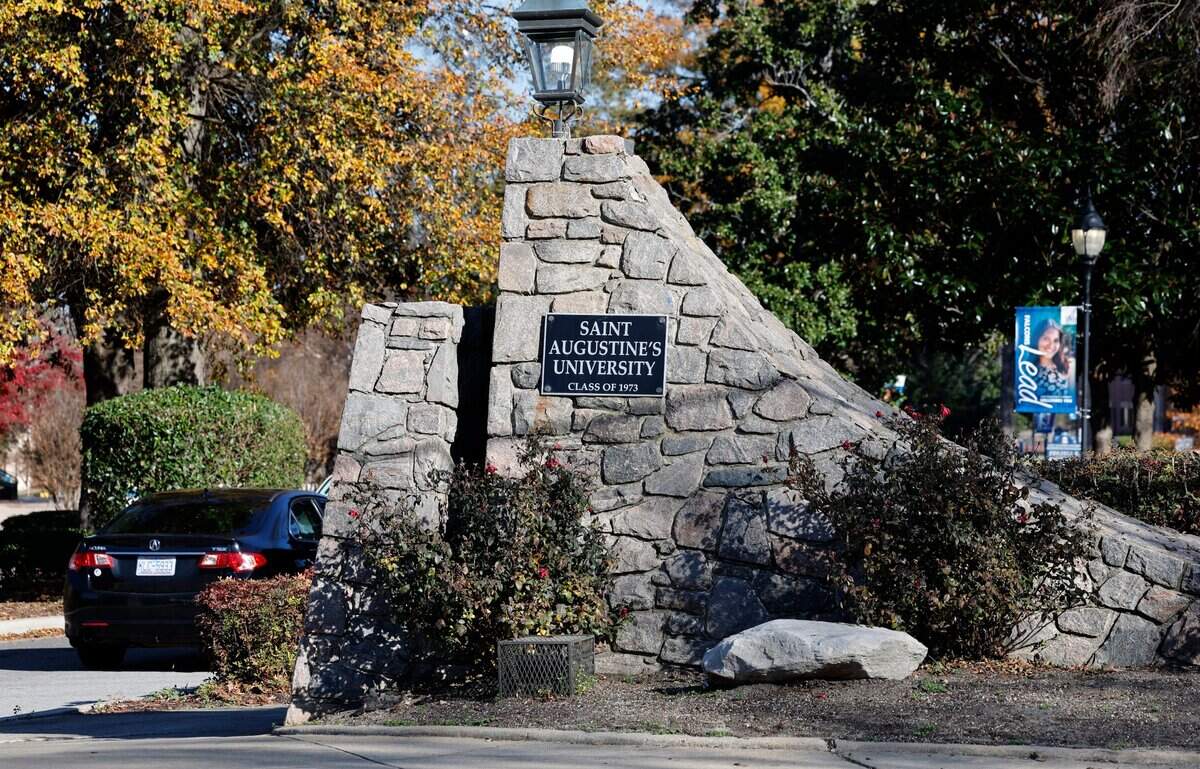
The past year has been a turbulent and tumultuous one for St. Augustine’s, which is located in the Oakwood area of Raleigh and was originally founded by Episcopal clergy in 1867 to educate freed enslaved people.
Almost immediately after SACSCOC voted last December to remove St. Augustine’s from accreditation, a bevy of financial issues at the university began to come to light, largely through media reports. Among other issues, the university on multiple occasions was unable to pay its employees on time and owed major, multi-million dollar debts, including unpaid taxes to the IRS.
After moving classes online in the spring, the university then started classes two weeks later than expected for the fall semester, with campus leaders citing funding and maintenance issues as key reasons for the delay.
Concerns about the university’s financial woes continued throughout the fall term, as leaders announced various moves they painted as solutions to the issues.
In August, the university announced it had secured a “pivotal” $30 million line of credit and an initial $7 million loan from Gothic Ventures, a Durham-based firm. While leaders touted the move as “crucial to our journey toward excellence,” alumni and local clergy have criticized the loan and its terms — which reportedly include a 24% interest rate — as “predatory.”
Kip Johnson, founder of Gothic Ventures, previously defended the terms of the loan to The News & Observer, saying they were drafted “based on the financial challenges facing the University.”
Weeks before SACSCOC’s new decision, the university announced it had reduced its expenses by $17 million this fiscal year by cutting half of the university’s employees, including 67 staff positions, 37 full-time faculty positions and 32 part-time faculty positions. A news release about the move said it was part of a “comprehensive strategy to ensure compliance with SACSCOC and secure its accreditation.”
Shortly after that announcement, the university made another: It plans to partner with a Florida-based sports venue developer to lease part of the university’s land, which leaders say will generate $70 million for the school. A spokesperson confirmed to The N&O that no land would be sold as part of the deal, but the exact terms and scope of the plan remain unclear.
That partnership “reflects our determination to not only address challenges but also secure a brighter future for SAU and the communities we serve,” Brian Boulware, chair of the St. Augustine’s Board of Trustees, said in a statement Tuesday. “We will continue to foster innovation, resilience, and excellence as we move forward.”
Throughout the university’s trials, alumni have also criticized the university’s Board of Trustees and called for them to resign. Save SAU, a coalition of six organizations including the university’s National Alumni Association, filed a lawsuit to remove the board members, but a judge dismissed the case, WRAL reported.
Potential paths forward
The financial issues experienced at St. Augustine’s over the past year hardly mark the first time the university has faced such issues. It has routinely faced similar questions about its finances and future dating back decades.
In 2004, for example, the university was on probation with SACSCOC because “it owed too much money, was failing to collect money it was owed and was relying too heavily on lines of credit,” The N&O reported at the time.
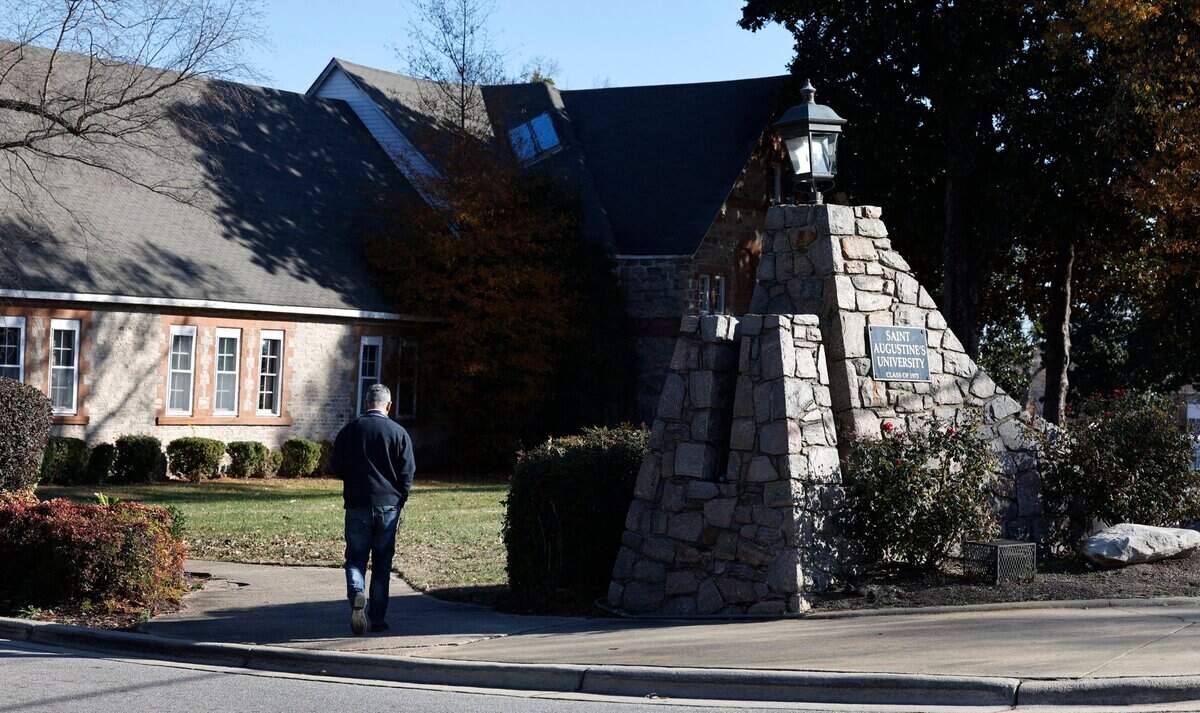
Still, with SACSCOC’s new decision, the university is at a crossroads.
Moving forward, university leaders have said St. Augustine’s will remain accredited, albeit on probation, with SACSCOC while another appeals process plays out. But there are other options for accreditation that the university could pursue, though its exact long-term plans are unknown.
University leaders have previously indicated they are open to pursuing legal action against SACSCOC, potentially taking a page from Greensboro’s Bennett College. Like Bennett, the university could also seek accreditation from another agency.
Bennett, a private, historically Black college for women, lost its SACSCOC accreditation in 2018 after being on probation for years over financial issues. After raising $9.5 million in a fundraising campaign and suing SACSCOC, the university became accredited with another agency, the Transnational Association of Christian Colleges and Schools (TRACS), allowing it to remain open and eligible for federal funding.
Concord’s Barber-Scotia College, another HBCU, offers another case study for St. Augustine’s possible options.
Barber-Scotia has been unaccredited since 2004, when SACSCOC removed the college from membership due to inaccurate reporting of information on the school’s finances and academics during a period of leadership turnover, The Charlotte Post reported. The college’s lack of accreditation leaves students unable to receive financial aid, and its enrollment has dwindled to fewer than a dozen students who take their courses online, Queen City News reported.
Barber-Scotia’s president announced this year that the university plans to seek accreditation from TRACS.
Burgess, St. Augustine’s interim president, has previously said the university is in the midst of a “crisis,” but that any decision to close the school is years away.
This story was originally published December 10, 2024 at 12:18 PM.