Wake schools will reorganize special-education services. Can they do a better job?
Wake County will reorganize how it serves its 22,000 special-education students amid challenges such as allegations of teacher abuse and complaints about slow service.
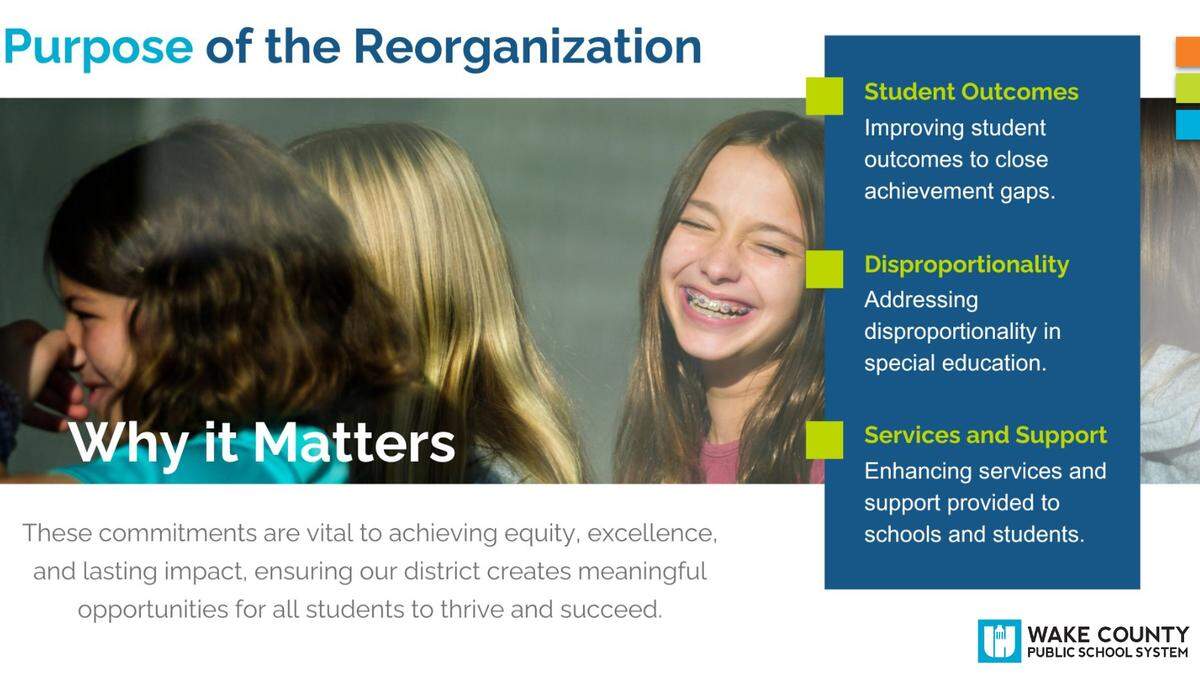
Wake County school administrators told the school board on Tuesday that they’re launching the first reorganization of their special-education services since 2010. The changes, which are still being developed, will include providing more services to schools and improving how they comply with legal requirements to serve special-needs students.
“We don’t just want to move people around and move services around,” said Stacey Wilson-Norman, Wake’s chief academic advancement officer. “We want to have a purpose and a strategic alignment.”
Services for special education students are governed by state and federal law.
Special-education students have Individualized Education Plans (IEPs) that are supposed to list the additional services they’ll get from the school to help them cope with their disabilities.
As part of the reorganization, Wake says it will enhance compliance with IEPs, resulting in fewer legal disputes and penalties. Some families have taken Wake to court and won six-figure settlements to get the services they say their child needs.
Wake also says it wants to achieve greater compliance with state and federal regulations to mitigate financial and reputation risks.
Disproportionality in special education
The reorganization comes as Wake says it wants to improve academic outcomes for special-education students and address disproportionality in the program.
Currently, only 24.2% of students with disabilities are academically proficient on state exams. They’ve got the furthest of any group to go as Wake tries to have 90% of its students academically proficient by 2028.
Wake would have to increase the proficiency rate for special-education students by 16.45 points a year to reach 90% by 2028.
“We’re not making progress close to that annually,” Wilson-Norman said.
Wake says it wants to increase proficiency rates for special education students with targeted interventions. Wake also wants to reduce the achievement gap between special-education students and their peers.
Students of color are over-represented in the special-ed population.
Students with disabilities accounted for 38.1% of Wake’s suspensions last school year. But students with disabilities only account for 11.4% of the district’s enrollment.
Wake has been trying to reduce the number of out-of-school suspensions, saying students will benefit academically if they’re on campus learning.
Wake’s test scores, demographics and suspension rates for special-education students mirror national trends.

Teacher turnover in special education
Part of the challenge Wake faces is that it’s harder to find people to work with special-education students.
Wake has a higher vacancy rate for teachers and instructional assistants in special education than in general education classrooms. Wake also has many special-education teachers who didn’t go through the traditional route of attending a college to get a teaching degree.
Wilson-Norman, the chief academic advancement officer, said one of the recurring requests from schools is to provide more training for special-education teachers.
“How do we provide support faster, quicker and whatever ways so that teachers are prepared?” she told the board.
School board vice chair Tyler Swanson was briefly a special-education teacher at Enloe High School in Raleigh. Swanson said that the caseload got so high that he had to focus on the students with the greatest needs, making it harder to serve the IEPs of other students.
Swanson said hiring case managers would help special-education teachers be able to focus on their teaching duties.
Allegations of abuse against special-ed staff in Wake
The reorganization comes as Wake’s special-education services have come under increased scrutiny.
Last school year saw the arrests of at least four teachers and instructional assistants accused of assaulting students with disabilities.
A federal lawsuit accuses the school system of negligence in the case of James Rencher, a special-education teacher who was convicted of assaulting two students with disabilities. The lawsuit alleges it took 602 days between the time that Wake was first alerted about the abuse before it was reported to law enforcement.
In response, Wake says it’s reviewing how the Rencher case was handled and has implemented several measures, including:
▪ Training sessions for principals on mandatory reporting requirements.
▪ Strengthening report tracking processes.
▪ Updating investigation procedures and adding additional staff to support investigations.
▪ Created and shared a new Mandatory Reporting Guide that Wake says “clearly outlines the processes for reporting to law enforcement and other outside agencies.”