Mandatory DEI courses in UNC System ‘suspended’ after Trump executive order, memo shows

North Carolina’s public universities can no longer require students to take general-education courses related to diversity, equity and inclusion — a change directly tied to a January executive order by President Donald Trump.
UNC System general counsel Andrew Tripp announced the move Wednesday in a memo “regarding federal contracting compliance,” obtained by The News & Observer. The memo listed the chancellors of all 16 of the state’s public universities and the North Carolina School of Science and Mathematics as recipients.
According to the memo, universities will still be allowed to offer diversity-related courses, but students cannot be required to take them.
While the memo pertained specifically to Trump’s order on “Ending Illegal Discrimination and Restoring Merit-Based Opportunity,” which he signed on Jan. 21, the change marks the latest effort to dismantle DEI in the public university system. Last year, the UNC System Board of Governors repealed DEI mandates in favor of a new policy on “institutional neutrality,” a move that resulted in dozens of diversity-related jobs being eliminated or restructured.
Among other provisions, Trump’s order adds new requirements for federal agencies seeking to enter into contracts with third-party organizations — including that an entity applying for a contract must attest that “it does not operate any programs promoting DEI that violate any applicable Federal anti-discrimination laws.” The contractors must also certify that they comply “with all applicable Federal anti-discrimination laws.”
In higher education broadly, and specifically in the UNC System, it is common for universities to hold contracts with the federal government for research or other campus operations such as student aid.
The UNC System, Tripp wrote, is “synonymous with cutting edge federal research,” pointing to the amount of money that the state’s universities receive in federal research funding annually. In the 2023-24 fiscal year, that amounted to $1.4 billion — accounting for 62% of the system’s research funds and 13% of the system’s overall budget, Tripp wrote. That same year, the UNC System received more than $600 million in additional federal money for student aid and other funding, the memo stated.
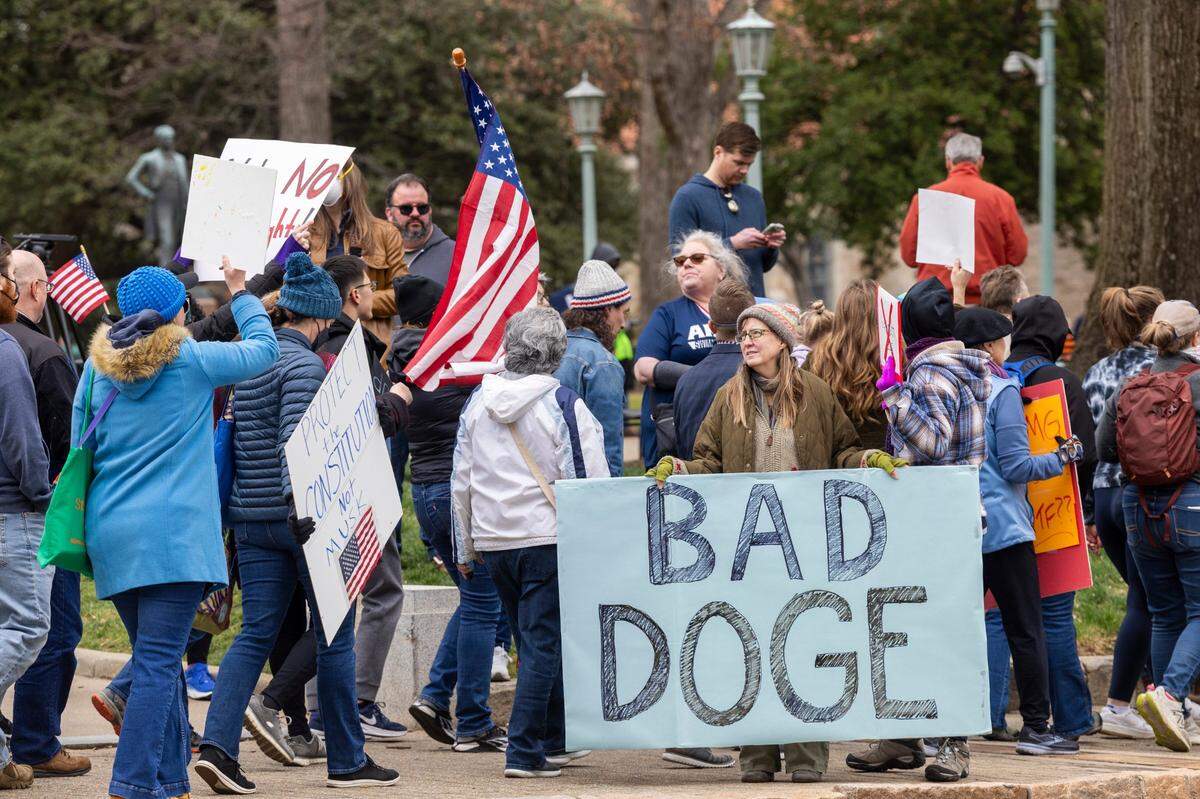
If contractors do not adhere to the new requirements under the executive order, the memo stated, they “risk ineligibility for additional federal contracts and grants — or worse — costly enforcement actions initiated by federal agencies.” Tripp then wrote than any “mandatory curricular and program requirements on prohibited topics discussed in the (executive order)“ could prevent universities from being considered compliant under the new mandate. It is unclear, exactly, what topics are prohibited under the order.
“Accordingly, effective immediately, all general education requirements and major-specific requirements mandating completion of course credits related to diversity, equity, and inclusion,” as well as any other prohibited topics identified in the policy that replaced the UNC System’s previous DEI policy last year, “are suspended,” Tripp wrote.
At multiple points throughout the memo, Tripp acknowledged that it is too soon to know how Trump’s executive order will be interpreted across the federal government. But the university system is taking action anyway, he wrote.
“Even though some form of additional federal guidance is expected, and the law in this area remains unsettled, the risk of jeopardizing over $1.4B in critical federal research funding is simply too great to defer action,” the memo read.
In a statement to The N&O, UNC System spokesperson Andy Wallace wrote: “Like institutions across the country, we’re assessing recent changes to federal policy and ensuring our universities can continue receiving the federal funding they depend on.”
Course requirements at NC State, elsewhere
Under the suspension outlined in Tripp’s memo, diversity-related courses that were previously required will now be converted to elective courses. Students may stay enrolled in the courses and receive elective credit or withdraw from the course “without penalty.” Dropping the courses will not delay a student’s graduation, provided they meet all of the other requirements of their degree programs.
“This does not affect any course content; it suspends any requirements for DEI-focused courses as a condition of graduation,” Wallace said in his statement.
At least a handful of universities in the 17-campus UNC System currently require students to take a diversity-related course to graduate, including NC State University, where students must take one course in “U.S. Diversity, Equity and Inclusion.”
The “rationale” for that requirement at NC State is listed on the university catalog website as: “The study of diversity, equity, and inclusion in the United States provides students the opportunity to consider questions of difference and culture, identity and community, privilege and oppression, and power and responsibility in our nation, and to gain an understanding of how these issues affect both individuals and communities.”
UNC Greensboro also lists a DEI-related course requirement, in which students study “diversity and equity” through the humanities and fine arts or through the social and behavioral sciences. Courses that fulfill the requirement “focus on systems of oppression, structures of power, and institutions, while making connections to U.S. or global societies and examining intellectual traditions that address systems of injustice,” per a university website.
UNC Asheville, which previously required students to take a “diversity intensive” course, no longer includes references to that requirement on its websites. UNCA Chancellor Kimberly van Noort addressed Tripp’s memo in a message to her campus Thursday, saying that the university’s “top priority is ensuring that this change does not impede graduation or your academic degree progress.”
Some major- or academic program-specific DEI requirements may remain under the suspension if a university chancellor approves a “tailored waiver,” according to Tripp’s memo. The chancellors will hold the sole authority to approve or deny such requests, and they must report any approved waivers to the Board of Governors.
In an email to The N&O, UNC Asheville spokesperson Brian Hart wrote that any “diversity intensive” courses at the university “that are part of a major, minor, or certificate program will still remain as program requirements.” Asked whether van Noort had already approved waivers for such courses, Hart replied that university leaders “are currently determining which classes fall under the category of ‘major-specific requirements’ and continue to work with the UNC System Office to determine how to properly adhere to the process for waivers to the program-specific requirements.”
Still, the memo states, chancellors may not waive the suspension on the general-education requirements. The campus leaders were directed to implement the directives included in the memo immediately.
This story was originally published February 6, 2025 at 5:21 PM.