Thousands of affluent students now benefit from NC private school voucher expansion
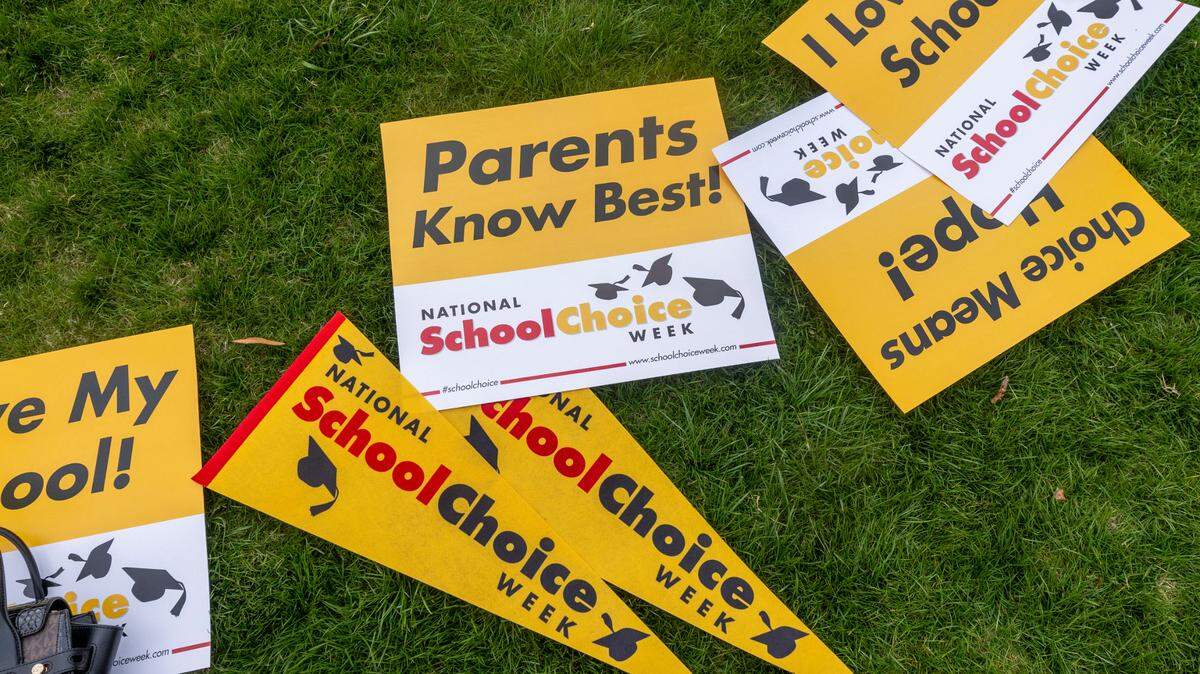
A private school voucher program created to help low-income North Carolina families now serves mainly middle class and affluent families in some counties, public records show.
Data presented last week to state lawmakers shows 42% of the 79,775 Opportunity Scholarship students come from families who made too much money to have qualified for a voucher last school year. In Wake and Mecklenburg counties, the majority of Opportunity Scholarship recipients would have been ineligible before the state removed income eligibility limits.
The number of affluent families getting a voucher could rise even more for the 2025-26 school year. Data released Thursday by the N.C. State Education Assistance Authority shows that 42% of the 40,089 new applicants this year are in the two highest income tiers.
Expanding income eligibility for a voucher
The state has been giving Opportunity Scholarships to help families cover private school costs since 2014. The program was initially promoted by Republican lawmakers as a way to help low-income families pay for private schools to escape failing public schools.
But over the past decade, the income eligibility rules were expanded to allow more people to get a voucher. This school year marked the first time that there were no income limits for receiving an Opportunity Scholarship.
The new eligibility rules fueled a record expansion in the program. The 79,775 students currently receiving a voucher is more than double the total of 32,549 recipients last school year.
Students are grouped into four tiers based on their family income to determine how much they’ll get. Recipients are getting between $3,360 and $7,468 in scholarship money this school year.
For this school year, a family of four in Tier 1 makes $57,720 or less, between $57,720 and $115,440 in Tier 2, between $115,440 and $259,750 in Tier 3 and more than $259,750 in Tier 4. Until this school year, only families in Tier 1 and Tier 2 were eligible for an Opportunity Scholarship.
Opening up vouchers for affluent families
The breakdown of voucher recipients this school year is 30% in Tier 1, 28% in Tier 2, 28% in Tier 3 and 14% in Tier 4. This means 33,853 scholarship recipients are only getting vouchers due to the income limits being dropped.
Democratic lawmakers called voucher expansion “welfare for the wealthy.” But Republican lawmakers argued that the wealthiest families have the right to decide how their taxpayer dollars are used to educate their children.
While 58% of the voucher recipients statewide would have been eligible before this year, the opposite is the case in some counties.
In Wake County, 66% of the 10,507 voucher recipients are from the previously ineligible Tiers 3 and 4. Wake County families are getting $43.8 million of the $382.8 million that’s been awarded for Opportunity Scholarships this school year.
In Mecklenburg County, 58% of the 7,808 voucher recipients are in Tiers 3 and 4. Mecklenburg County is getting $35.8 million in Opportunity Scholarship funding.
Wake and Mecklenburg are the state’s two most populous counties and have the largest number of voucher recipients.
The split was closer in some counties with 51% of Johnston County recipients and 50% of Union County recipients being from Tiers 3 and 4.
But Tiers 1 and 2 accounted for the majority of applicants in most counties. For instance, 56% of Durham’s voucher recipients are from Tiers 1 and 2.
How many already attended private schools?
Another change lawmakers made was to open up the program to students who were already enrolled in a private school. Previously, the program had been geared toward families leaving public schools or starting out in kindergarten.
Lawmakers were told last week that the data hasn’t been compiled yet on how many of the new voucher recipients were already attending a private school before they got a scholarship. That information is supposed to be available later this year.
Data from other states shows that it’s primarily existing private school families who get the vouchers after the program is expanded.
Private schools have been encouraging their existing families to apply for an Opportunity Scholarship. In some cases, schools raised their tuition in anticipation of the new infusion of state funding.
Some private schools saw increases of more than $2 million this school year in their Opportunity Scholarship funding.
“There is a strong likelihood that we will see even more families with children already in private schools requesting a school voucher again next year, which means that the tab for taxpayers to cover private school tuition will also increase,” Public Schools First NC said in its analysis of this school year’s voucher numbers.
Enough money for all the new applicants
The 40,089 new applications received this year is significantly less than the 72,000 applications submitted last year. But it’s still far more applications than what was received when the program still had income eligibility limits.
Of the new applicants, 30% were in Tier 1, 28% were in Tier 2, 26% in Tier 3 and 17% in Tier 4. The total adds up to 101% due to rounding.
Awards will be issued in April. A spokesperson for the State Education Assistance Authority said Thursday they have enough state funding to cover all 40,089 new applicants for the 2025-26 school year.
NC Reality Check is an N&O series holding those in power accountable and shining a light on public issues that affect the Triangle or North Carolina. Have a suggestion for a future story? Email realitycheck@newsobserver.com
This story was originally published March 14, 2025 at 5:30 AM.