Not your average bandage. This NC State invention requires electricity to heal
AI-generated summary reviewed by our newsroom.
- NC State researchers created an electric bandage that heals wounds 30% faster.
- The device uses a water-activated battery and electrodes to mimic natural healing.
- NCInnovation funded the research to help transition the bandage to human use.
Currents of electricity flowing through the body are often associated with bad things like electrocution. However, that power can be beneficial when treating chronic wounds or injuries that struggle to heal on their own.
Chronic wounds affect millions of people worldwide, especially those with diabetes, and can increase the risk of other medical complications.
Researchers at N.C. State University developed an electric bandage that healed chronic wounds in mice 30% faster than conventional bandages. Their project is one of 17 funded by NCInnovation’s May 2025 grants.
“We have created a simple, easy-to-use bandage that shows a lot of promise in healing chronic wounds,” said Amay Bandodkar, grant recipient and assistant professor of electrical and computer engineering at N.C. State. “We are excited to further mature this technology and test it in more advanced models.”
What are chronic wounds?
Chronic wounds are breaks in the skin or other tissues that do not heal properly.
When tissues are damaged, chemical signals are sent out to alert the rest of the body.
In response, cells from the immune system race to the injury site and begin the repair process, which typically takes a few weeks. Chronic wounds, however, heal very slowly or never at all.
“There is no strict rule, but generally if a wound has not begun closing within four weeks, it can be considered a chronic wound,” Bandodkar said.
These wounds can introduce many problems for patients. Individuals may have to take off extended time from work while their body heals. Further, the open wound leaves patients vulnerable to infections, increasing the risks of limb amputation and even death.
The current treatments for these wounds can be ineffective, costly or complicated. So Bandodkar and his colleagues wanted to create a more user-friendly alternative.
How does the electric bandage work?
Scientists know electrical energy can be used to repair injuries. Previous research shows that applying an electrical field to a wound can speed up the healing process. Yet, devices capable of applying that field often require bulky equipment, making them less practical for everyday use.
This conundrum caught Bandodkar’s interest; his lab already had expertise in creating batteries that power medical devices. At the same time, they were working on a collaborative DARPA-funded project to identify properties of wounds.
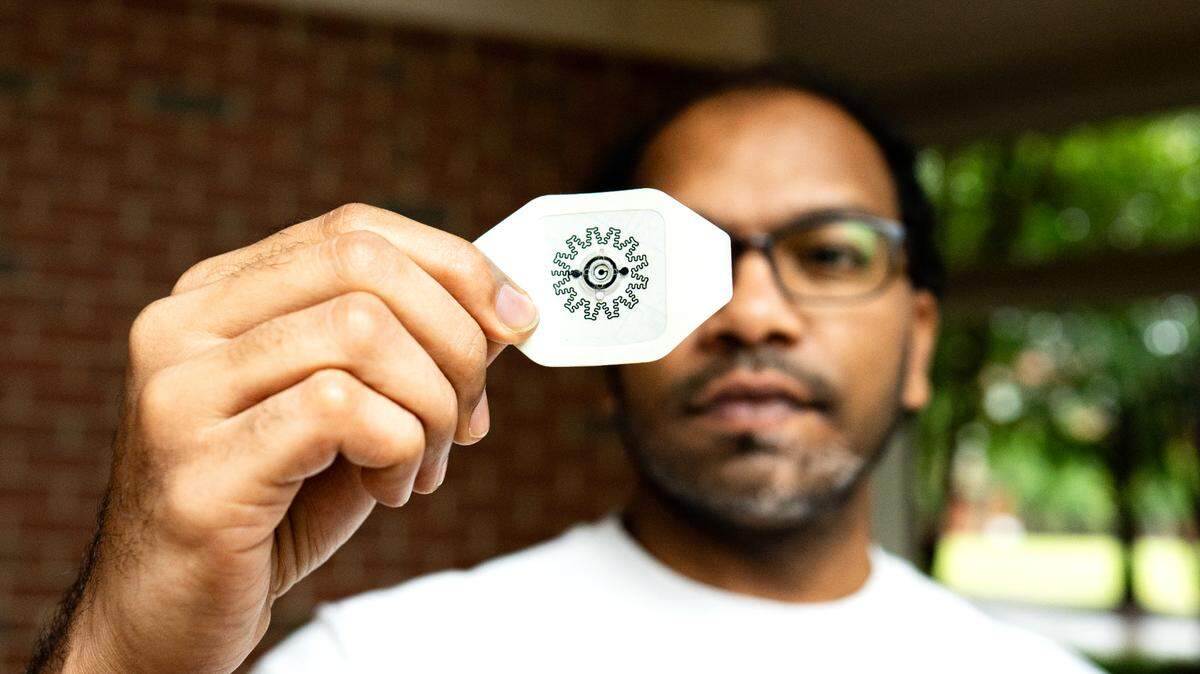
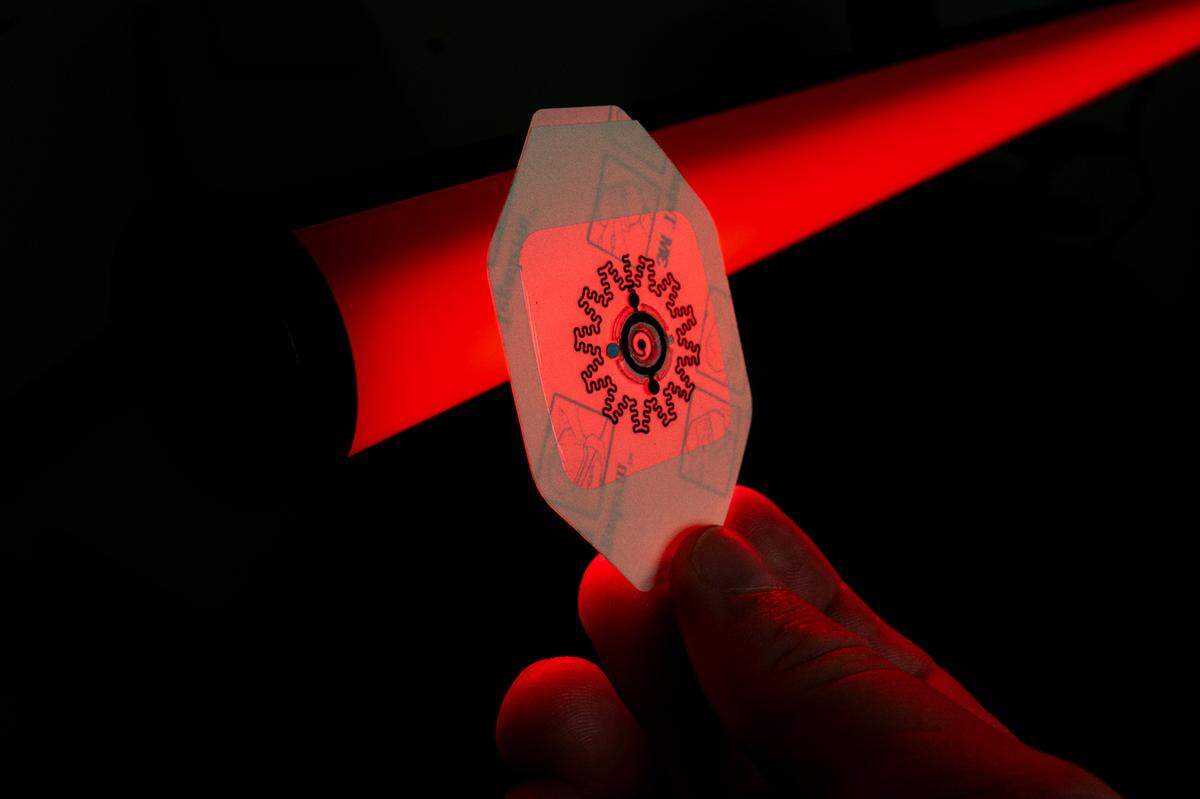
The result? The team developed a small adhesive bandage that is free from electronics. Since the battery is electronics-free, it can be activated by a small drop of water.
Their electric bandage contains a small battery near the surface and thin metal plates underneath. These plates, called electrodes, are designed to direct the electricity in a circular pattern toward the center of the wound.
The design mimics normal wound healing and gives the device versatility.
“The electrodes are highly flexible and can bend in three dimensions without significantly losing in their electrical properties,” said Rajaram Kaveti, postdoctoral researcher in Bandodkar’s lab. Kaveti played a leading role in developing this technology. “This means our bandage can still be applied to complex wounds that are deep or irregularly shaped.”
The group tested its device on complex chronic wounds using diabetic mice. They report the device healed these wounds 30% faster than conventional bandages in a study published in Science Advances. Their next steps involve making the bandage commercially available.
NCInnovation grant funds additional research & development
Though current studies are in mice, the end goal is for their bandage to be available for humans. As such, the researchers considered comfort, cost and durability while developing the device.
Still, they must conduct additional research and development before the device is ready for the public. That’s where NCInnovation comes in.
NCInnovation is a nonprofit serving public universities in the UNC System. It makes grants from $500 million in a state-funded endowment to help researchers take their products from the lab into the market. Private donations are used to pay their administrative costs.
Bandodkar emphasized the need for such grants.
“Every funding mechanism has limitations of what can and cannot be done,” he explained. “Most of the funding is purely for academic research; they do not provide funding for commercialization.”
He plans to use some of this grant to test the bandage in more rigorous animal models and settings, such as military and disaster conditions, according to the NCInnovation website.
The General Assembly may not continue to fund NCInnovation, or at least not at the same levels. Proposed budget bills from the House and the Senate cut or move funding from the organization. It is unclear what will be reflected in the final budget.
This story was originally published June 26, 2025 at 8:24 AM.