Business plan reveals what UNC System will contribute to new accreditor
Welcome to Dean’s List, a higher education newsletter from The News & Observer and me, Korie Dean.
More details are emerging about the UNC System’s plan to join five other states to form a new accreditor for their public universities.
The Board of Governors of the State University System of Florida voted last week to approve the new agency, which will be called the Commission for Public Higher Education. That vote came after hours of heated debate between board members and the system’s leader about the endeavor — including questions about the accreditor’s governance structure, as detailed in a new business plan for the commission.
“I do think the chancellor and team have a lot of work to do to continue to educate this board, to be blunt,” board chair Brian Lamb said, according to Inside Higher Ed.
While the plan leaves many questions from the board unanswered, it also provides insight into the UNC System’s role in the agency.
In this week’s newsletter, I’ll cover key details that caught my eye in the plan — including some major money that North Carolina might be expected to contribute to the effort.
Also included this week:
- A report on changes to housing for transgender students at UNC Asheville;
- An update on accreditation for St. Augustine’s University;
- and more.
Here we go.
New details about UNC System’s accreditation proposal
If it wasn’t already clear from Florida Gov. Ron DeSantis’s announcement last month for the new accreditor, the commission’s new business plan makes it so: Florida will lead the effort to establish the agency, taking a major role in its formation.

The business plan states that the commission will be a “nonprofit organization incorporated in Florida.” Further, the Florida Board of Governors will be the organization’s “sole member” and “body corporate.”
The organization will be overseen by a board of directors, the plan states, with the initial six members consisting of individuals tapped by the founding-member university systems.
In addition to the public university systems in Florida and North Carolina, those are: the Texas A&M University System, the University System of Georgia, the University of South Carolina and the University of Tennessee System.
The commission will also have a full-time staff consisting of a president, chief financial officer, chief accreditation officer, senior adviser and administrative assistant.
“University systems may lend executives with accreditation expertise to CPHE during its start-up period,” the plan reads. “Expansion of compensated staff for CPHE will be commensurate with the demands and growth of the agency.”
And how will the commission be funded?
To start, the organization will receive $4 million from the Florida Board of Governors and the state legislature. And the other states will be expected to contribute similarly, per the business plan.
“CPHE anticipates the other five founding university systems will dedicate funds, labor or a combination of, that is comparable to Florida’s initial contribution,” the plan reads.
UNC System spokesperson Jane Stancill told me Tuesday the system’s initial contributions will come from in-kind staff support, not a direct payment to the agency.
Long-term, the commission expects to generate revenue through membership fees collected from universities who join the agency. It will also consider other streams of revenue, including “subscription-based accreditation fees,” in which member schools would pay “a monthly or annual subscription for ongoing accreditation services, compliance monitoring, and advisory support.”
Those funds aren’t likely to come in until 2027 or 2028, per the plan.
Timeline to form new accreditation commission
But before then, the commission plans to ramp up its activity — almost immediately.
The plan shows that the commission anticipates holding its first board of directors’ meeting next month before hiring initial staff by October. Meanwhile, it expects to draft its accreditation model by December. Then, in the first half of next year, it expects to begin accreditation with six pilot institutions.
By June 2028 at the latest, the plan says, the commission expects to be fully recognized by the U.S. Department of Education.
“The launching of a new institutional accreditor is a major undertaking, and CPHE’s Founding University Systems have not undertaken it lightly,” the plan reads. “Growing dissatisfaction with current practices among the existing institutional accreditors and the desire for a true system of peer review among public institutions have led to this endeavor.”
The full business plan is available on the Florida Board of Governors website.
Stay tuned: We could get even more details or comments about the accreditor at the UNC System Board of Governors’ next meeting on July 24.
ICYMI: Catch up on these headlines
Speaking of accreditation, Raleigh’s embattled St. Augustine’s University on Monday announced it lost its final appeal to regain its accreditation.
The decision by the Southern Association of Colleges and Schools Commission on Colleges (SACSCOC) upholds the agency’s most recent decisions in December and March to strip St. Augustine’s of its accreditation and membership with the organization.
The university now plans to file a lawsuit seeking an injunction against SACSCOC’s ruling — an expensive endeavor for a school that already faces significant financial struggles.
For more, read the full story: St. Augustine’s loses final appeal to regain accreditation, but plans to file lawsuit

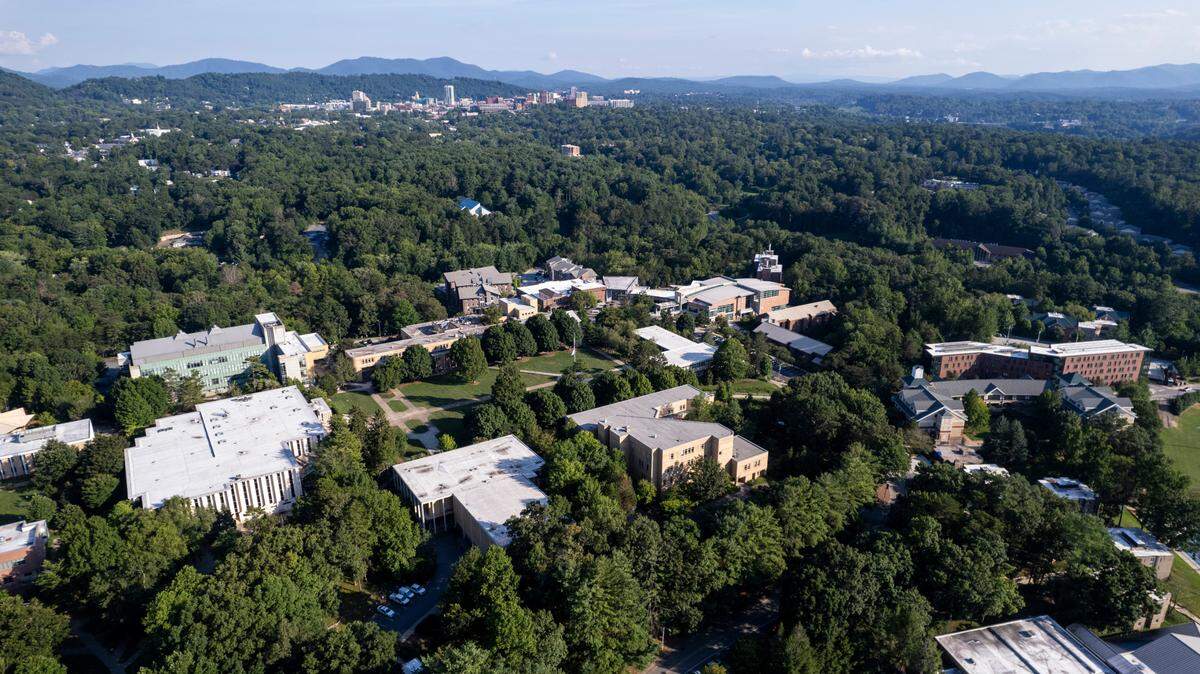
UNC Asheville is now requiring transgender students to submit additional documentation if they wish to live in university housing corresponding to a sex other than that assigned at birth.
The change comes after the university’s top lawyer emailed faculty, staff and students last month and said officials would review policies and practices to ensure UNCA is compliant with a federal directive threatening campuses found to be “knowingly violating civil rights laws.”
A transgender student told me she decided to move off campus when the university informed her of the new rules for campus housing, saying the new requirements are “invasive.”
For more, read the full story: UNC Asheville takes stricter stance on housing for transgender students
Higher ed news I’m reading
- As the Trump administration ramps up its focus on civil rights in higher education, some campuses are hiring Title VI coordinators — a move that mimics the push to hire Title IX coordinators in the early 2010s, Inside Higher Ed reports.
See you next time
Thanks for reading Dean’s List. I’ll see you right back here next week.
Not a subscriber? Sign up on our website to receive Dean’s List in your inbox each week.
This story was originally published July 15, 2025 at 5:00 AM.
CORRECTION: A previous version of this newsletter used an inaccurate headline. The UNC System’s initial contributions to the accreditor will come from in-kind support, not a direct payment.