Are NC schools more segregated? What data show after state lifted voucher cap
Nia Smith says, for her family, public schools weren’t working.
Her son has special needs, and she wanted to put him in a small school with a strong sense of community and specialized instruction. But, with her budget, most of the major private options were out of reach. With a state school voucher — an Opportunity Scholarship — she was able to afford to enroll her son last year at ALC Mosaic, a secular private school in east Charlotte.
North Carolina made public money available for families to use for private schools starting in 2014, but the program had an income cap until last year. Smith was in the second income tier for the state, meaning she qualified for the scholarship before, but there wasn’t enough money to go around before the state expanded funding for it last school year.
“It’s definitely worth it because it gives you so many other options,” Smith said. “Being able to talk to the directors and speak with them directly and being in the know.”
Proponents say voucher expansion offers options to families like the Smiths, particularly for kids with complex needs. But, critics claim it siphons resources away from what they say are already underfunded public schools. Meanwhile, research has shown that students leaving public schools for private schools contributes to school segregation.
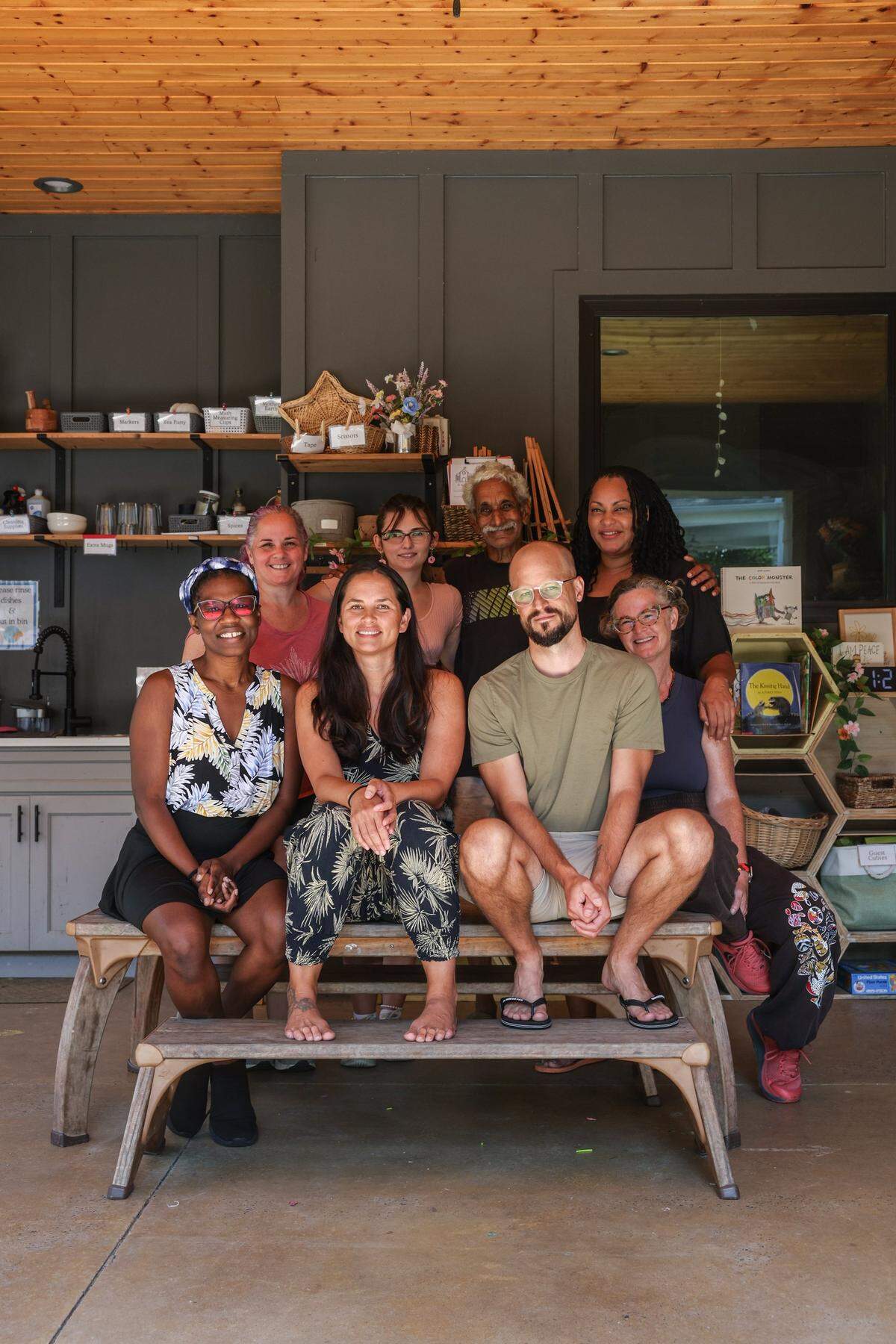
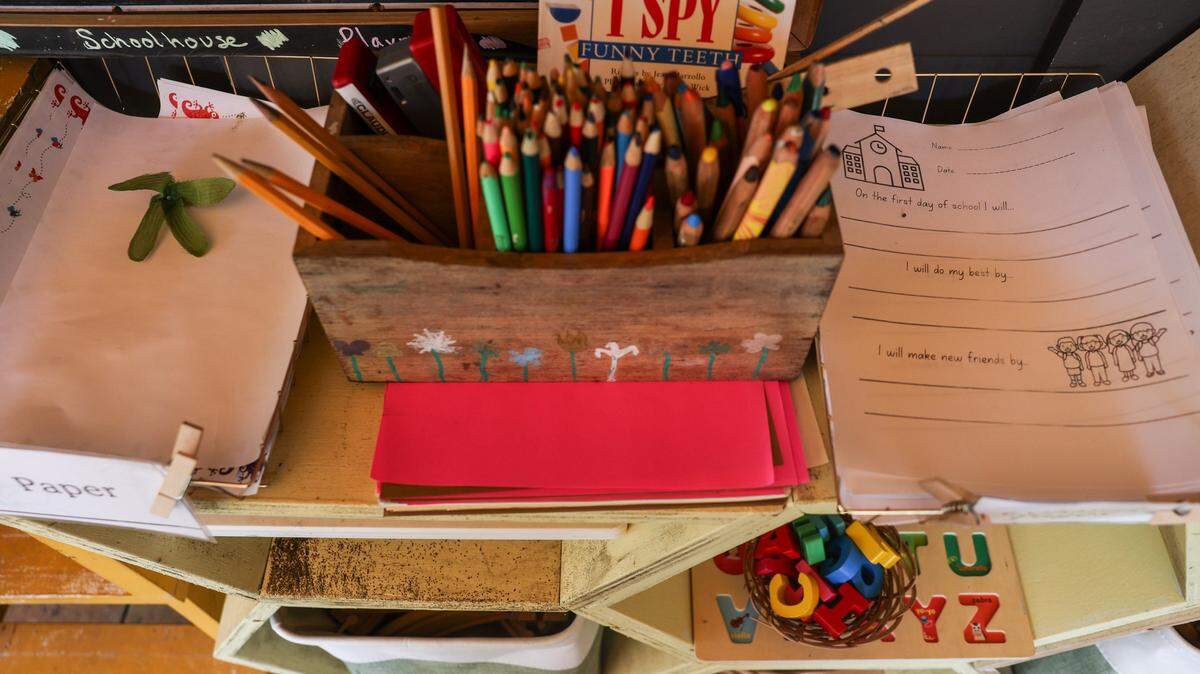
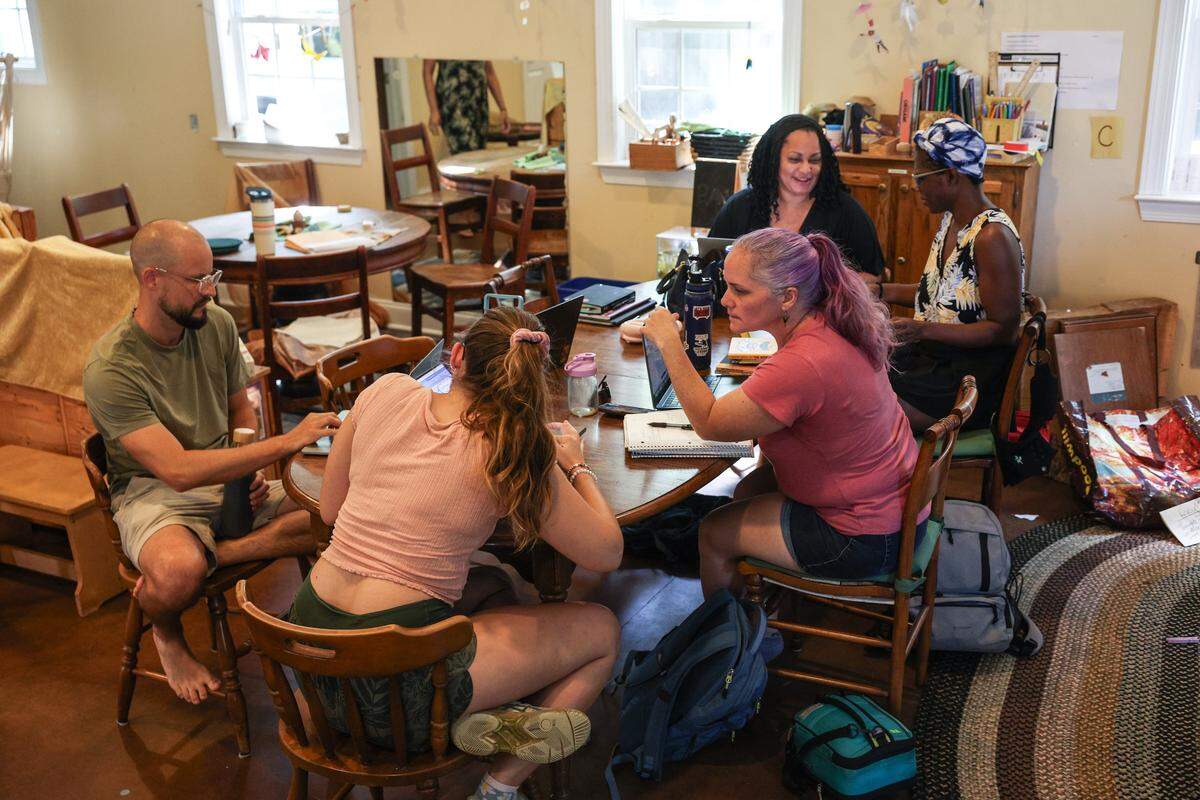
ALC Mosaic has a sliding scale tuition model that allows families to pay what they can afford, which for some, is as little as $800 a year. Director of Operations Tomis Parker said that’s by design, since he and the families who choose his school value creating a diverse, accessible community.
“We have always made an effort to be as financially accessible as possible,” Parker told The Charlotte Observer. “We believe that education should be a public good and accessible to people.”
That’s not how most private schools operate. Many of them have tuition that far exceeds the amount dispensed in even the largest school vouchers in North Carolina.
After the first year of universal school vouchers in North Carolina, data show school demographics haven’t shifted much. That’s largely because the vast majority of new recipients were already in private schools.
NC school segregation
Schools are no longer segregated by law, as they were in North Carolina prior to the Supreme Court’s decision in Brown v. Board of Education in 1954. However, after making strides in school integration in the following decades, de facto segregation has been increasing in NC schools over the last 30 years. A disproportionate number of students attend schools where the the student body is more homogenous racially and socioeconomically than the community and state.
Researchers warn, if the exodus from public schools in the state continues, school segregation may worsen. Studies show white students are overrepresented in private schools. During the 2021-22 school year, 45% of NC public school students were white, while 74% of NC private school students were, according to data from ProPublica.
Proponents of voucher expansion say private schools can be diverse, despite the exclusionary origins of many in the South, but it takes intentionality on the part of their leaders to create equitable access.
Meanwhile, there’s been an increase in racial diversity in the public school system as a whole, but that doesn’t mean individual schools are diverse.

In 2021, despite accounting for less than half of the state’s public school population, over two-thirds of white students in North Carolina attended majority white schools. The average white student in North Carolina attended a school that was 58.9% white, even though white students only comprised 45% of the total state enrollment. Meanwhile, the average Black student in North Carolina attended a school where 41.2% of the students were Black, even though Black students accounted for 25% of the state’s enrollment.
Diversity in schools isn’t just a noble idea: research shows that racially and socioeconomically diverse school environments are beneficial for all students. Data indicate students at integrated schools tend to score better on standardized tests and have better outcomes in non-academic areas, such as the ability to navigate multicultural environments.
“The reason to worry about segregation is that we have a diverse society, and children are going to do well if they know how to interact in it,” Charles Clotfelter, a former Duke University professor of public policy, told The Charlotte Observer. Clotfelter has done extensive research on the economics of education, including related school segregation in North Carolina.
Today’s NC school segregation
Clotfelter’s research indicates that school segregation is more pronounced in urban counties in North Carolina, though urban districts such as Charlotte-Mecklenburg Schools have found some success in diversifying school environments through specialized magnet programs.
“When social scientists like me talk about segregation, they’re usually talking about unevenness in enrollment patterns. They’re talking about a county where the distribution of white children is very different than the distribution of white students, Black students or Hispanic students,” Clotfelter said. “In general, rural counties are less segregated, while the schools in urban counties are more segregated.”
He said that’s, in part, because urban areas have more private and charter school options. Districts also were ordered to end explicit efforts to make schools more racially balanced. Busing is no longer used as a tool for integration, for example, because federal courts stopped pushing local districts to pursue racial balance in schools, eventually barring even voluntary integration measures.
“The way to stop discrimination on the basis of race,” Supreme Court Chief Justice John Roberts said in his 2007 decision in Parents Involved in Community Schools v. Seattle School District No. 1, “is to stop discriminating on the basis of race.” That decision prohibited school districts nationally from using race as a factor in school assignment.
CMS has increased the number of magnet schools since the ‘90s and, in turn, contributed to school diversity as students from a broad range of socioeconomic backgrounds and neighborhoods are able to participate in the specialized programs.
Regardless, Clotfelter said private schools are a contributing factor to school segregation since they tend to be disproportionately white and high-income. One in five white students in North Carolina that attends a predominantly white school goes to a private school, according to Clotfelter’s research.
North Carolina’s universal voucher eligibility is less than a year old. So, it’s difficult to determine its long-term impacts on school segregation. But Clotfelter has some predictions.
“I would expect that it would increase the amount of people going to private schools and, according to what we’ve found, that will increase segregation,” Clotfelter said. “That would be what I would expect.”
However, data show last year the majority – about 87% – of the over 53,000 new voucher recipients did not attend public school the prior year.
Data also show the demographics of who gets a school voucher shifted dramatically after the income cap was lifted. After voucher expansion, white students accounted for 73% of voucher recipients – an increase of 10 points from the 2023-24 school year. Meanwhile, Black students made up 11% of voucher recipients during the 2024-25 school year, a decrease of 8 points from the previous school year. Hispanic students made up 10% of recipients, a drop of 5 points.
Overall private school enrollment across the state increased by nearly an identical number as the year before families of all income levels become eligible for vouchers.
NC Opportunity Scholarship Program
The state’s school voucher program previously only supported students from families below 175% of the federal poverty level (about $90,000 for a family of four). Now, families of any income level can access the funds, but those with the lowest income still receive priority.
The program more than doubled in participants between the 2023-24 and 2024-25 school years. Data presented to state lawmakers in March show 42% of the more than 80,000 students now getting Opportunity Scholarships come from families who make more than $115,000 per year, which is too much money to have qualified for a voucher before last school year.
In Mecklenburg County, that figure is higher. About 58% of total recipients in Mecklenburg County for the 2024-25 school year came from households that make over $115,000 per year, and 28% came from households that make over $259,700, according to data from the North Carolina State Education Assistance Authority.
Around 24% came from households that made less than $57,720.
Scholarships range from $7,468 for the lowest-income families to $3,360 for the highest-income families.
In total, Mecklenburg County received $39 million in vouchers during the 2024-25 school year and 7,857 total scholarships. That’s three times the $13 million it received the year prior
“It could be that it’s not really impacting segregation primarily but that resources are going to private schools,” Clotfelter said. “A lot of the little programs we talk about, it’s all scratching at the edges when the big issue is that we’re significantly underfunding public education.”
The 5,955 scholarships awarded to students shifting from public to private school in fall 2024 accounted for $34.4 million in taxpayer funds — about 18.5% of the total $185.6 million awarded in vouchers last school year. If those students hadn’t left for private schools, the state would have awarded $44.5 million in public school district funding, according to state data from June. The state said it will reinvest the $10.1 million difference back into public schools.
Amid the drastic expansion of the program, the overall enrollment and demographic breakdown of CMS during the 2024-25 school year remained virtually unchanged from the prior school year, according to state data. Total enrollment in NC public schools remained steady across the state between the 2023-24 and 2024-25 school years, with approximately 1.5 million students enrolled in public schools, both traditional and charter, each year.
What’s the way forward?
Parker from ALC Mosaic, says voucher expansion has been a tool for increasing accessibility at his school and can be at other schools, too. Still, he acknowledges that, for many private schools, even the maximum Opportunity Scholarship award of around $7,500 comes nowhere close to covering the cost of tuition.
For example, tuition at Covenant Day School in Matthews ranges from $14,290 to $21,590 per year. CDS received $3.3 million in Opportunity Scholarship dollars during the 2024-25 school year, the most of any school in Mecklenburg County. That’s nearly 10 times what it received the prior school year.
Meanwhile, Charlotte Christian School received $2.4 million in Opportunity Scholarship dollars last school year, according to NCSEAA data. That’s 16 times what it received the year prior. Charlotte Christian School’s minimum cost of tuition last year was $18,850 for pre-K and kindergarten, up to $24,605 for high school, a school spokesperson told The Observer.
“It’s a drop in the bucket at a lot of these schools,” Parker said. “The voucher should be enough or enough to fill the gap for low-income families, and if it’s not, we need to look at increasing the scholarship amount at the lower end as well as imploring private schools to make themselves accessible to folks in those lower two tiers.”

Parker said he doesn’t believe private schools should be required to lower tuition in order to meet the needs of low income families even though schools receive voucher dollars. He hopes more will consider doing so. He also does not agree with the argument that all public schools need is more funding in order to meet students’ needs.
“I think education as a whole is entirely underfunded and undervalued, just looking at what teachers get paid compared to how important and valuable their work is,” he said. “But, I’m not sympathetic to the idea that public schools would be more successful if they just had more funds. The classrooms and institutions are so large that you cannot adequately serve students at that level.”
He said, for example, just because public schools are required to serve students with disabilities while private schools are not, that doesn’t mean public schools are always meeting those children’s needs.
Mike Long, president of Parents for Education Freedom in North Carolina, pointed to economics as the main driver of a lack of diversity in private school populations and said school-funded scholarships can help close the gap.
“The only solution to this problem is for educational dollars to follow the child, not the system, which alone provides families everything they need to get the best education for their children,” Long said. “Why are these families leaving public schools if they are afforded the opportunity? That must be the question the public school system addresses if they want to turn this trend around.”
Elizabeth Paul, a policy and research manager at NC Public School Forum, said it’s a complicated issue, but she believes many of the challenges public schools face boil down to a lack of resources. By funneling resources elsewhere, she says, most students lose out.
“The reality is that vouchers are taking away resources needed to serve our students with disabilities, for example. Public schools are serving the majority of children, and if we’re not fully funding them, higher income people can afford higher cost options while others can’t,” she said. “You cannot say something is failing if you’ve never given it the chance to succeed.”
This story was originally published August 21, 2025 at 5:00 AM with the headline "Are NC schools more segregated? What data show after state lifted voucher cap."