
NC schools respond to law requiring religious exemptions to classroom activities
AI-generated summary reviewed by our newsroom.
- New NC law requires public schools to honor parents' religious-based objections.
- Wake County draft policy outlines steps for exemption requests and approvals.
- Law excludes charter schools and mandates alternative assignments when excused.
A new state law will allow North Carolina parents to pull their children out of classroom discussions of topics that conflict with their religious beliefs.
In July, state lawmakers passed a new state law over the veto of Gov. Josh Stein that requires school districts to allow parents to file religious-based objections to exempt their children from specific classroom discussions, activities or assigned readings.
The new law opens the way for parents to cite religious objections on a wide range of classroom topics, including LGBTQ+ history and the scientific theory of evolution.
On Tuesday, the Wake County school board’s policy committee backed a new policy that lays out the steps parents must follow if they’re seeking a religious-based exemption to a school assignment.
“It’s not for staff to second guess,” school board attorney Neal Ramee told the policy committee. “If the parent makes a good-faith claim under the statute that the activity imposes a substantial burden on the student’s religious beliefs, the teacher and the principal should evaluate that, but they should accommodate that request.”
The school board will vote on the policy Sept. 16..
Groups help parents opt their kids out of assignments
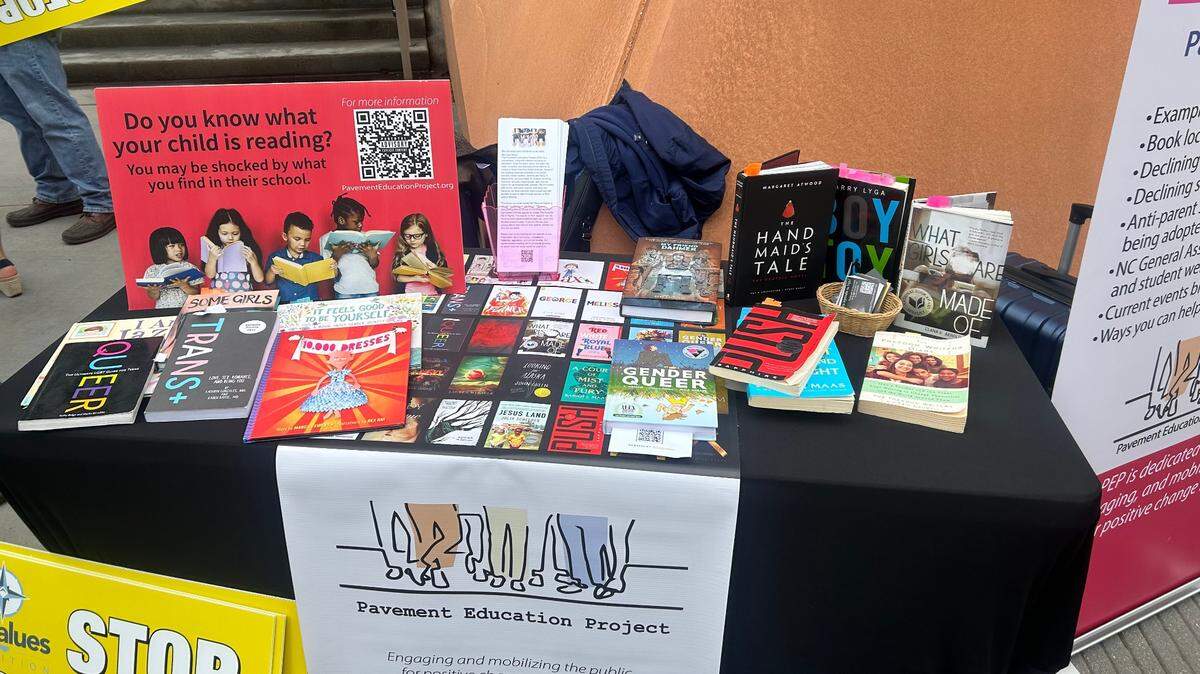
The Pavement Education Project has included on its website links to forms that North Carolina parents can use to opt their children out of assignments for religious reasons and because it involves LGBTQ+ content. The group has accused public schools of trying to indoctrinate students.
The Pavement Education Project is citing both the new state law and a June U.S. Supreme Court decision in favor of religious parents who wanted their children pulled out of lessons on LGBTQ+ instruction in Montgomery County Public Schools in Maryland.
“Your kids shouldn’t have to cover their eyes in school,” the Pavement Education Project said in a post Monday on X, previously called Twitter. “We can help them avoid that.”
Under the new state law, parents can request their child be excused from school assignments that “impose a substantial burden on the student’s religious beliefs or invade the student’s privacy by calling attention to the student’s religion.”
The law says that “to the extent practicable,” school districts will provide advance notice to students and parents of the discussions, activities or assigned readings. If the school excuses the student, an alternative reading or activity that’s aligned to state standards is supposed to be assigned.
State lawmakers only applied the religious exemption requirement to traditional public schools. Charter schools are not subject to the new provisions.
Principals expected to approve religious exemptions
Wake County’s proposed new policy is based on wording suggested by the N.C. School Boards Association. Under the proposed policy, requests for religious exemptions:
- Must be in writing.
- Must specify the discussion, activity or reading and explain how it would impose a substantial burden on the student’s religious beliefs or invade the student’s privacy by calling attention to the student’s religion.
- May suggest a proposed alternate activity or study.
Requests for exemptions would be submitted to the classroom teacher and principal. Upon approval, the teacher will give the student an alternative assignment or activity.
While approval isn’t automatic, requests should typically be granted by the principal, according to Ramee, the board attorney.
“Courts don’t like to second-guess the sincerity of religious beliefs or the centrality of religious beliefs,” Ramee said. “I don’t think this policy should lead to an inquiry about religious faith and beliefs in the home. I think it would have to be handled sensitively.”
Drew Cook, assistant superintendent of academics, said teachers have become accustomed to building alternatives into their lesson plans.
“Consistent longstanding practice is to err on the side of the parent and the student whenever and wherever possible,” Cook told the board.
But in the event that the principal rejects a request, it can be appealed. Ramee said a request might in theory be rejected if the principal says the parent isn’t citing religious reasons or is objecting to the state standards instead of the specific assignment.
This story was originally published August 26, 2025 at 5:06 PM.