NC superintendent tells Chapel Hill crowd how state’s schools can be best in US
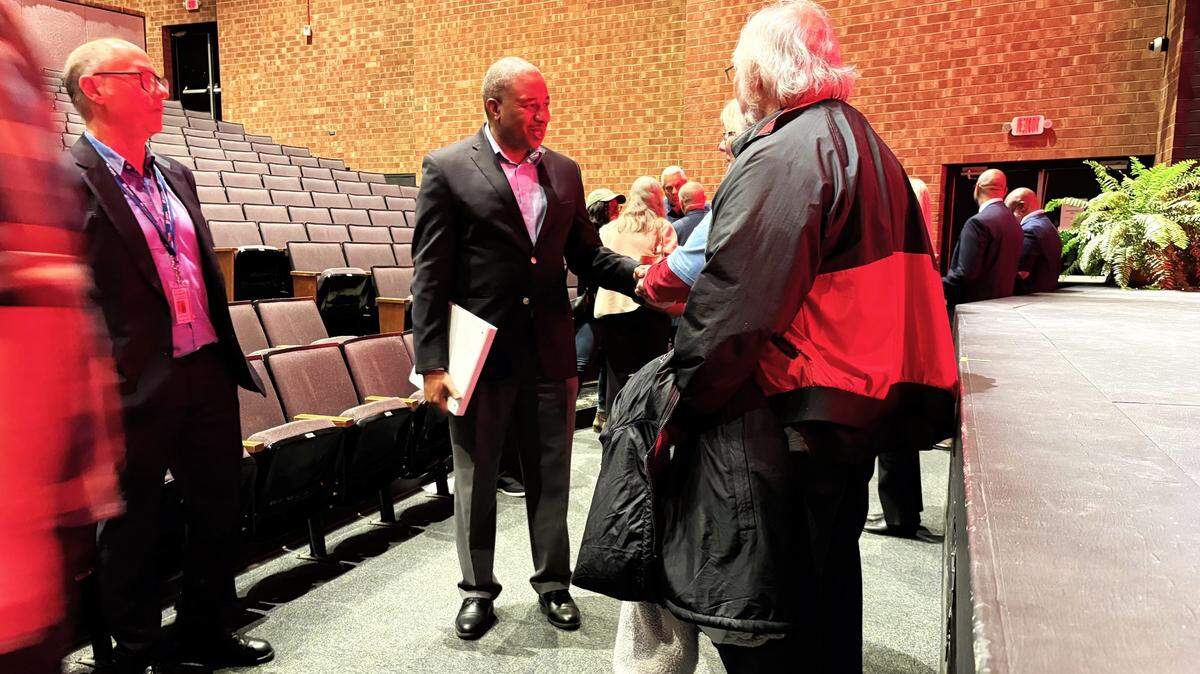
The voices of parents, students, teachers and local officials rattled the walls Wednesday at Chapel Hill High School as state Superintendent Mo Green brought them to their feet with an exhortation to embrace success.
“I am a champion of public education,” the crowd shouted, louder each time, as the school’s band marched in through the doors to a rousing, pep rally-style medley.
Green, on the last stop of a statewide tour to advocate for “the best public schools in the nation,” smiled as he left the stage and greeted the crowd gathered at the front to shake his hand and share a few words.
The “Achieving Educational Excellence” five-year strategic plan was drafted following a similar tour earlier this year, in which Green sought feedback and ideas from communities around the state. The State Board of Education approved the plan in August.
Former Orange County Schools Superintendent Monique Felder, who was hired in March as the state’s deputy chief academic officer, introduced Green at Wednesday’s event.
The plan has three key goals: make N.C. public schools the best in the nation by 2030, inspire high academic achievement, and develop student character, including through service learning and comprehensive education programs.
“Some will say that this plan is too bold,” Green said. “We need to prove them wrong. Some will say it’s impossible. Show them that it’s inevitable. Some will say that it costs too much. Remind them that ignorance costs more.”
After the event, Green said one of the two biggest challenges will be setting expectations for how great public schools should look and feel. The other will be ensuring adequate funding to carry out the mission, he said, including better teacher pay.
State lawmakers, some of whom attended his tour stops, have an important part to play that will require them to come together across party lines, just like the State Board of Education did in approving the plan, Green said.
“When you do, and when the General Assembly does its part, then we can make this happen, and I feel good about the General Assembly hearing us and finding ways to do some things that really will improve the funding for our public education system,” he said.
Building on what’s right with schools
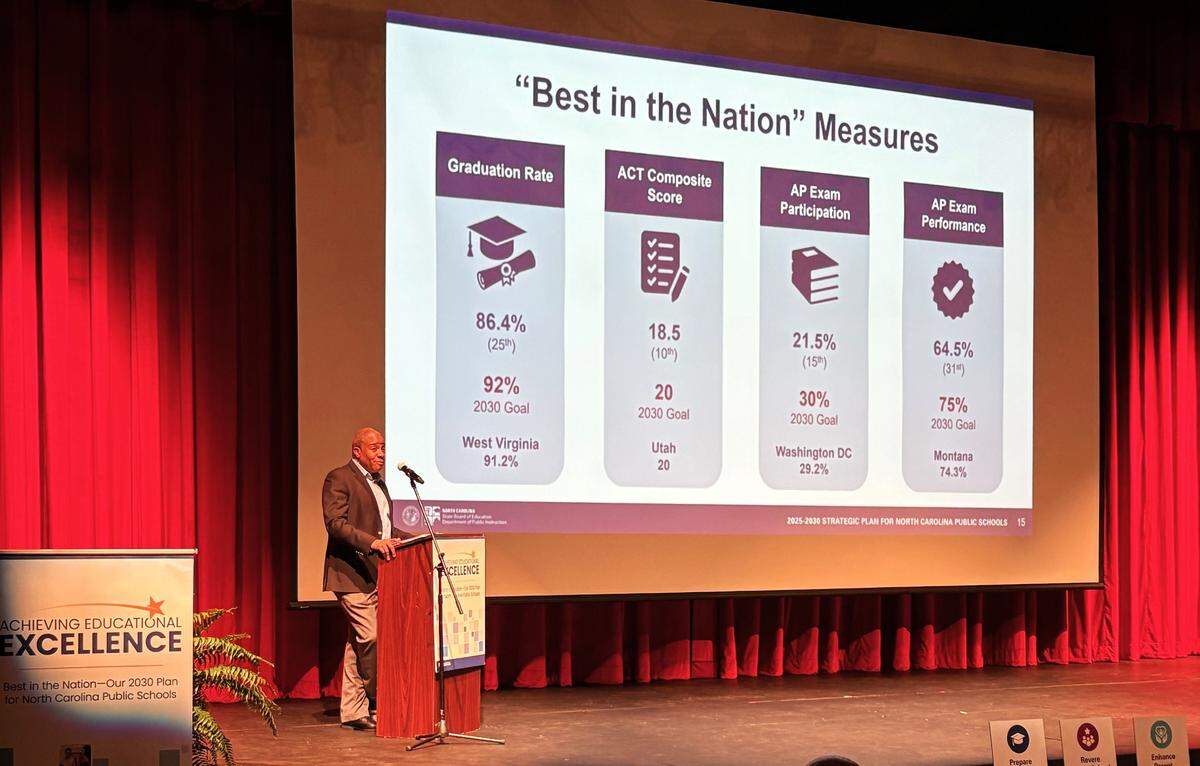
The five-year plan is built on eight pillars preparing students for a well-adjusted and successful life, supporting schools and teachers, and building stronger family and community partnerships. Each has focus areas, ways to measure success, and a list of action steps for achieving seven key targets:
- Enroll 89% of school-age children in N.C. public schools, up from 84% last school year.
- Ensure 92% of students graduate from high school in four years. The current rate is 87.7%.
- Increase the average ACT composite score from 18.5 to 20.
- Enroll at least 30% of 10th- to 12th-grade students in advanced placement courses by 2030, and increase participation in K-12 career and technical education courses to 41% of students.
- Lead the Southeast in teacher pay. North Carolina now ranks 43rd for average teacher pay, according to the National Education Association.
- Be a leader in National Assessment of Educational Progress reading and math scores.
The plan will not only fix what’s broken, Green said, but it will also build on what North Carolina is getting right about education, noting the large number of students in career and technical education classes, Early College programs, and National Board-certified teachers who are recognized as experts in their field.
Green paused his remarks before wrapping up to give the stage to Chapel Hill-Carrboro Superintendent Rodney Trice.
At the top of what makes his district special is the teachers, Trice said, who “represent thousands of teachers across North Carolina who show up every single day believing in the possibilities of our children.” He also touted the district’s four-year graduation rate of 90%, which he credited to hard work by students but also the support that the district provides.
“One of my top priorities as superintendent is expanding what success looks like after high school,” Trice said, adding that education “is about more than test scores.”
“It’s about developing healthy, competent and resilient young people,” he said.
Reversing a decline in enrollment
The Chapel Hill-Carrboro district has seen its enrollment fall by over 1,000 students since 2020, primarily in elementary school classrooms, and continues to wrestle with a multimillion-dollar budget shortfall. Last year, the board cut more than 100 staff positions, after depleting its fund balance — money left over after the bills are paid — to cover shortfalls in previous years.
It’s a similar story for districts across the state as they wait for a final state budget and await more federal education funding cuts. President Trump’s proposed budget could eliminate $12 billion in education spending, including an estimated $200 million in funding for North Carolina, The News & Observer has reported.
County governments have historically paid about 22% of local education costs, the Public School Forum of North Carolina reports, but the loss of state and federal money is shifting a higher burden to property taxes and homeowners.
Durham Public Schools responded to the pressure this year by cutting over 100 positions, and in Wake County, the board slashed $20 million, in part with staff cuts and smaller pay increases.
State attendance data shows only 39 of the state’s 115 school districts gained students in 2023, with many districts reporting more students leaving public classrooms for private, charter and home school options.
In 2024, state lawmakers lifted income eligibility limits in the state’s private school voucher program, increasing the number of middle-class and wealthy families who are leaving, according to N.C. State Education Assistance Authority report.
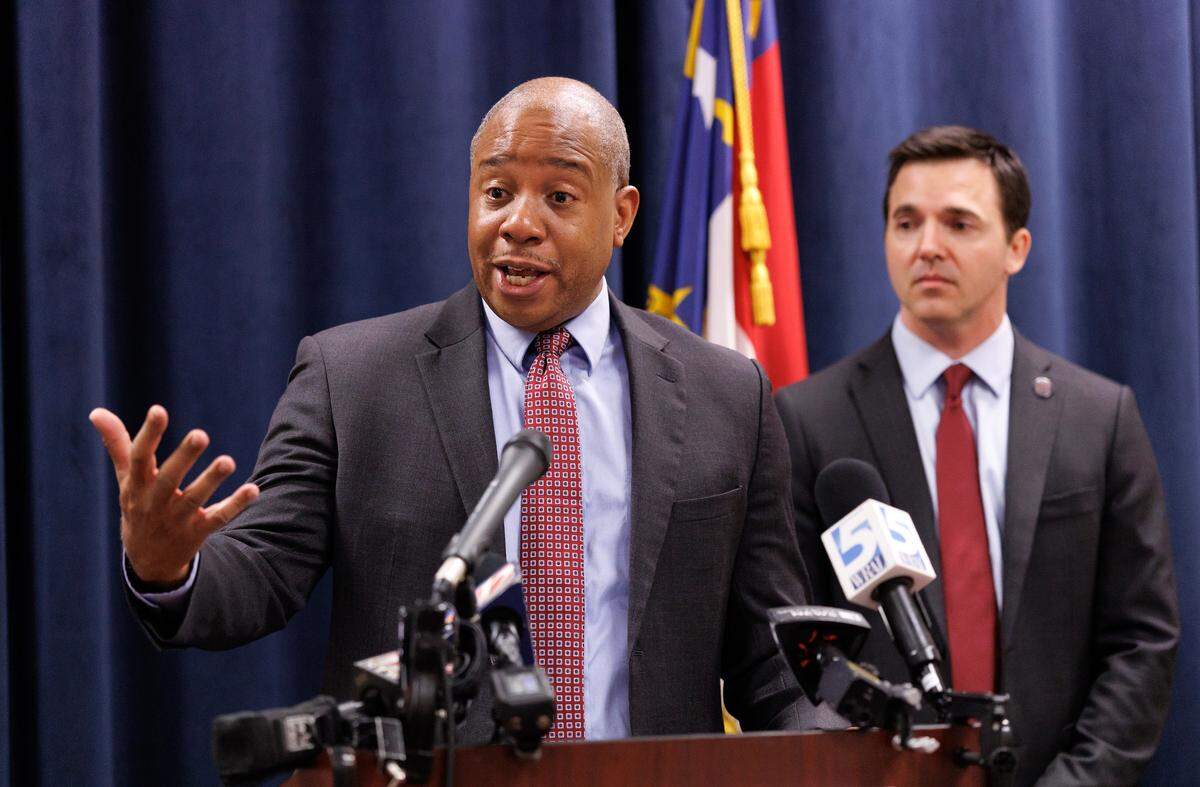
Green noted the decline in enrollment statewide when asked why he said North Carolina has “lost our way” during his address.
“The moment that we find ourselves in is that that number will only accelerate downward if we’re not careful to do some intentional things to turn it around,” he said. “Because there are now the opportunities with the taxpayer-funded private school voucher program, families can now have even more choice and use taxpayer dollars to exercise that choice.”