This NC school district returned to traditional grading. Why it switched back.
AI-generated summary reviewed by our newsroom.
- Johnston County restored A-F letter grades for grades 3–5 after parent complaints.
- K–2 stayed standards-based but switched to Level 1–4; grades 3–5 cores use A–F.
- Surveys showed strong school and community support for returning to traditional grades.
One of North Carolina’s largest school system has gone old school in how it grades its elementary school students.
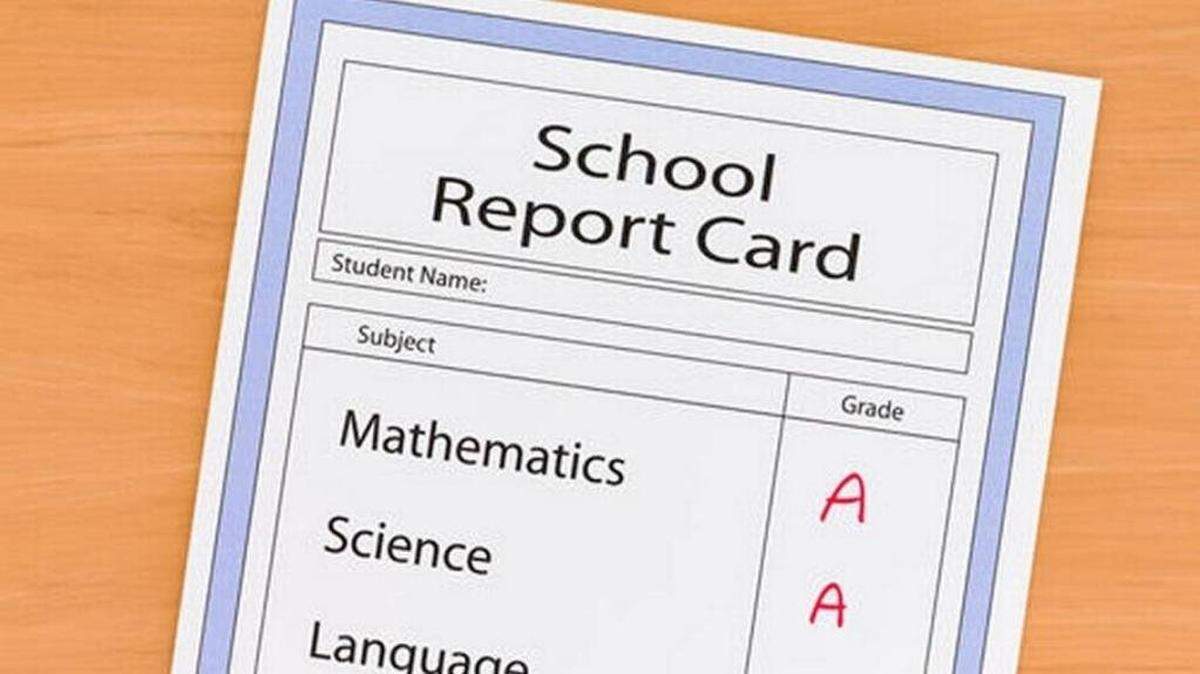
Johnston County was among the many North Carolina school districts that switched to “standards-based grading” that uses scales such as 1 to 4 to assess elementary school students. But following parental complaints, Johnston County returned this school year to using traditional A through F letter grades for students in grades three through five.
“We’re making updates to ensure that grades are clear, fair, and meaningful so everyone understands how our students are learning and growing,” Paige Barnes, the district’s executive director of elementary education, said in a YouTube video explaining the change. “We heard from many of you that grading could be confusing or inconsistent, especially when students move between grade levels or schools. So we’re simplifying and aligning our grading system.”
Johnston County is North Carolina’s seventh-largest school district. It has more than 37,000 students.
The grading changes in Johnston County highlight the challenges schools have faced deciding the best way to report the performance of elementary school students.
Elementary schools adopt standards-based grading
For decades, schools have used A through F letter grades on report cards. It’s typically a 10-point scale where an A is 90 to 100, a B is 80 to 89 and so on.
But around 25 years ago, North Carolina school districts began switching to standards-based grading in elementary schools. In this system, students are usually graded on a 4-point scale: Level 1 for non-proficient, Level 2 for approaching proficiency, Level 3 for proficient and Level 4 for exemplary/beyond mastery.
It’s similar to the scale used on state exams where a Level 3 or higher is considered passing.
Standards-based grading is supposed to better inform parents and students if a child’s performance is meeting grade level standards and putting them in position to be promoted.
Johnston County began using standards-based grading in elementary schools in 2014. But the district used a scale where the grade of N was equivalent to Level 1, a B was equivalent to Level 2, a P was equivalent to Level 3 and an M was equivalent to Level 4.
Standards-based grading is largely only found in elementary schools. For instance, a Wake County middle school experimented with standards-based grades but eventually returned to traditional grading.
Overwhelming support to return to traditional grades
In 2024, Johnston County began surveying schools and the community about updating elementary school grading practices.
Based on the review, the district decided to continue using standards-based grading in kindergarten trough grade two. But the scale was changed this school year to a Level 1 through 4 scale.
But for grades three through five, there was overwhelming support for returning to traditional grading. Every elementary school improvement team, 91% of the elementary school principals and 81% of the people who responded in a community survey preferred using traditional grades over standards-based grading.
Starting this school year, the core courses such as math and language arts switched to A through F letter grades on a 10-point scale. “Enhancement” courses such as art, music, physical education and STEM use a Level 1 to 3 scale.
“Thank you for doing this,” school board member Kevin Donovan told staff when the changes were presented at the March board meeting. “Looking at these kids’ report cards and going to their schools and seeing their ‘grades,’ it’s extremely confusing to know where your child is at. And to see an actual number tied to it is very clarifying and helps a lot of parents out.”