
He pushed Barber-Scotia from the brink. Can NC HBCU be everyone’s ‘safe school’?
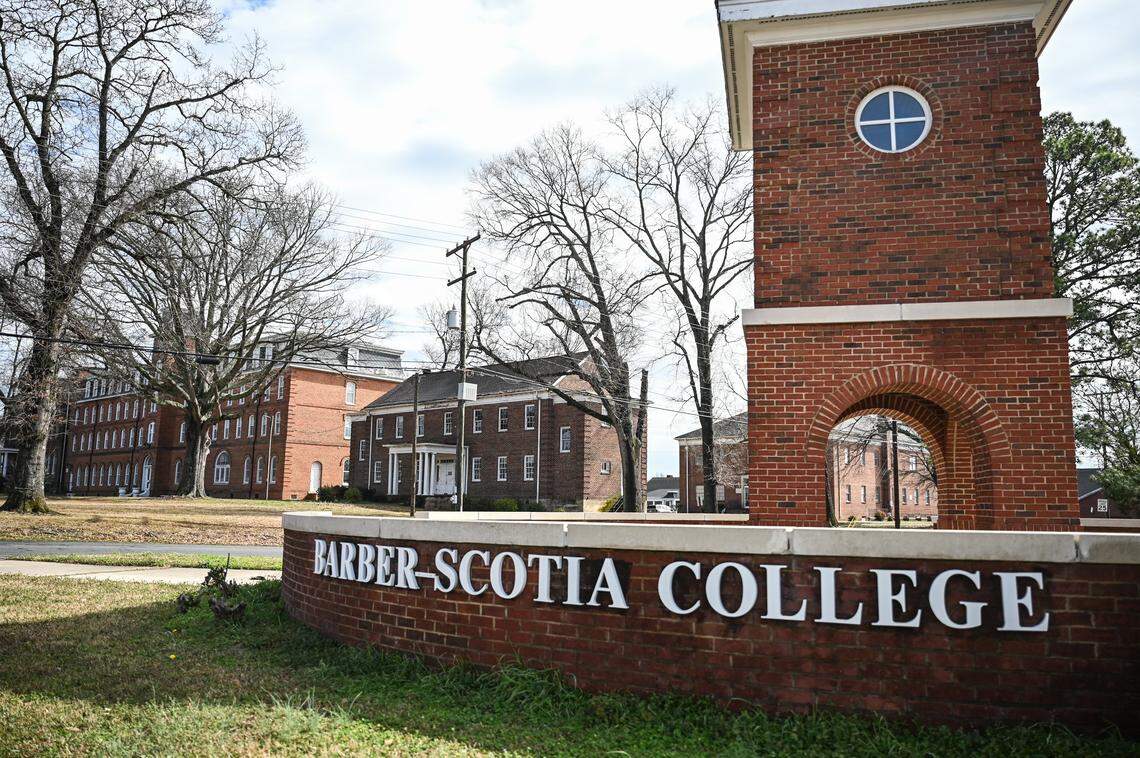
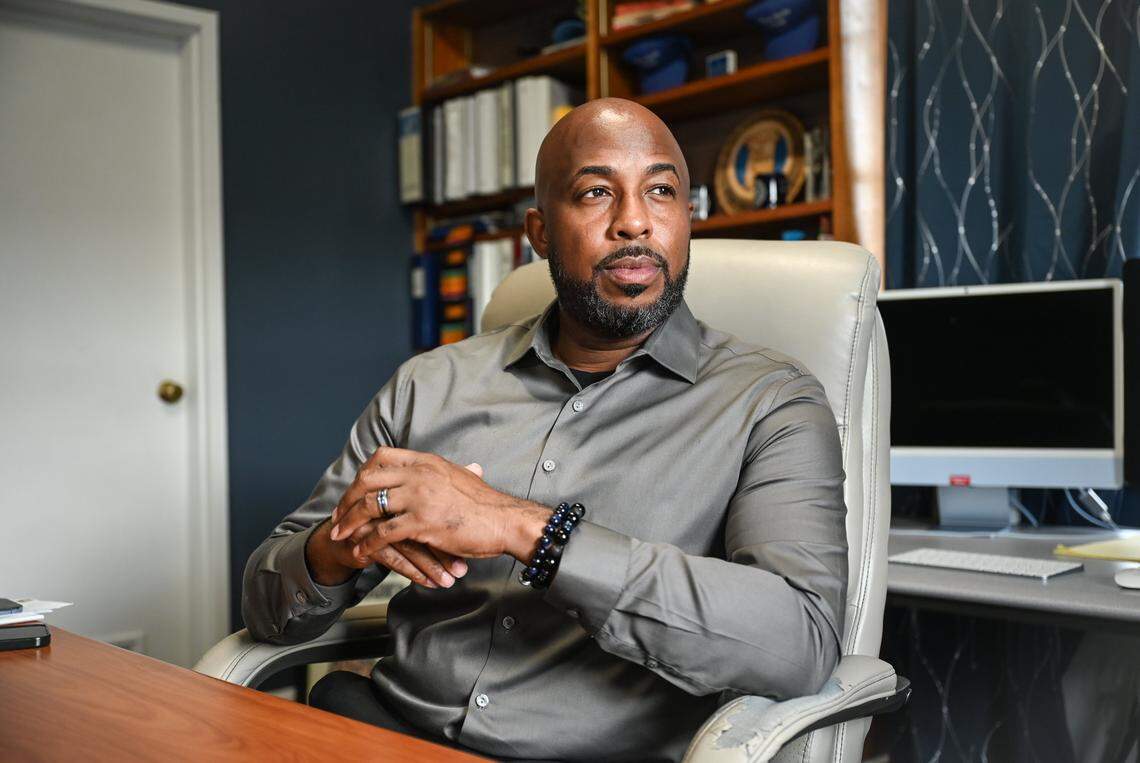
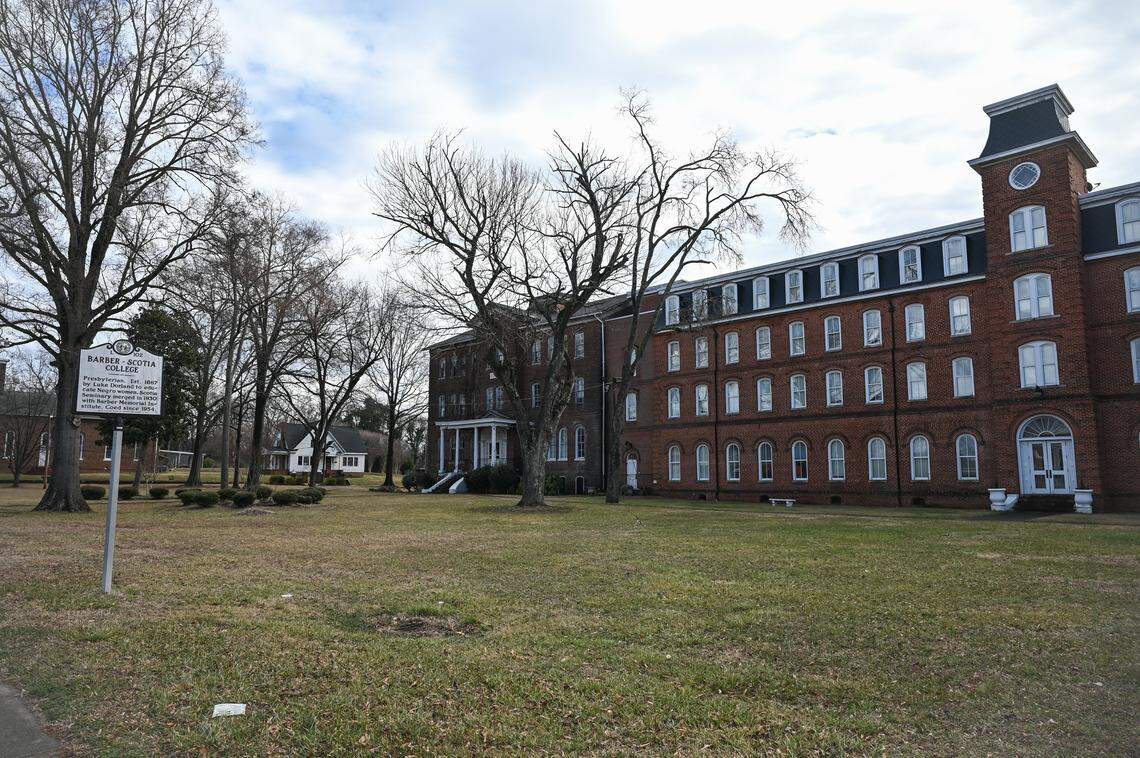
Chris V. Rey’s office is one of the only rooms at Barber-Scotia College with lights on. The 23-acre Concord campus is covered in red brick buildings, monuments to its former glory. They sit mostly empty – for now.
Rey is the school’s president and determined to lead the 159-year-old historically Black college into a renaissance. It’s no small task: it will require restoring the school’s accreditation, which it lost 22 years ago. The school teetered on the brink earlier this year, when it ran into serious financial trouble.
Rey announced in a vulnerable video in January the college was “completely out of money.” Since then, he has raised over $120,000 in individual gifts. There was no large benefactor who swooped in, Rey said. Instead, it was an effort funded by hundreds of alumni and community members who believe in preserving the school’s legacy.
“It was probably the most human moment I’ve had since I’ve been president…. At that moment, I said I was tired, and I meant that,” he told The Charlotte Observer. “But that was such a small part of this whole story.”
While the money should carry the school through the end of this semester, it will need more in the bank to apply for accreditation.
It felt like “whiplash,” Rey said, after just a week earlier the school had celebrated a major financial win: the North Carolina Property Tax Commission ruled 14 contested parcels on the school’s campus qualified for property tax exemption under North Carolina law, overturning a 2023 decision by the Cabarrus County Tax Assessor, and averting a $127,000 property tax bill.
The school has seen remarkable growth after launching a new strategic plan in 2022. Goals of the plan include reviewing academic programs, with an aim of enrolling 20 students per program, building financial strength and regaining accreditation. In 2023, Barber-Scotia had four students, all enrolled online. Today, it has almost 70, Rey said.
He’s no stranger to leading large organizations. When he stepped into the role of president of Barber-Scotia in 2023, the 22-year army veteran and former Spring Lake mayor was the international president of Phi Beta Sigma fraternity, a multimillion-dollar organization with more than 700 chapters and 225,000 members worldwide.
In his office, he has pictures of himself posing with former U.S. Presidents George W. Bush and Joe Biden and civil rights leaders John Lewis and Al Sharpton. On his desktop, he has a sticker that reads simply, “Because you believe.”
“There were no students when I got on this campus. No faculty, no staff; it was just me and the keys,” he said. “I know I can do this… I just need time and money, but we’ll get there.”
The road to accreditation
Accreditation is how colleges and universities prove they meet certain quality and educational standards. Different accrediting bodies have different requirements, but already having students, operating as a school and proving financial stability are typical benchmarks.
Ross Mugler is the president and CEO of the Association of Governing Boards of Colleges and Universities. He said accreditors look at two main things: if a school has the “physical and organizational infrastructure” needed to be a good steward of federal funding and evidence of academic rigor and good student outcomes.
“It’s kind of the guardrails that you need in education to make sure that the student is getting what they’re paying for,” Mugler told The Observer. “The reason accreditors exist is really to protect consumers.”
When a school isn’t accredited, the students who go there can’t get federal student loans. That makes attracting students and collecting tuition more difficult.
“It’s like the chicken and the egg – You can’t get accredited unless you have students enrolled,” Rey said. “So the goal has to be to create an environment where someone says, ‘I want to be a part of this historic journey at Barber-Scotia College. I want to be part of that class.’”
One strategy Barber-Scotia used to attract students last semester was launching a football team. It worked at first.
“Launching a football team definitely got us what we needed, which were students that were excited to be here,” Rey said.
A semester at Barber-Scotia costs $2,500, which is low compared to most other institutions. Rey said many students at Barber-Scotia can’t pay for a more expensive education and see the school as “their ticket out” of difficult circumstances. That’s why he was determined to make in-person instruction happen for the 117 students the school enrolled last semester.
However, he said, money the school planned on fell through when some students couldn’t pay tuition, leaving Barber-Scotia in the lurch and leading to Rey’s plea for support in January.
“It was realizing that the additional revenue wasn’t going to happen that threw everything off because, had the students been able to pay, there would’ve been no issues,” Rey said. “I think the biggest lesson was, while it looked good, and it sounded great, the reality is staying small and keeping it skinny to go through this process is more important than trying to show people, ‘Oh, we had no students, but now, we’ve got 100 students.’”
Rey has paused the football program and moved all instruction online until Barber-Scotia can regain accreditation. A few students are still on campus, he said, and the funding raised in January will go toward continuing the needed utilities and maintenance.
Until then, Rey said he’s looking into ways to continue to use the school’s buildings for educational programs, by renting them out to other organizations. It wouldn’t be the first time: Barber-Scotia previously rented out housing, dining and athletic facilities to Forest Trail Sports University in 2016.
Mugler said schools typically focus on getting all the academic and financial pieces in place for accreditation before focusing on athletics.
“If (Barber-Scotia) were in a different place, it really would make perfect sense, but, if you can’t basically do a pro forma for the next three to five years to show that this is actually going to make money or break even, you don’t want to even look at that,” Mugler said. “Because starting up a program like that can be expensive.”
Barber-Scotia has final audits and an additional $125,000 in contingency funds to raise before it applies for accreditation. Once applications are submitted, the process can take 15-18 months before it’s official.
Until then, Rey is keeping things lean. Most of the school’s 80 faculty and staff, aside from grounds people and maintenance workers, are part-time volunteers. Rey announced in January he would not get paid until the school had raised money for operations and said Tuesday that, with the $120,000 fundraising, he and other paid staff at the school would resume receiving pay.
“The people’s college”
Rey one day wants Barber-Scotia to be known as “the people’s college” – a place where NC students can get “skilled up, trained up or degree’d up” affordably.
“I want it to be that, no matter where you are in your life, this is a school that you can come to,” Rey said. “We’ll be everybody’s safe school, and I’m OK with that… Because everybody needs a chance.”
Rey envisions a program where every student who graduates from high school in Cabarrus County gets automatic admission to Barber-Scotia. He’d also like to bring on the needed counselors and staff to eventually be a good option for students with extra mental health needs.
“I want to become a school where that population knows that we have the staff, training and curriculum to meet their needs,” he said. “I want to be for everybody.”
When asked why current students would pick Barber-Scotia over the many other education options in the Charlotte and Concord area, Rey said he knows picking an unaccredited school is a gamble.
“My answer to that now is going to be different than it will be when we have accreditation,” he said. “For now, it’s a chance to be a part of history; it’s a chance to be legendary.”
Rey is a Christian and said ushering in the revival of Barber-Scotia is more than a passion project. It’s a charge from God.
“Assignments come from God, and this is my assignment,” he said. “If I’m the person that is supposed to get us to the accreditation finish line, then I want to be that person.”
This story was originally published February 25, 2026 at 5:00 AM with the headline "He pushed Barber-Scotia from the brink. Can NC HBCU be everyone’s ‘safe school’?."