1 in 10 NC teachers are leaving the profession. What it means for schools.
AI-generated summary reviewed by our newsroom.
- Attrition rate is 10.11%: 9,107 of 90,105 left March 2024–March 2025.
- Vacancy rate 7.4% (down from 7.6%); two‑thirds filled by temporary licenses.
- Emergency hires 29% of first‑year teachers; only 35% received ed‑prep training.
North Carolina’s teacher turnover rate has increased slightly with 1 in 10 teachers having left the profession during the past year, according to a new state report.
The report presented Wednesday to the State Board of Education shows a teacher “attrition rate” of 10.11% between March 2024 and March 2025. This means 9,107 of the state’s 90,105 teachers left the profession during that time period.
Of the teachers who left, 47% cited personal reasons.
“This year’s report reinforces the importance of addressing the core issues that lead to teacher attrition,” State Superintendent Mo Green said in a news release. “Our public schools cannot be best in the nation if our teachers are not adequately compensated, trained and revered. It will take action from the North Carolina General Assembly, the North Carolina Department of Public Instruction and our schools to strengthen the education profession.”
The annual State of the Teaching Profession and School Administrator in North Carolina report is mandated by state lawmakers. It only looks at turnover in school districts so it doesn’t include charter schools.
“While we would have preferred to see more encouraging data in this report, the findings are not surprising,” Tamika Walker Kelly, president of the North Carolina Association of Educators, said in a statement. “Our General Assembly has failed to invest in educators in ways that retain educators or attract new ones to the profession.
“Instead, lawmakers have enacted policies that push educators out — keeping wages stagnant so many must work multiple jobs to support themselves and their families, while also cutting benefits and limiting classroom resources. If we want better outcomes for our students and our state, we must start by doing better for our educators.”
Vacancy rate down slightly
Overall though, the attrition rate only increased 0.23 percentage points over the prior report.
“We don’t think anything positive or negative is happening in regard to attrition from the previous year,” Tom Tomberlin, senior director of educator preparation, licensure and performance at the state Department of Public Instruction, told the state board.
Tomberlin also told the state board that the teacher vacancy rate remained steady, dropping from 7.6% the prior year to 7.4% in the newest report. He said it’s not considered to be a substantive change.
The state’s school districts reported 6,721 vacancies. Two-thirds of those vacancies were filled by teachers with temporary licenses.
“What I hear from the districts is this is an ongoing issue throughout the entire school year to the end filling vacancies,” Tomberlin said.
State relying more on emergency teachers
The report comes at a time when the state’s public schools are relying more on hiring teachers on emergency licenses to staff classrooms. The number of first-year teachers hired under a permit to teach or an emergency license has risen from 11% in 2021 to 29% last year.
Only 35% of North Carolina’s first-year teachers received training from the state’s education preparation program. That percentage is down from 59% in 2021, when those programs trained the majority of the state’s educators.
It’s putting pressure on the teachers who did get the traditional training, according to Kimberly Jones, a North Carolina Teacher of the Year and an adviser to the state board.
“When we have a large and passionate group of people who don’t fully know what they’re doing, that 35% begins to take on that role and it is not compensated, and that is part of the attrition of people who do know what they’re doing,” Jones said.
Teachers not getting paid enough?
Enrollment is actually up 25% in the state’s educator preparation programs over the past decade. But only half of the prospective teachers complete the program, exacerbating the teacher shortage.
State leaders pointed to the low pay as a reason why people may be leaving the profession or choosing not to become teachers.
“Kids are smart about what they’ll make and therefore decide to switch majors along the way,” said Alan Duncan, vice chair of the state board.
North Carolina ranks 43rd in the nation in average teacher pay, according to the National Education Association.
North Carolina is the only state that didn’t pass a comprehensive budget in 2025. This meant no new teacher raises were provided by the state this school year at a time when costs are rising in the state Health Plan.
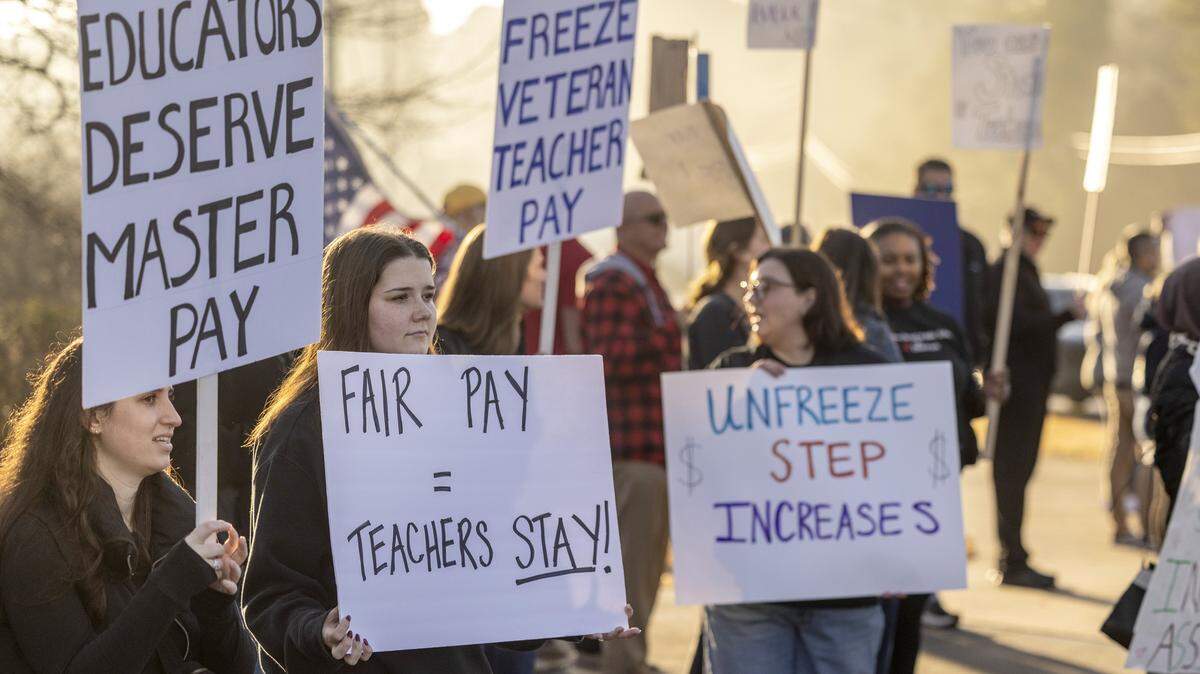
Hundreds of teachers — mainly in Wake County — called out of work on Jan. 7 to protest working conditions. The protest, organized by NC Teachers in Action, called for increased state funding for schools and teachers.
Principal attrition rate drops
This is the second year in a row that the state is keeping track of principal turnover..
At the end of the 2024-25 school year, 151 of 2,482 principals left for an attrition rate of 6.1%. That’s down from 7.45% the prior year.
Most of those who left — 59% — retired.
More than three-quarters of principals of low-performing schools remained at the same school.
This story was originally published March 4, 2026 at 3:37 PM.