From Hawaii to Raleigh: Meet Peace University’s new president, Jennifer Walsh
AI-generated summary reviewed by our newsroom.
- Jennifer Walsh will lead William Peace University starting this summer.
- Strategy focuses on retention, timely graduation and measured growth.
- Plans target transfers, military students and bespoke graduate programs.
William Peace University in downtown Raleigh is welcoming a new president this summer.
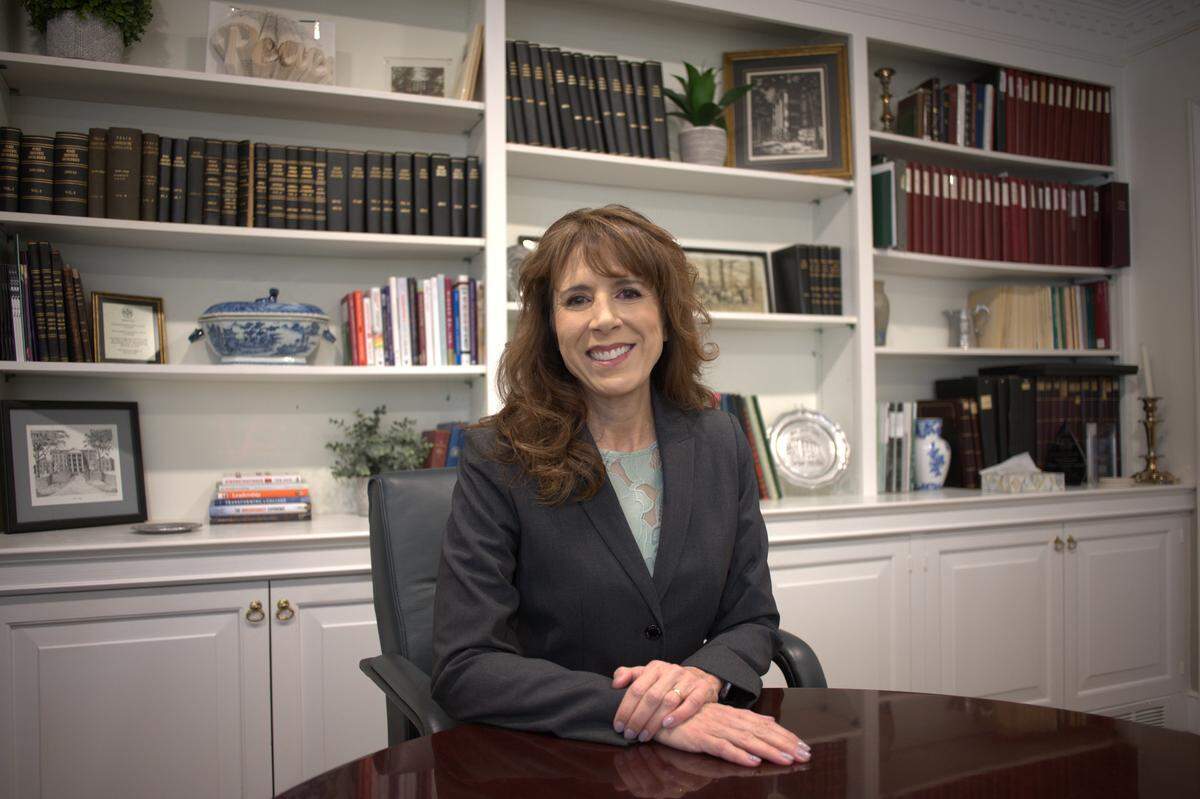
Jennifer Walsh is moving to Raleigh from Hawaii to serve as the 13th president of the historic campus, which has just over 700 undergraduate students in more than 30 majors. She met with The News & Observer on Thursday to discuss what drew her to Peace, her vision for the university, and her solutions to its myriad challenges.
Walsh, 55, is a graduate of University of California Riverside and Claremont Graduate University. Before taking the role as president at Peace, she worked at Hawai’i Pacific University, Claremont McKenna College and Azusa Pacific University.
This interview had been edited for clarity and brevity.
What Peace and Walsh can offer one another
Why did you leave Hawai‘i Pacific University for William Peace University?
Hawaii has been wonderful, and I have nothing but admiration and respect for my colleagues there. The institution is really well-positioned to be successful long term. But I was ready for a change, for the next chapter. There’s going to be a lot of tearful goodbyes, but I’m so excited to be here at Peace.
One of the things I was looking for in my next chapter is an institution that puts students first. For me, that’s nonnegotiable. Every college and university says they put students first, but when you’ve worked in higher education for as long as I have — 30 years — you learn that not everybody actually lives that out. But Peace is a place that actually does live out its mission.
The other thing I was looking for, and that’s harder to find, was an institution that is not afraid to evolve and change. ... You’ll hear me say this often, but I’m a builder. I want to be at an institution that’s not afraid to add on to the house to make sure that we’re adapting and changing as the times demand. If we’re stuck in the past and refuse to change, as higher ed is wont to do, then we’re going to become irrelevant.
Do you have any connection to North Carolina?
No, but I’m here to grow them. I grew up in southern California, but over the last decade or so, all of my immediate family members have migrated east. I have a brother in Atlanta, my father moved to Pennsylvania, my sister lives in New York, and my daughter and her wife and my brand new baby grandson live in New York City. He’s 6 weeks old today and is just a joy.
Everyone is so excited to come visit Raleigh. They’ve heard so much about the growth in this area. They’re waiting for us to get an address and some furniture so they can come crash.
You say William Peace is Raleigh’s “best-kept secret.” Why do you think that is? Why is it not better known, if it’s been around since the 1850s?
When you have an institution with as long of a legacy as Peace, it’s sometimes easy for the community to take it for granted, especially if it’s smaller and doesn’t have the same news flash that some of the larger institutions can have.
Part [of the solution] is to tell Peace’s story and position it as a trusted talent partner to industry and community leaders. We want to be able to say “Hey, we know you’re growing. We know sometimes finding talented employees is difficult. Hire our interns. Show us where we can grow. What new programs can we add to our portfolio to better prepare your workforce?”
I’m hoping that with our vibrant location in the middle of downtown, and the consistent outreach and the message that we are here to serve, that we will start to build trust and brand recognition over time.
How to solve Peace’s problems
The 4-year graduation rate at Peace is 32%. What will you do to fix that?
Here’s my metaphor, and this is a rough one, but I’m just going to use it anyway.
It’s like when you look in the night sky and see the starlight. But that light you see is actually the product of something that happened eons ago. When you look at the graduation rate, it’s a byproduct of what happened four, six, eight years ago. It’s slower to change.
But we do need to make steady progress to first improve retention, which has already begun, and make sure we’re offering classes in a way that is accessible, affordable, and meets students’ needs to help them finish in four years. We’re really having an eye to get that six-year graduation rate well above the 50% mark. That’s a reasonable goal. It will allow us to demonstrate that if you come to Peace, not only are you going to love it here, but you’re going to be able to get the courses you need in a timely and affordable fashion, so you can graduate on time and begin that next step.
It will take a little bit of time for that starlight to reach us, but when we do get there, it’s going to be vibrant and shining bright.
Peace has just 730 students. What are your growth goals?
We’re already growing, and we’re going to continue to grow in a sustainable, incremental way. We’re not going to double overnight — that wouldn’t be healthy. We need to have measured growth to make sure that our services to students and our infrastructure can keep up.
I see three avenues to growth. One is to grow our traditional population with increased transfer students from Wake Technical College and other community colleges in the local area. With creative pricing, we’re able to position the Peace price in a way that is sustainable for transfer students. That’s going to allow us to grow that population very quickly.
The second area of growth is with our military and veteran student population. This involves Peace Online. To appeal to military-affiliated working adults, they need that flexibility. Many of them are in the Fort Bragg region. They’re transitioning out of active duty, and they need a degree and upskilling to make sure they’re well-positioned for civilian life. It’s a population I know well, as Hawaii has a very large military and veteran population. Those needs are everywhere, including here in North Carolina.
The third area — and this is exciting — is new graduate programs. So far, we’ve only offered undergraduate programs. We’ll have to first seek accreditation approval to offer graduate programs. My goal is to offer unique graduate programs that aren’t replicated in every institution across the country. I want to talk to our partners in the region to see how we can meet their needs. What about something that supports the construction industry? You can’t drive around here without seeing home tracts go up. Those firms need construction managers, HR managers, sales personnel. All of those positions are ones that we can help fill with curated, customized, bespoke graduate programs to meet specific needs. That’s where we can make a difference, and we can do it in a sustainable and affordable way.
Peace’s tuition is $35K, but six years after graduation, the average salary of an alumnus is less than $40K. How do you justify the return on investment?
A lot of that reflects North Carolina salaries in general. A vast majority of our students come from North Carolina, and when they graduate, they live and work in the state. We will see those salaries increase as employment opportunities also increase. It’s a push-pull relationship. Growth brings higher costs, but it also brings higher salaries. I expect that as our students are employed by emerging industries that are high-need and high-wage, that average is going to increase.
I’m not worried right now. We just went through the exercise that the federal government had every institution do to signal whether or not the earnings of students outweigh the costs, and Peace came through with flying colors.
With $11.5 million in debt and $25 million in deferred maintenance projects to complete, how will you stabilize finances?
Finances are actually stable right now. Most institutions of higher education have a break-even budget. That’s part of nonprofit world. We want to keep our costs low. We want to keep our resources efficient for every student that comes in. We want to make sure that those dollars are used efficiently and effectively.
I looked at the deferred maintenance list when I arrived on campus. I would be hard-pressed to know why the number on paper is that number because the buildings are in excellent shape. Most of the improvements are cosmetic. There aren’t any structural concerns. So for me, it’s highly reassuring to know that we do not need to look at an expensive capital outlay.
You have to understand, I came from a campus where some of my buildings were right on the sea. Sea water is so corrosive. They had to be condemned and torn down. Here, the infrastructure is sound, the student living spaces are healthy and safe, and the facilities that we have are in the process of being modernized and revitalized for future growth opportunities.
William Peace doesn’t have tenure. Do you worry about how that affects faculty recruitment and retention?
It’s interesting, but every single position I’ve held since my initial faculty days have been in institutions without traditional tenure. I know some faculty who are very used to a tenure system, but increasingly, it’s not the norm. More private institutions, and some publics, are looking at doing away with tenure.
We offer a vibrant work environment with long-term job security, without the artificial restraints that tenure can be associated with. The fact that we don’t have a traditional tenure system doesn’t bother me at all. We protect academic freedom. We do all the things that you would expect higher ed institutions to do, and the fact that it doesn’t have tenure just means that we’ve got a little bit more flexibility to pivot and add capacity as needed.
The inspiration behind the work
What do you think is Peace’s single greatest strength?
The people. I know that can sound a little clichéd. But that’s what sold me on Peace. Every single person I talked to, from board members to students, to staff, faculty, and alums, they love Peace — which is kind of a cool slogan: I love Peace. This is not fabricated enthusiasm. I’ve been in enough institutions that I can spot fake cheerleading a mile away, but people love Peace. That’s the kind of institution I want to lead, where people are genuinely excited and motivated to make a difference. You can’t replicate that. I wish there was a formula, because it’s so infectious.
What excites you most about higher education?
We are at such a pivotal point right now. It is so exciting. It’s a little nerve wracking at times, because the pace of change is so dizzying. I am so glad to be leading Peace at this moment in time. We’re just like our mascot Phantom [a horse]. We’re running at breakneck speed. We’re going to evolve quickly, and we’re going to do it in a thoughtful way that keeps students at the forefront of all we do. We are at a moment in higher ed where we have to change in order to stay relevant. This is such an exciting time for small schools like Peace to come in and make a difference.
This story was originally published March 20, 2026 at 5:30 AM.