Alumni react to St. Augustine’s bankruptcy: ‘Why are we not worth a conversation?’
AI-generated summary reviewed by our newsroom.
- St. Augustine’s announced bankruptcy and said it was losing accreditation last week.
- Alumni say they were left out of communications and are seeking transparency.
- The university owes between $50 million and $100 million.
When St. Augustine’s University, Raleigh’s 160-year-old HBCU, announced last week that it was bankrupt and losing its accreditation, the leader of its young alumni association, Olivia Huckaby, was shocked she hadn’t received any advance notice.
She says this lapse in communication is just the latest breach of trust between the leaders of St. Augustine’s and its alumni. St. Augustine’s has faced declining enrollment, accreditation challenges, and financial difficulties since the 1990s. Huckaby graduated from the university in 2012. Now, she runs a nonprofit focused on digital skills.
She and her fellow alumni are still processing the news of the bankruptcy and trying to figure out what it means for the institution, especially for recent graduates. St. Augustine’s is asking all current students to transfer.
Huckaby describes a feeling of whiplash: being locked out of crucial developments, like the university preparing to file for bankruptcy, and then the school turning around and asking her for money. But the thing is, St. Augustine’s desperately needs it. It owes between $50 million and $100 million to hundreds of different creditors, according to its bankruptcy filing.
“There’s so much tension between the board and alumni. It’s sad,” Huckaby said. “We don’t want to fight with our own board. Unfortunately, we have poor leadership on the board, with people who don’t have a longevity vision for the institution.”
“We’re asking them to provide us transparency. We’ve invited them to a number of meetings, both on Zoom and in-person. We just want to know what their intentions are with the university. That’s it. If it’s to sell it or change it, whatever it is — just let us know. We shouldn’t have to find out through the news. Why are we not worth a conversation?”
A statement on the university’s website indicates that leadership is interested in answering the call for transparency.
“Leadership recognizes that trust must be rebuilt through transparency, accountability, and consistent action,” the statement reads. “The decision to file for Chapter 11 is a critical first step, as it establishes a structured, court-supervised process that ensures oversight, financial discipline, and clear communication with stakeholders. Through this process, leadership is committed to demonstrating responsible stewardship and keeping stakeholders informed every step of the way.”
Financial struggles were clear to students
St. Augustine’s refers to the Chapter 11 filing as a “proactive step” to “reset the university’s financial foundation.” Self-Help Credit Union, which took over parts of the university’s debt earlier this year in a deal that included the replacement of key members of the board, will appear in bankruptcy court, “demonstrating confidence in the University’s future.”
Alliyah Chaplin, a 25-year-old Chapel Hill native who attended St. Augustine’s from 2020 to 2022 before transferring to Shaw University, says the school’s financial struggles were obvious.
“No improvements were being done on campus. Stuff was breaking down and couldn’t be fixed,” Chaplin said. “There was less enrollment every year. I kind of knew this was going to happen.”
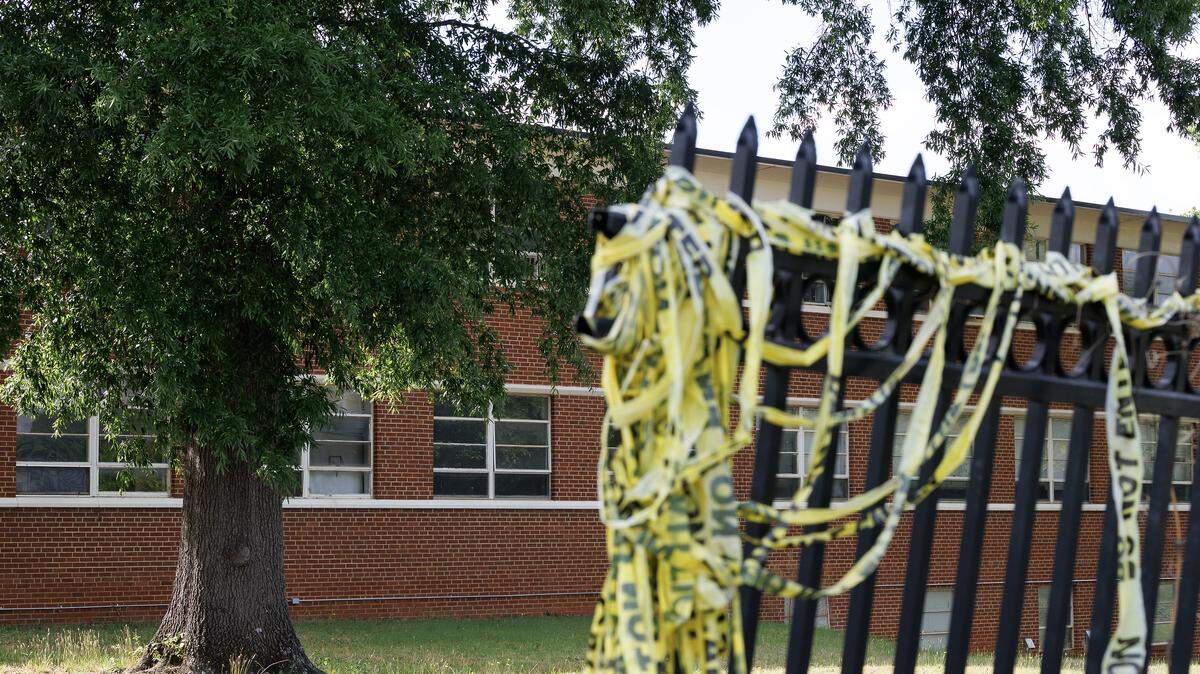
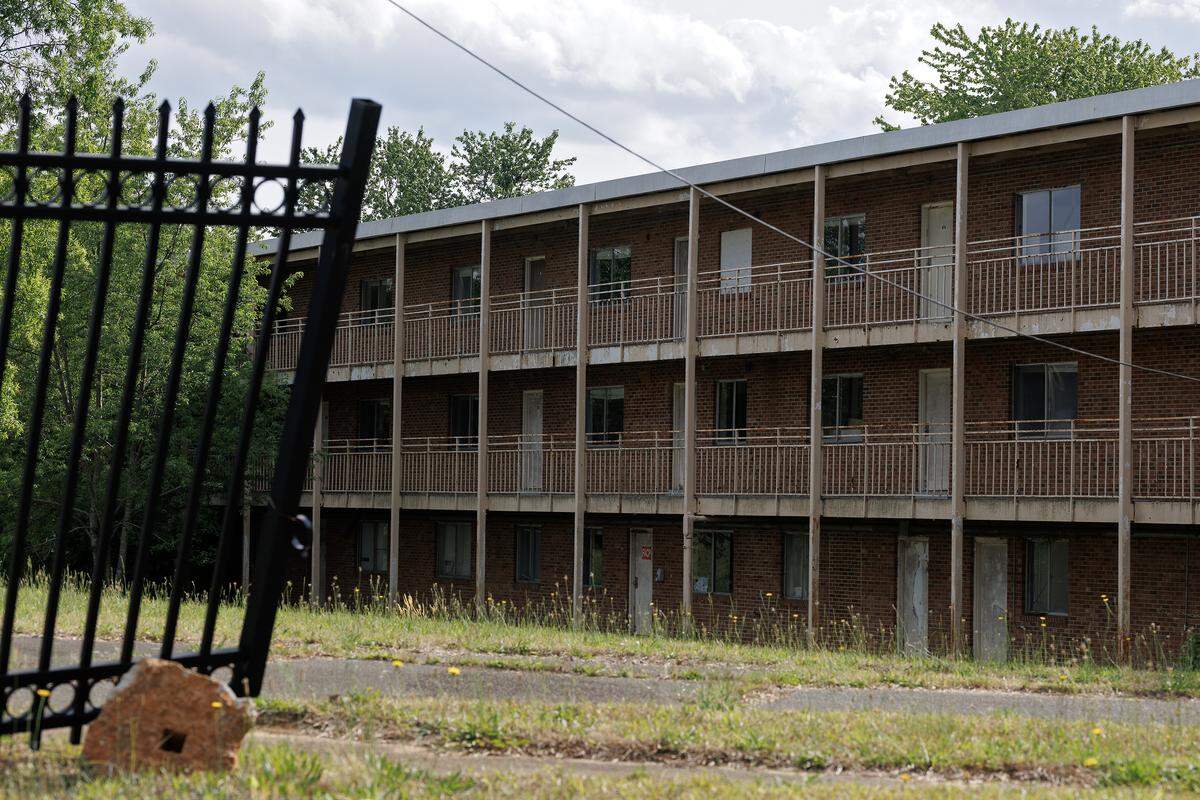
Huckaby said there aren’t any students on campus now. She feels that the university isn’t taking proper steps to secure the property. She’s seen vandalism and witnessed people treating the private campus more like a public park. She is worried that leadership is considering selling off the land to a developer rather than bringing students back.
“I‘m really just upset that there are people sitting in those seats that would rather see that land turned into apartment buildings than restore our history,” Huckaby said.
The university, however, says that the bankruptcy will help it “protect key assets, including real estate and land.”
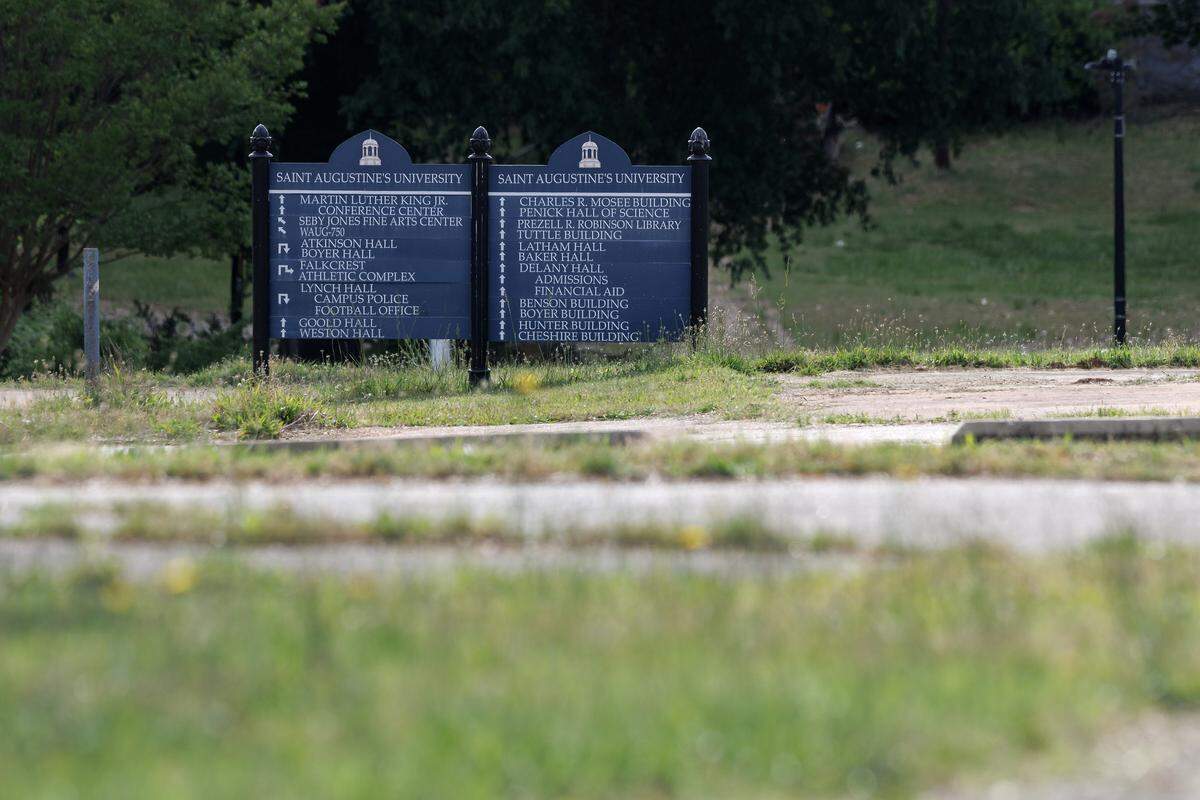
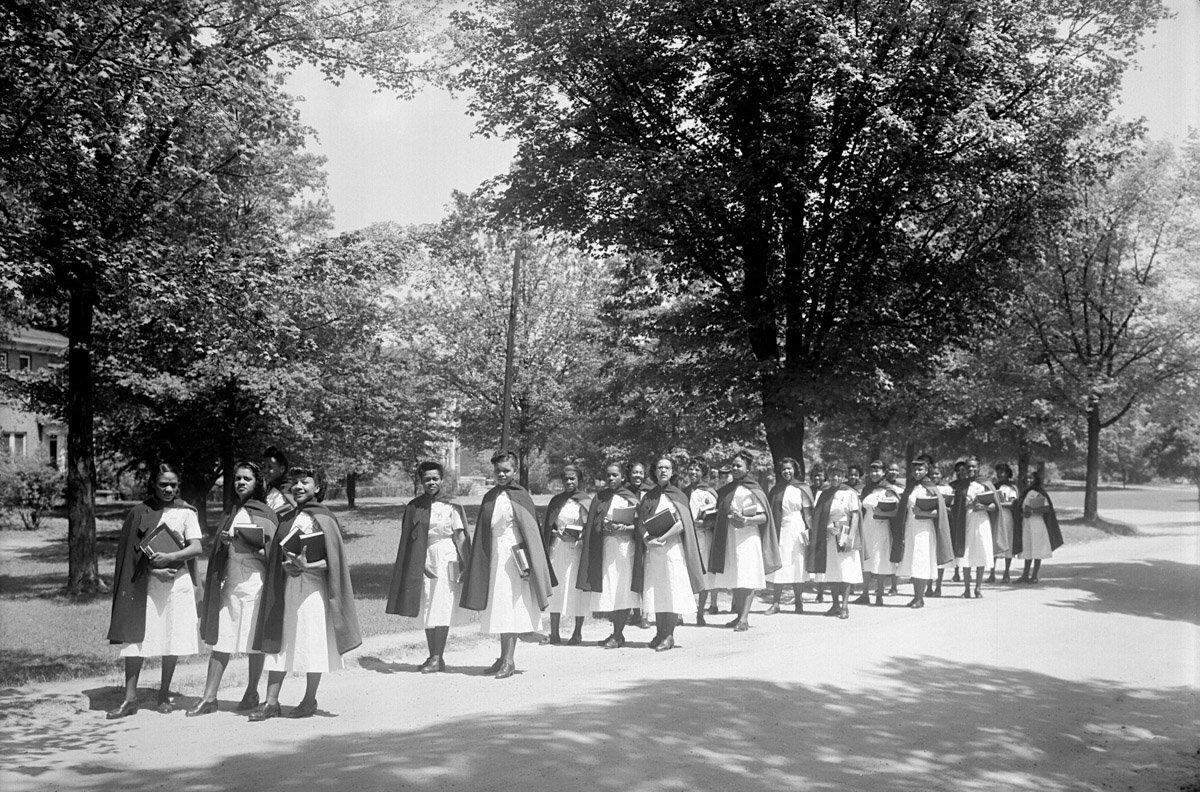
Above all, alumni are worried about preserving the mission of St. Augustine’s, one of the South’s oldest historically Black colleges and universities.
“There are a number of alumni, even historically, they have done great things in society, in their communities,” Huckaby said. “They’ve broken barriers in their own families. I still stand strong on my degree, the institution, and the ancestors — the people that worked diligently to make sure that people of color had somewhere to become educated.”

For Kimberly Hayes-Johnson, who graduated from St. Augustine’s in 1989, the news of the bankruptcy is heartbreaking. She says the impact on students and families goes beyond a financial or administrative issue: the school’s legacy is at stake. She recalls arriving on St. Augustine’s campus from Greenville, Mississippi, in 1985, and just how much that experience still means to her. The focus must be on preserving the institution for future generations, she argues, even though that may require a lot of work.

“My greatest concern is for the students,” Hayes-Johnson said in a statement to The News & Observer. “They must be supported, protected, and given clear, stable pathways forward without disruption to their academic progress. At the same time, I absolutely still have hope for the legacy of Saint Augustine’s. A 159-year legacy does not simply disappear — it must be preserved, protected, and, where possible, rebuilt with intention and transparency.”
“Alumni cannot be passive in this moment,” she continued. “This is a call to action. We must show up in partnership and in collaboration with the University — fully committed with our time, expertise, and resources — to ensure both immediate support and the long-term viability of the institution.
The N&O tried to reach multiple members of the Board of Trustees but was unsuccessful.
This story was originally published May 7, 2026 at 5:30 AM.