UNC doesn’t have to release remaining COVID research records, NC Supreme Court says
AI-generated summary reviewed by our newsroom.
- NC Supreme Court denied petition to compel UNC to release COVID research documents.
- UNC withheld 5,205 documents, including unpublished research, under a research exemption.
- UNC turned over 130,000 pages but US Right to Know sought about 50,000 more.
The North Carolina Supreme Court has declined to hear a case against UNC-Chapel Hill from an advocacy group seeking records the group said could shed light on the origins of COVID-19. The decision is likely the final word in a high-profile public records dispute dating back to 2020.
Carolina Journal first reported this story.
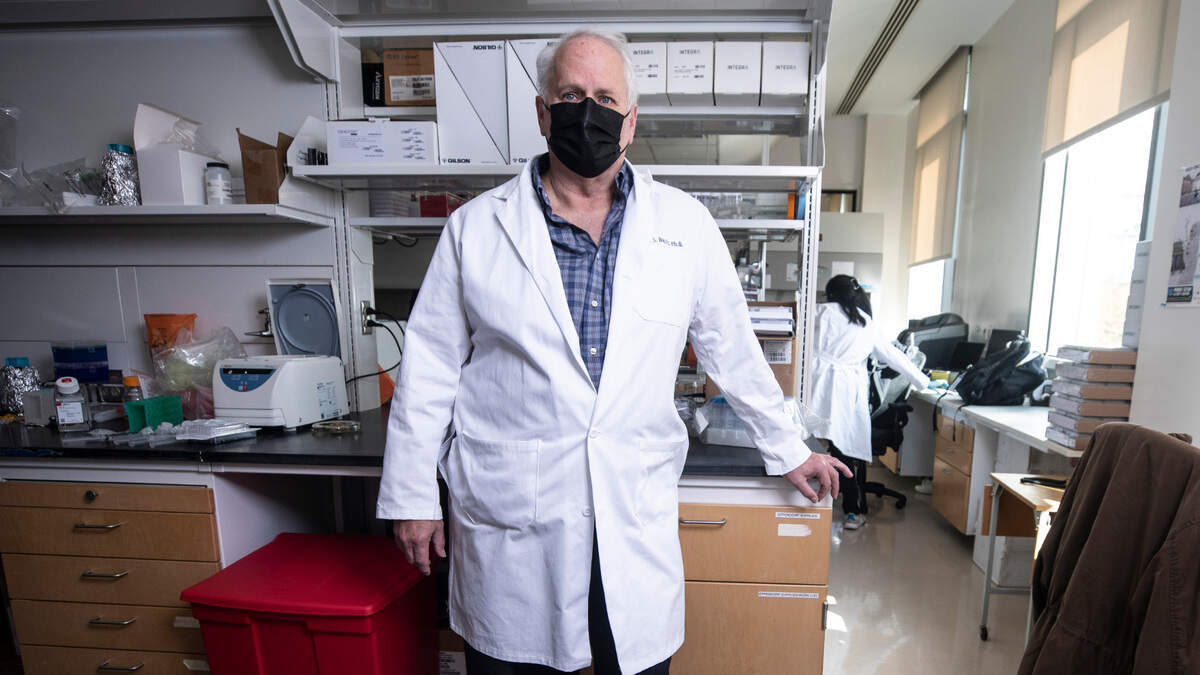
Ralph Baric, one of the world’s top coronavirus researchers, retired from UNC-Chapel Hill earlier this month after 40 years at the university. His legacy — including early warnings about the threat of such viruses and intensive work on the development of vaccines — has been complicated by unproven accusations that his research helped cause the COVID-19 pandemic.
Baric’s work with the Wuhan Institute of Virology, located in the Chinese city where the virus that causes COVID-19 would later be discovered, and his public comments about the virus’s origin have brought scrutiny to his research.
US Right to Know, the watchdog group that sued UNC in pursuit of Baric’s research records, describes itself as “an investigative research group focused on promoting transparency for public health.” It is particularly concerned with the idea that the American public has been denied the full truth about the origins of COVID-19.
UNC-Chapel Hill has not responded to The News & Observer’s request for comment.
UNC-Chapel Hill turns over 130,000 pages of documents
UNC-Chapel Hill already turned over 130,000 pages of documents concerning its coronavirus research in response to US Right to Know’s July 2020 public records request, both to the state legislature and to the advocacy group.
But the university also “withheld certain documents under the research exemption,” which exists to “protect public universities and colleges from being placed at a competitive disadvantage in relation to private universities,” according to a previous court filing in the case. The university withheld 5,205 documents from US Right to Know, it said, including materials like unpublished manuscripts and unpublished research data.
US Right to Know sued UNC-Chapel Hill for those remaining records. The North Carolina Supreme Court declined to hear it, in a decision made public Friday. That decision leaves a prior ruling against US Right to Know from the NC Court of Appeals in place.
On Friday, Gary Ruskin, executive director and co-founder of US Right to Know, took to social media to express his disappointment in the high court’s decision.
“Today, the North Carolina Supreme Court denied our petition to compel the University of North Carolina to release about 50,000 pages of documents, mostly related to Ralph Baric, that may contain clues about the origin of the COVID-19 pandemic,” Ruskin posted. “We are disappointed by this result. We believe that North Carolina, our country and the world deserve better. And that it is not the proper role of the University of North Carolina — an institution of higher learning — to hide or bury what it may know about the origins of the pandemic.”
Ralph Baric raised alarms about coronavirus, lab security
Baric, though, has also raised alarms that some labs may not have been secure enough for the caliber of the diseases they studied. Baric joined 17 other scientists in a 2021 letter, published in Science, calling for a deeper investigation into the possibility of a lab leak.
More recently, the U.S. Department of Health and Human Services proposed banning Baric from receiving federal funding for his research. In the email notifying Baric of the decision, HHS accuses him of a “pattern of deception.”
In an email notifying faculty about Baric’s retirement, Nancy Messonnier, dean of the Gillings School of Public Health, and Maria Gallo, chair of the department of epidemiology, celebrated his prolific career.
“Dr. Baric has been responsible for creating pioneering life-saving treatments, important diagnostic advancements and vaccines that are used around the world,” they wrote in an email to their department, which was reviewed by The News & Observer. “Dr. Baric’s lab contributed to the development of the major drugs to treat the COVID-19 virus, as well as the MRNA vaccine, which saved countless lives globally.”
As early as 2015, Baric warned that coronaviruses could jump from bats to humans, and that no treatment was readily available. Baric also worked on vaccines for norovirus and dengue fever.
This story was originally published June 24, 2026 at 1:22 PM.