
Dr. Paul Farmer, global humanitarian leader and Duke graduate, dies
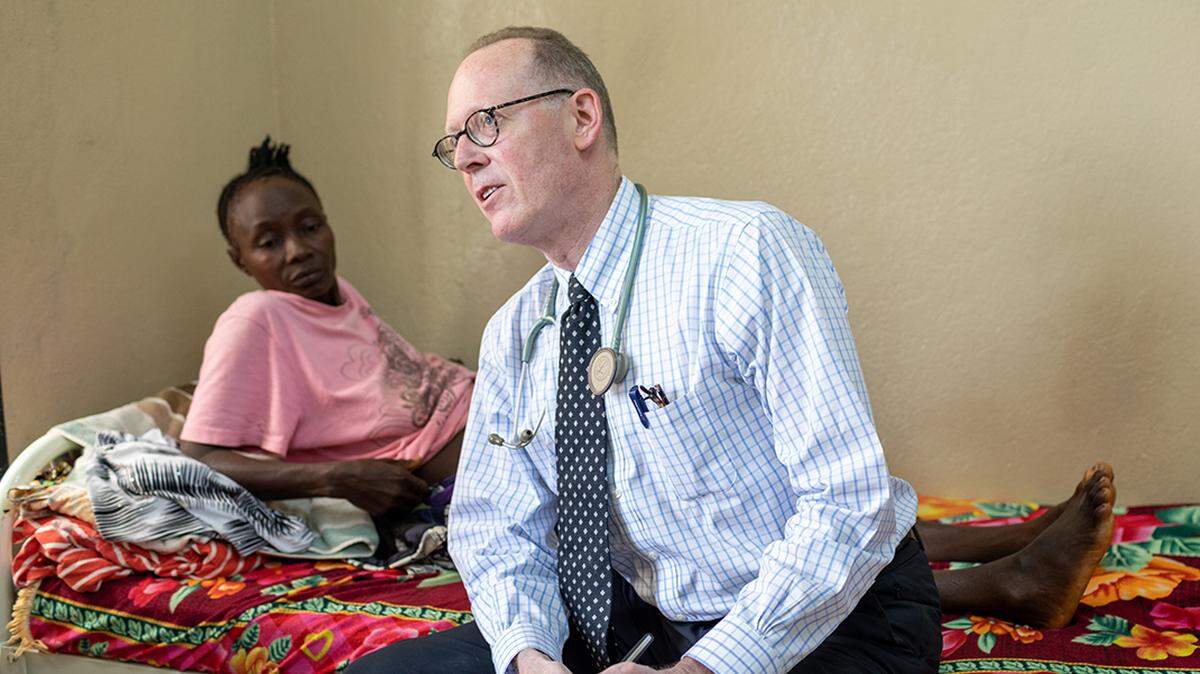
Dr. Paul Farmer, a U.S. physician, humanitarian and author renowned for providing health care to millions of impoverished people worldwide and who co-founded the global nonprofit Partners in Health, has died. He was 62.
The Boston-based organization confirmed Farmer’s death on Monday, calling it “devastating” and noting he unexpectedly passed away in his sleep from an acute cardiac event while in Rwanda, where he had been teaching.
Farmer, a 1982 graduate of Duke University, served as a member of the Duke University Board of Trustees from 2009 to 2021. He was a professor of medicine at Harvard Medical School and chief of the division of global health equity at Brigham and Women’s Hospital.
He wrote extensively on health, human rights and social inequality, according to Partners in Health.
“A compassionate physician and infectious disease specialist, a brilliant and influential medical anthropologist, and among the greatest humanitarians of our time — perhaps all time — Paul dedicated his life to improving human health and advocating for health equity and social justice on a global scale,” wrote George Q. Daley, dean of Harvard University’s Faculty of Medicine, in a statement.
Partners in Health, founded in 1987, said its mission is “to provide a preferential option for the poor in health care.” The organization began its work in Cange, a rural village in Haiti’s central plateau, and later expanded its operations to regions including Africa, Eastern Europe and Latin America.
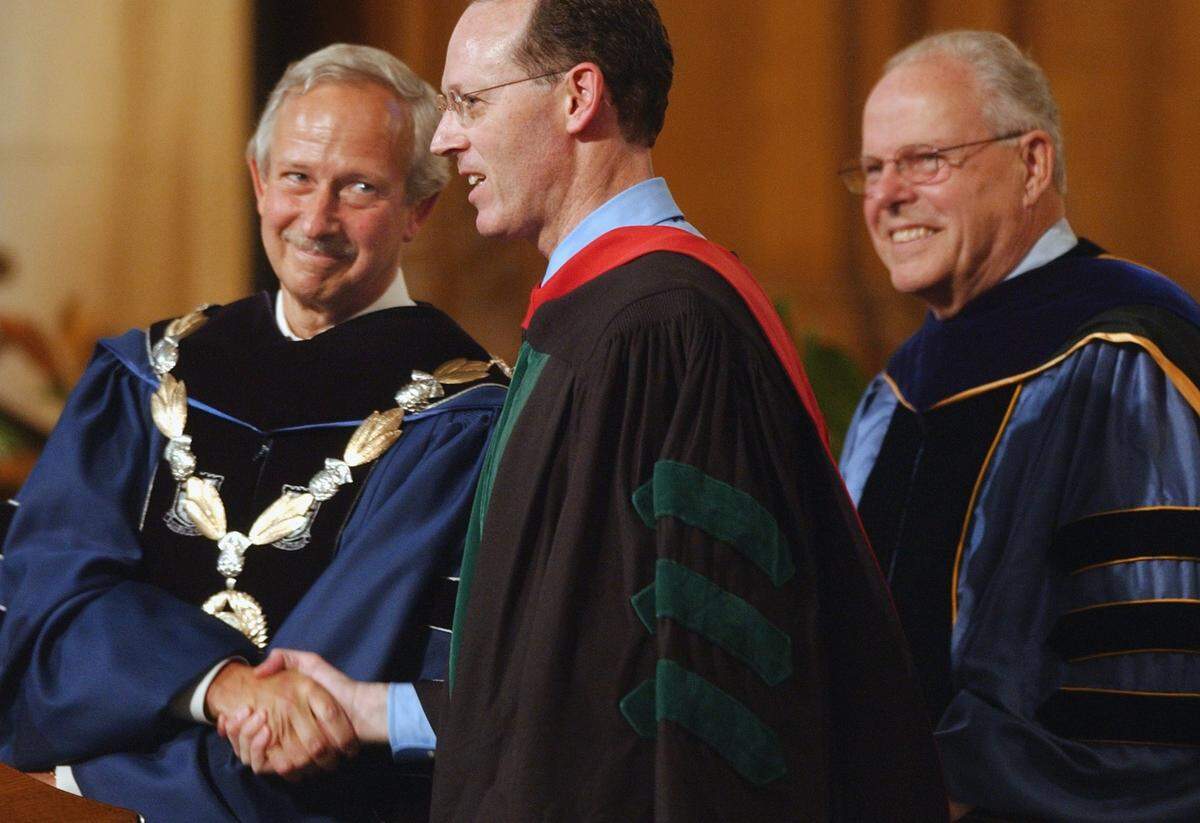
Duke University lowered its flags through Wednesday to honor Farmer, who maintained strong Duke ties after graduating summa cum laude with a degree in medical anthropology. In addition to serving on the university’s board of trustees, he was a member of the Board of Advisors of the Duke Global Health Institute, the university said. He also delivered the 2015 commencement address at Durham Bulls Athletic Park.
“Like so many in the Duke community, I am shocked and saddened by the news of Paul Farmer’s passing,” Duke President Vincent Price said in a statement.
“Paul was truly an inspiration, and he will rightfully be remembered for his pathbreaking work in global health and his selfless commitment to serving some of the most vulnerable populations in the world. His work saved countless lives; it also changed a great many lives for the better—the students he encouraged, the physicians he mentored, the friendships he forged the world over, and the family he loved.”
Farmer continued to return to Duke, where his daughter, Catherine, attended, to discuss health issues around the world. He most recently took part in a discussion Jan. 26 sponsored by the Duke Global Health Institute, the university said.
‘Important figure in the world’
Pulitzer Prize-winning author Tracy Kidder, who wrote the nonfiction book, “Mountains Beyond Mountains: The Quest of Dr. Paul Farmer, A Man Who Would Cure the World,” told The Associated Press the two traveled together for a month as Farmer treated prisoners and impoverished people in Haiti, Moscow and Paris.
“He was an important figure in the world,” Kidder said. “He had a way of looking around corners and of connecting things. He couldn’t obviously go and cure the whole world all by himself, but he could, with help of his friends, give proof of possibility.”
One of Kidder’s strongest memories of Farmer occurred in Peru, where the doctor was treating patients with multidrug-resistant tuberculosis. Kidder recalled a woman wearing a Mickey Mouse shirt who followed them to their car, looking very shy.
With her head down, she said, “Thank you,” to Farmer in Spanish. Kidder recalled: “Paul turned, took each of her hands in his and said, ‘For me, it is a privilege,’ in Spanish.”
He added that Farmer was instrumental in getting AIDS treatments, and created various health systems around the world.
“It really humiliates the nay-sayers, who think it’s somehow OK for some people to get health care and others not,” Kidder said. “It just drove him nuts.”
Michelle Karshan, vice president of a nonprofit prison health care system in Haiti who worked closely with Farmer, said he was determined, innovative and always knew how to get around obstacles and bureaucracy.
“He didn’t take no for an answer,” she said. “He didn’t think anybody was too poor or too illiterate to be entitled to receive health care.”
She noted that when the World Health Organization resisted giving HIV medication to people who were illiterate in Haiti for fear they would not know when or how to take it, Farmer set up his own program and created a chart that relied on the sun’s position. He also hired people known as “accompaniers,” who would hike through Haiti’s rough mountainous terrain to make sure patients had water, food and were taking their medications.
“I’m so sad for all the people who are not going to have him in their lives. He was there for everybody,” Karshan said.
Praise from world leaders
Haiti’s Prime Minister Ariel Henry praised Farmer’s work, as did former U.S. President Bill Clinton.
“Paul Farmer changed the way health care is delivered in the most impoverished places on Earth. He saw every day as a new opportunity to teach, learn, give, and serve — and it was impossible to spend any time with him and not feel the same,” Clinton said in a statement.
At the beginning of the COVID-19 pandemic, with thousands of cases reported daily in Massachusetts, local health departments were overwhelmed by the task of contact tracing to help slow the spread of the disease.
The state launched a contact tracing collaborative in April 2020, and asked Partners in Health to lead the initiative, which made more than 2.7 million calls to residents at a total cost of about $158 million, according to the state.
Farmer is survived by his Haitian wife, Didi Bertrand Farmer, and their three children.
This story was originally published February 22, 2022 at 8:58 PM.