
‘Strike team’ dropped onto small Texas island to eradicate poisonous invasive plant
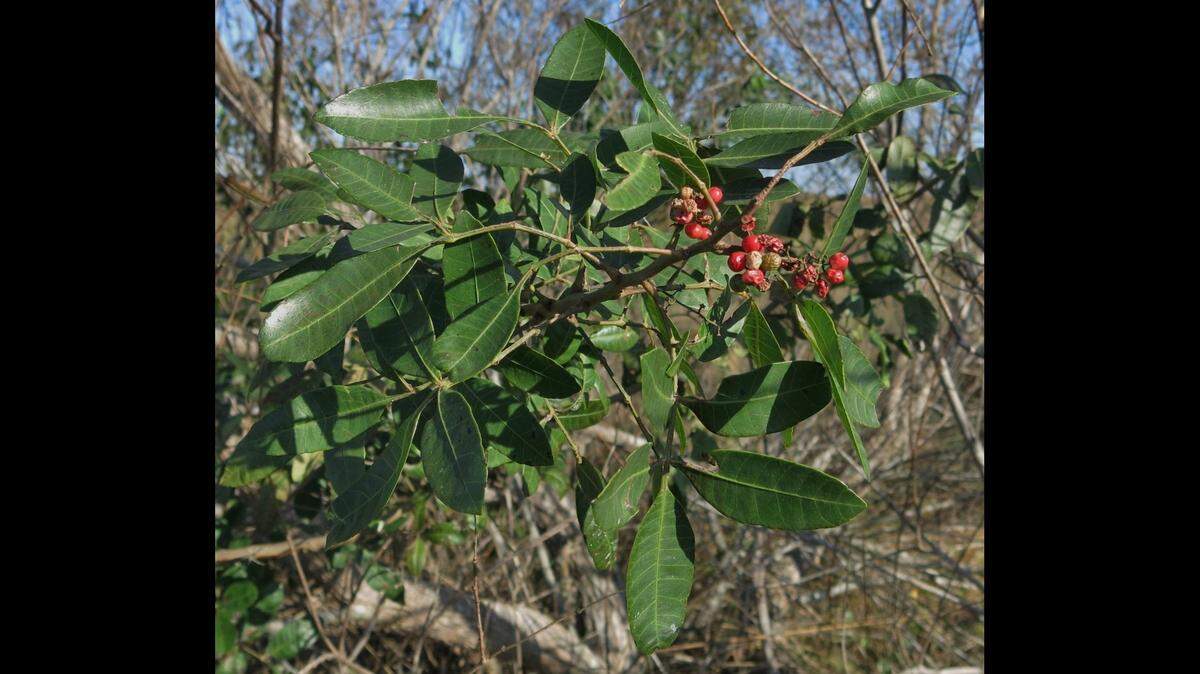
A small Texas barrier island has became the latest front in an ongoing war to stop a poisonous invasive plant that is spreading across the southeastern United States.
An Invasive Species Strike Team spent three days (Dec. 7-9) at Padre Island National Seashore, trying to eradicate all forms of Brazilian peppertree, according to the National Park Service.
The peppertree — also known as rose pepper and christmasberry — is a shrub-like tree with a resin that is noxious in the same way as poison ivy, poison oak and poison sumac, park officials said.
“Brazilian pepper(tree) tends to produce a dense canopy that shades out other plants and provides a very poor habitat for native plant species,” Padre Island officials posted Jan. 2 on Facebook. “This invasive species is also known as an allelopathic plant that produces chemicals that inhibit growth or germination of neighboring plants.”
Padre Island National Seashore is a federal preserve that covers “70 miles of coastline, dunes, prairies, and wind tidal flats” between the Gulf of Mexico from the Laguna Madre, the National Park Service says. The Laguna Madre is “one of a few hypersaline lagoons in the world,” meaning it’s “saltier than most seawater,” Texas officials say.
The strike team focused on one of the park’s “spoil islands” — known only as 614-305F — where the peppertree gained a foothold. The plant often takes the form of “dense thickets,” though individual plants have been known to grow 15 feet tall, according to the U.S. Department of Agriculture.
A nonprofit volunteer service agency known as American Conservation Experience supplied the team, which is based on a program introduced by the U.S. Fish and Wildlife Service. Invasive Species Strike Teams use any means necessary to destroy invasive species, from plucking up seedlings to cutting down mature trees, according to U.S. Fish and Wildlife.
Texas is one of five mainland states where Brazilian peppertrees have been found, including Florida, Alabama, Georgia and California, according to the USDA. (It has also been found in Hawaii.)
“The Brazilian peppertree is native to Brazil, Paraguay and Argentina and was brought into Florida in the 19th century for use as an ornamental plant,” the park said. “This tree is one of the most invasive and widespread of the exotic pest plants in the state of Texas.”
This story was originally published January 5, 2021 at 4:37 PM with the headline "‘Strike team’ dropped onto small Texas island to eradicate poisonous invasive plant."