
Elon Musk endorsed it, so what is Signal? Encrypted messaging app surges in popularity
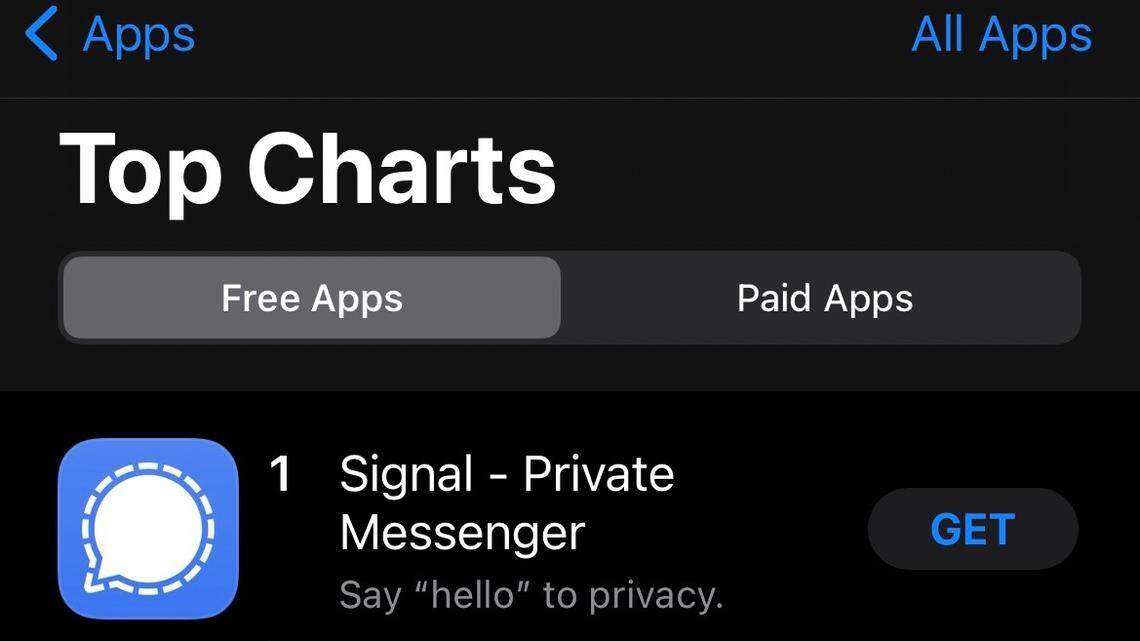
Two words from one of the world’s wealthiest men has led to a frenzy on app stores.
“Use Signal.”
That was the statement from Elon Musk, the CEO of Tesla and SpaceX, who helped vault the encrypted messaging app Signal into a new level of popularity last week.
Since Musk’s succinct tweet on Jan. 7,Signal — a rival to WhatsApp and Facebook Messenger — has been one of the hottest apps on the App Store and Google Play.
“From January 6 to January 10, Signal saw approximately 7.5 million installs globally from across the App Store and Google Play,” a representative for app-analytics firm Sensor Tower told Business Insider.
Twitter CEO Jack Dorsey, who has previously said he uses Signal, shared a screenshot Sunday showing that the app had risen to the top of the Apple App Store. It remains atop the chart Tuesday afternoon.
Signal was No. 7 on the Google Play store over the weekend, Mashable reported.
So what is the appeal of Signal — and how does it differ from its competitors?
Encryption services
The privacy Signal offers is perhaps the biggest selling feature for the app.
“State-of-the-art end-to-end encryption keeps your conversations secure,” Signal writes on its website. “We can’t read your messages or listen to your calls, and no one else can either. Privacy isn’t an optional mode — it’s just the way that Signal works. Every message, every call, every time.”
Signal offers one-on-one messaging, group messaging, voice and video calls. Only the sender and recipients can see the content shared, Signal says, unlike some of its competitors.
The app shared a chart last week by Forbes detailing what data is shared by Signal rivals Facebook Messenger, WhatsApp and Telegram. For Facebook, information such as your location, browsing history and advertising data is collected. WhatsApp collects data such as contacts, purchase history and advertising data.
“The only personal data Signal stores is your phone number, and it makes no attempt to link that to your identity,” a graphic shared by Signal reads.
The surge in popularity comes after WhatsApp announced some users would have to share some of their personal data with its parent company, Facebook, or lose access to the app by Feb. 8, according to Business Insider. It later clarified the comment and said its change “does not affect the privacy of your messages with friends or family.
“We want to be clear that the policy update does not affect the privacy of your messages with friends or family in any way,” WhatsApp wrote on its website. “Instead, this update includes changes related to messaging a business on WhatsApp, which is optional, and provides further transparency about how we collect and use data.”
But some say Signal still offers the best privacy of the messaging services.
“When it comes to privacy it’s hard to beat Signal’s offer. It doesn’t store your user data,” CNet reported. “And beyond its encryption prowess, it gives you extended, onscreen privacy options, including app-specific locks, blank notification pop-ups, face-blurring anti-surveillance tools, and disappearing messages.”
How to use it
Signal is a nonprofit company and is not tied to a major tech company. It’s supported through grants and donations.
The app, available for free, is designed to be used as a supplement or even a replacement for SMS (short message service) text messages. After downloading the app, you’ll be able to find which of your contacts also use the service. From there, let the messaging commence.
It’s also available as a desktop app on Windows and Mac.
“There are no ads, no affiliate marketers and no creepy tracking in Signal,” Signal boasts on its website.
Why the sudden shift?
Signal isn’t new — launching in 2018. But the sudden change in popularity comes less than a week after pro-Trump rioters stormed the United States Capitol.
Musk tweeted a meme Jan. 6, hours after the attack, that seemingly blamed Facebook for its role in the riot. A day later, he encouraged his 42 million followers to use Signal.
The new popularity of Signal also follows restrictions by social media companies on what and who is shown on their services following last week’s riot in the nation’s capital.
Parler, an app popular among conservatives, is no longer available through Apple, Google and Amazon.
“As social media companies are taking a more active stance on what’s allowed on their platforms after the violent Capitol riots, it makes sense that those searching for new platforms would turn to ones in which their communications are kept secret,” Vox reported.
This story was originally published January 12, 2021 at 3:35 PM with the headline "Elon Musk endorsed it, so what is Signal? Encrypted messaging app surges in popularity."