
12,000 gather under Texas bridge, hoping for entry into US. Where did they come from?
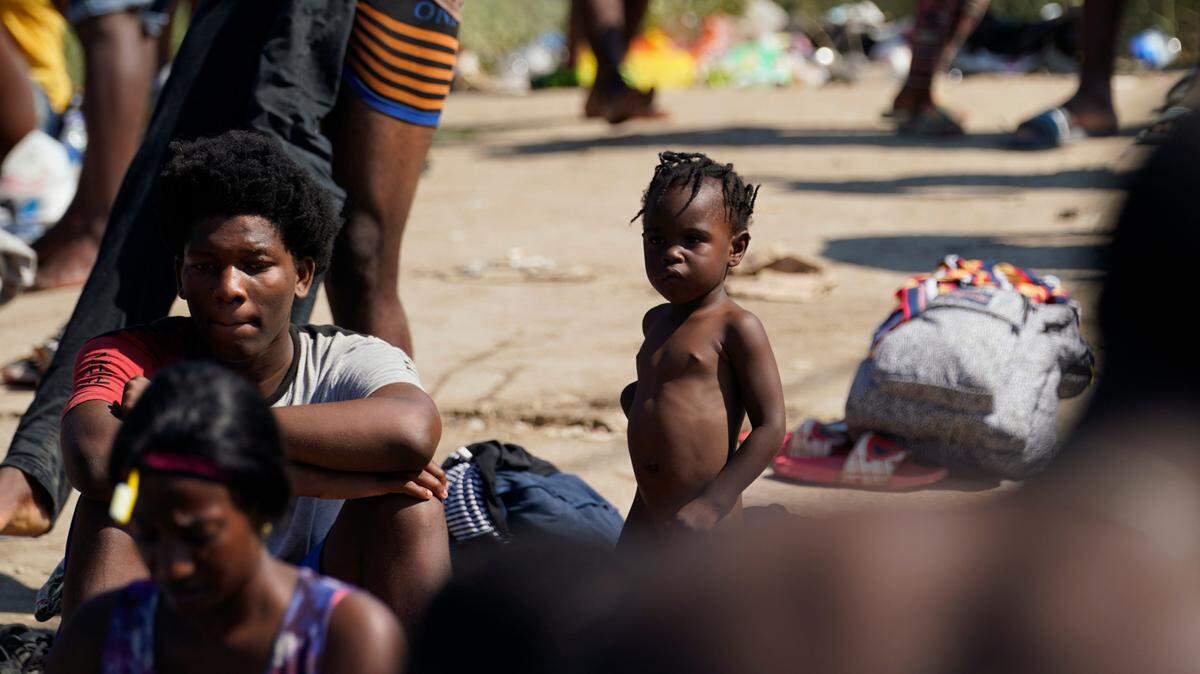
Thousands of migrants are crowded under a bridge in Del Rio, Texas waiting to be processed by U.S. immigration officials.
The migrants are mostly from Haiti, but also from Cuba, Nicaragua and Venezuela.
Val Verde County Judge Lewis Owens said there are an estimated 12,000 migrants at the bridge, according to The Associated Press. A day earlier, Del Rio Mayor Bruno Lozano said there were roughly 10,503 migrants underneath the bridge, up from roughly 8,200 that morning, Reuters reported.
Lozano declared a local state of disaster on Friday, saying that the city expects an additional 8,000 migrants to arrive in Del Rio over the next few days. He also requested assistance from the state to help deter more migration to the city, and the city is closing toll booths on the bridge connecting Del Rio to Ciudad Acuña in Mexico to halt traffic across the bridge, The Texas Tribune reported.
The migrants there are being held in a temporary staging area arranged by U.S. Customs and Border Protection agents while they wait to be taken into U.S. custody, The New York Times reported.
Conditions in the makeshift camp are difficult. Images and videos of the area show people sleeping on dirt or waiting in the smothering Texas heat — with little food or water. The campsite is littered with trash piles that stand 10 feet tall and at least two women have given birth, one of whom later tested positive for COVID, Owens told AP.
Hundreds of migrants have been seen wading through the Rio Grande into Mexico to bring back essentials they weren’t provided on the American side of the river, Reuters reported.
This year, the Southwest border has nearly experienced a 20-year high in the number of migrant apprehensions. In August alone, U.S. border enforcement authorities apprehended over 195,000 people at the Mexican border, according to data released Wednesday.
An influx of Haitians
In Del Rio, about 70% of the migrants awaiting processing are from Haiti, Val Verde County Sheriff Joe Frank Martinez told The Texas Tribune.
Their migration may have been triggered by the destabilizing events of the last few months — namely, the assassination of the country’s president in July and a 7.2 magnitude earthquake in August that killed more than 2,000 people and severely damaged multiple cities.
And some of the migrants in Del Rio are likely Haitians who arrived in Brazil and other South American countries years ago, following the country’s devastating 2010 earthquake, which killed around 300,000 people, The Washington Post reported.
The number of Haitians arrested on the Mexico-U.S. border has spiked in recent months, to 6,768 in August from 2,700 in May, Forbes reported.
This fiscal year, at least 29,616 Haitian migrants have arrived in the U.S., according to data from U.S. Customs and Border Protection. Many of them are from mixed-nationality families with children born in South American nations, including Brazil and Chile, the Post said.
Some of those migrants chose to head to the U.S. from South American countries due to the difficulties they faced there, including racism, poverty and language barriers, Houston Public Media reported.
“Haitian immigrants, and African immigrants as well, really do tend to experience systemic racism and discrimination, making it more difficult for them to get hired for jobs, to access housing, to get education,” Jessica Bolter, a researcher at the Migration Policy Institute who studies African and Haitian migration in the Americas, told Houston Public Media in June.
COVID-19 and struggling economies
Bolter also said that worsening conditions in Haiti and Latin American countries during the COVID-19 pandemic have brought some migrants to the U.S. in hopes of experiencing better conditions.
“As the U.S. economy is now starting to open back up and recover much more quickly than the economies in places like Brazil or Chile, that’s definitely an attractive factor for the migrants as well,” Bolter said.
Non-Haitian migrants coming from countries like Venezuela, Ecuador and Brazil might be propelled to do so because of “long-running economic devastation marked by blackouts and shortages of food and medicine” in their home countries, The Associated Press reported in June.
The uptick in migrant arrivals from those countries contrasts with historic trends — in recent years, those trends have been driven by arrivals of migrants from Mexico, El Salvador, and Honduras, according to the AP.
Long and difficult journey
Central American migrants may spend months traveling toward the U.S., although many Venezuelan migrants are able to arrive at the border in as little as four days, The Associated Press reported.
Haitian migrants making the journey from their home country have to travel nearly 2,000 miles to get to the Mexico-Texas border, an often dangerous journey including walking, and boat and bus travel that may be coordinated by smuggling organizations, the Post reported.
Once migrants finally make it to Del Rio or other ports of entry along the Southern border, they must wait for Border Patrol officials to process them, the first step in what is often an indefinitely long journey within the United States’ immigration system.
Dennis Smith, a CBP spokesperson, said in a statement to The Texas Tribune that Border Patrol is “increasing its manpower in the Del Rio sector” to address the “current level of migrant encounters” in the area.
Some Texas politicians have blamed the Biden administration for the current influxof migrants in Del Rio, a town of 35,000 about 150 miles west of San Antonio.
Texas Gov. Greg Abbott announced a plan to close ports of entry at the border but reversed course shortly after, saying that “the Biden administration has now flip-flopped to a different strategy that abandons border security.”
Border Patrol does not test migrants for COVID-19 unless they show symptoms, NBC News reported. COVID tests, if conducted, are done by non-governmental organizations only when migrants leave CBP custody, NBC reported.
This story was originally published September 17, 2021 at 7:05 PM with the headline "12,000 gather under Texas bridge, hoping for entry into US. Where did they come from?."