
Scientists try towing dead whale from California cove for study. It didn’t cooperate
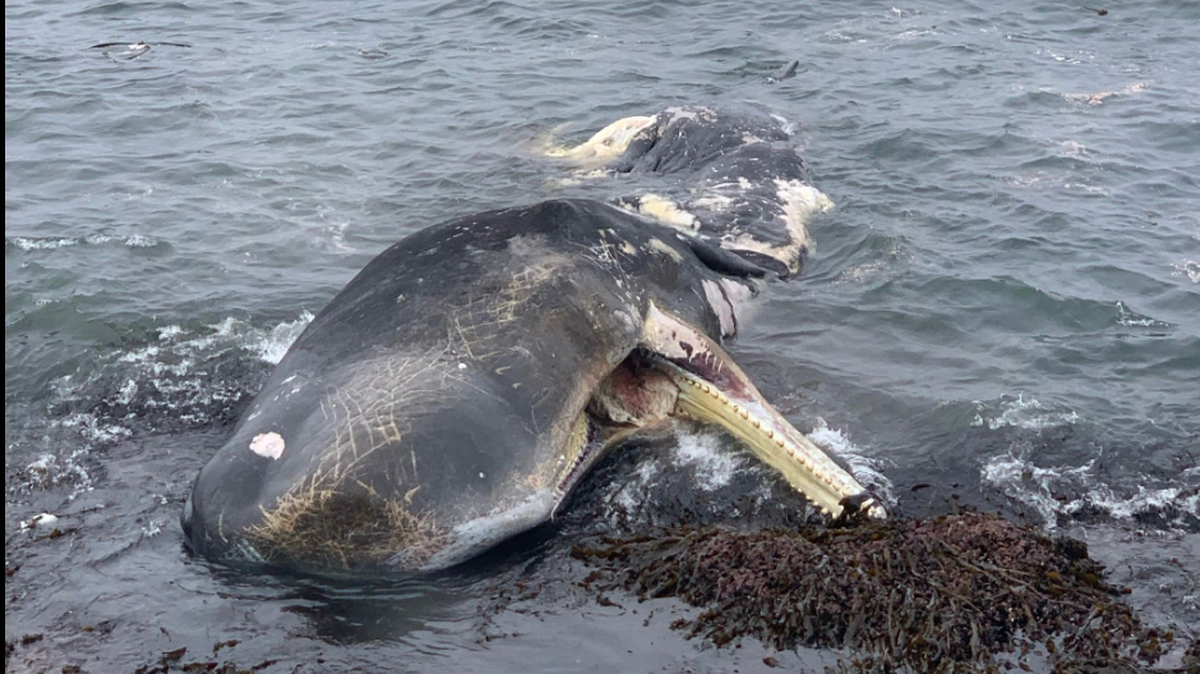
Even in death, endangered whales can be unpredictable.
California’s Noyo Center for Marine Science learned this the hard way when it tried towing a nearly 45-foot dead sperm whale from a “cove near Mendocino Bay to a beach appropriate for a partial necropsy.”
Things did not go as planned.
“Unfortunately, the whale lost buoyancy during the process, and sunk before reaching the destination beach,” the center reported in an Aug. 3 Facebook post.
This happened after a team worked “tirelessly” for days to move the whale, including members of the Mendocino Fire Department, U.S. Coast Guard and California Academy of Sciences.
Why it sank faster than expected is mystifying, since dead whales are notorious for floating atop the ocean for extended periods — attracting hungry sharks.
Finding it counted as “a rare occurrence,” so the center seized the opportunity to collect “parts for scientific research, and to one day display at our Ocean Science Center in Fort Bragg.”
Now, experts have another idea: They’re going to see what mysterious creatures show up to eat the whale as it sits on the sea floor.
It’s called a “whale fall” study, and they occur “when a whale carcass falls to the sea floor, providing a sudden, concentrated food source and a bonanza for organisms in the deep sea.”
As for the whale itself, the cause of death likely will remain a mystery. It was described as a 42-to-45-foot “sub-adult male,” the center told McClatchy News.
Sperm whales are an endangered species, known to reach 52 feet and live 60 years, according to NOAA Fisheries.
The project to tow the whale was conducted under authorization by the National Marine Fisheries Service through a Stranding Agreement issued to the California Academy of Sciences and Noyo Center for Marine Sciences.
The Noyo Center for Marine Science responds to reports of dead marine mammals on the Mendocino Coast, from Gualala to Rockport, as part of the Marine Mammal Stranding Network. The center’s work is done under a license in partnership with the California Academy of Sciences.
This story was originally published August 5, 2022 at 8:07 AM with the headline "Scientists try towing dead whale from California cove for study. It didn’t cooperate."