
‘Antique’ head sculpture proves to be 3,000-year-old Egyptian artifact, US agents say
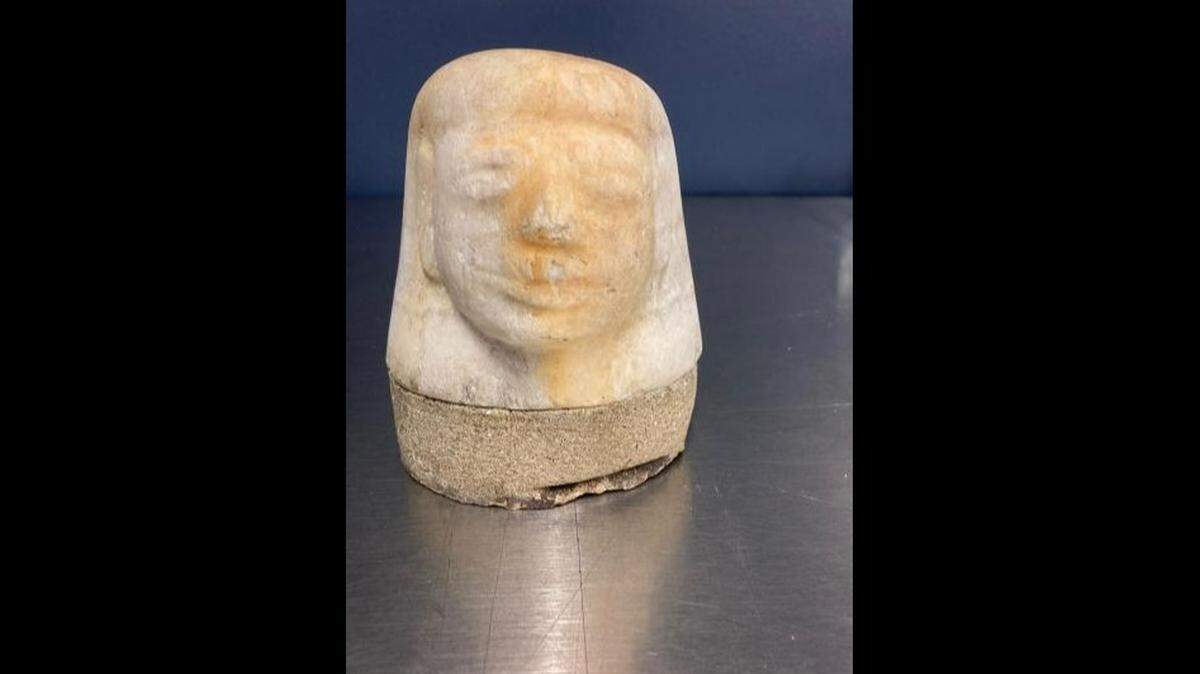
A 3,000-year-old Egyptian artifact with a grisly past is in the hands of U.S. Homeland Security after an art dealer tried passing it off as a routine art sculpture, according to U.S. Customs and Border Protection.
The nondescript stone head aroused suspicions Aug. 17 at the port of Memphis in Tennessee, when federal agents saw it vaguely listed in a shipping manifest “as an antique stone sculpture over 100 years old.”
Closer inspection by Egyptian art experts from the University of Memphis revealed it was the lid of a ceremonial jar likely made during “the Egyptian Third Intermediate Period, 1069 BC to 653 BC.“ That makes it around 3,000 years old, officials said.
“It is an Egyptian canopic jar lid of the funeral deity named Imsety,” U.S. Customs reported. “Canopic jars were used to hold the internal organs of mummies and Imsety specifically protected the deceased’s liver.”
The lid was brought into the country illegally, officials said. International treaties restrict “importing some archaeological and ethnological materials” — a move engineered by nations to thwart black market sales of looted archaeological treasures.
Federal investigators did not identify the dealer, who is based in Europe, but report the lid was being sent “to a private buyer in the U.S.”
“The shipper also made contradictory statements regarding the declared value of the item, and CBP seized it,” officials said. “It was turned over to Homeland Security Investigations for further examination and to determine it’s provenance.”
Four canopic jars were used during Egyptian mummification, each intended to hold specific body organs, according to The Metropolitan Museum of Art. The jars (with the lid on) were typically 49 inches high, and were included among the objects entombed with a mummy.
“The best known versions of these jars have lids in the shape of the heads of protective deities called the four Sons of Horus,” the museum reports.
“The human-headed Imsety was the guardian of the liver; the baboon-headed Hapy looked after the lungs; the jackal-headed Duamutef was responsible for the stomach; and the falcon-headed Qebehsenuef cared for the intestines.”
This story was originally published August 26, 2022 at 2:19 PM with the headline "‘Antique’ head sculpture proves to be 3,000-year-old Egyptian artifact, US agents say."